
Environmental standards like REACH and strict limits on toxic heavy metals continue to squeeze industrial paint formulators. Lead and chromate inhibitors are practically gone from modern specifications. As a result, non-toxic zinc phosphate remains an essential baseline inhibitor for protective primers, epoxy coatings, and marine finishes.
Finding a dependable source for raw chemical materials requires more than searching for the cheapest quote. Paint manufacturers need consistent oil absorption, tight particle size distributions (D50), minimal water-soluble salts, and secure ocean logistics. If you are deciding where to buy zinc phosphate for upcoming manufacturing cycles, this guide reviews the top ten global chemical producers in 2026.
Whether you need lab-testing samples for an offshore wind turbine coating or multi-container shipments for automotive primers, companies like Xinsheng provide certified, factory-direct inventory to secure your supply chain. Contact our technical sales engineers today to request technical data sheets (TDS) and custom sample batches.
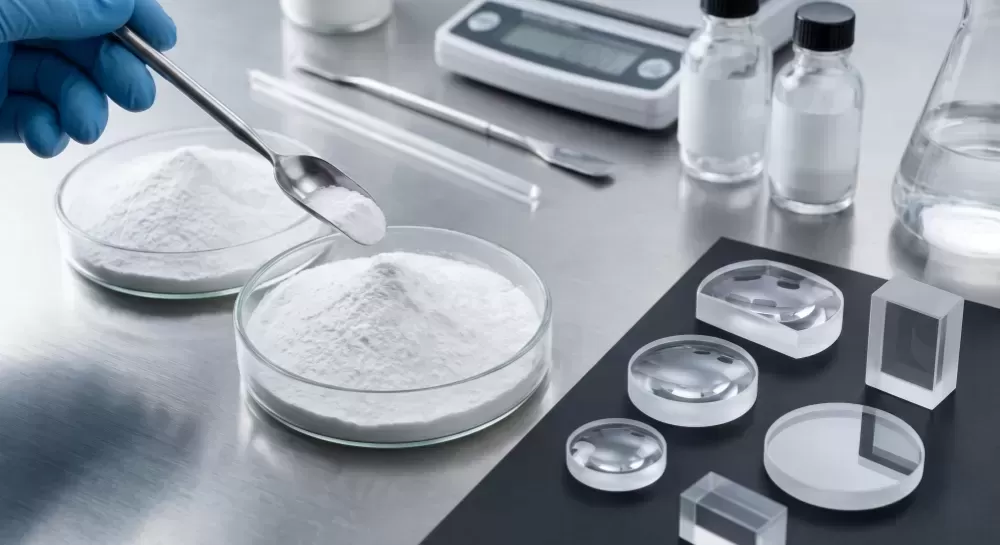
Buyer's Technical Checklist: Evaluating Zinc Phosphate
Before issuing a purchase order to any raw material vendor, coating chemists and procurement teams must inspect critical technical parameters. Inconsistent pigment batches cause flocculation, unstable viscosity, and early blistering during salt spray exposure.
- Chemical Purity and Zinc Content: Standard industrial formulations rely on the dihydrate or tetrahydrate form, Zn3(PO4)2·2H2O or Zn3(PO4)2·4H2O. Verify that the total zinc content (expressed as ZnO) and phosphorus pentoxide (P2O5) match standard specifications such as ISO 6745 (Zinc phosphate pigments for paints).
- Particle Size Distribution (D50 & Hegman Grind): Standard grades (D50 between 5 to 10 microns) suit thick structural steel primers. Thin-film coil coatings, automotive electrodeposition, and precision aerosol primers require micronized grades (D50 below 3 microns) to prevent surface roughness.
- Specific Resistance and Water-Soluble Matter: High concentrations of residual water-soluble salts draw moisture through the cured paint film via osmotic pressure. Choose materials with water-soluble content strictly below 0.1% to avoid osmotic blistering.
- Oil Absorption (g/100g): This value directly determines the critical pigment volume concentration (CPVC) of your formula. Unexpected swings in oil absorption will destabilize your binder ratios and drive up manufacturing costs.
- Synergistic Options: In demanding marine (C5) environments, standard zinc phosphate may require reinforcement. Progressive compounders regularly blend standard zinc compounds with modified aluminum tripolyphosphate to gain immediate passivating ion release.
Top 10 Zinc Phosphate Manufacturers in 2026
The global market splits between long-standing European chemical syndicates, North American specialty additive firms, and Asian direct chemical producers. The following suppliers lead the market in product quality, export readiness, and compliance.
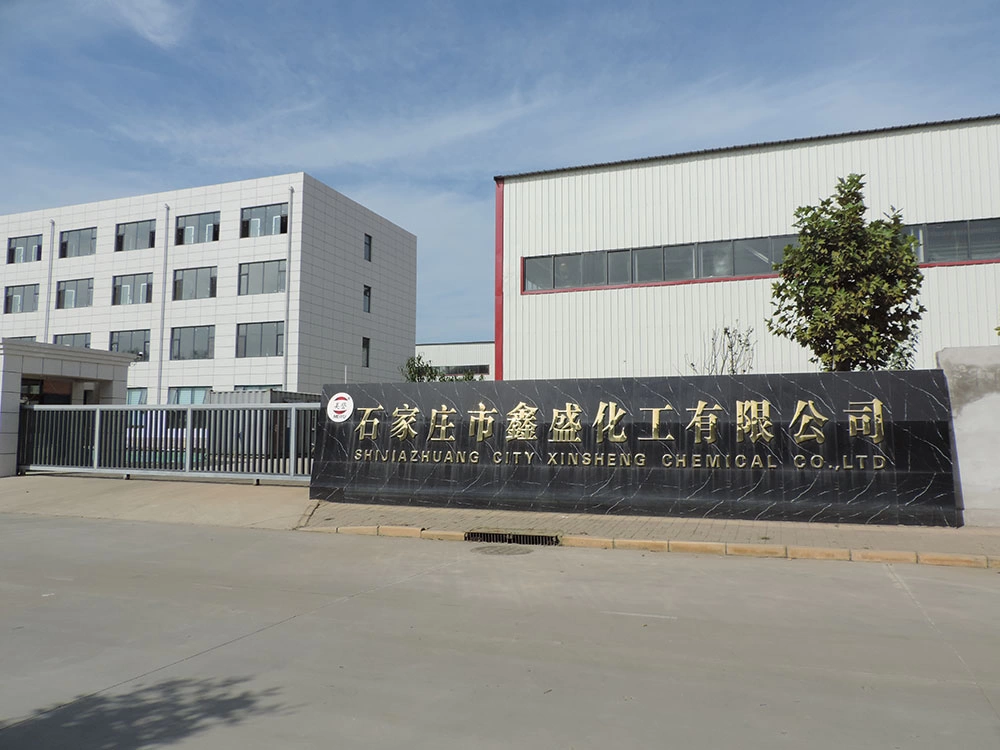
1. Xinsheng (Shijiazhuang City Xinsheng Chemical Co., Ltd.)
Established in 1993, Xinsheng operates as a specialized manufacturer of phosphate-based anti-corrosion pigments. Unlike commercial trading houses, Xinsheng manages synthesis from raw phosphorus feeds to final surface-treated packaging. The company runs dedicated production lines for standard zinc phosphate, micronized grades, and low-heavy-metal variants tailored for environmental compliance.
Beyond standard zinc compounds, Xinsheng manufactures a complete matrix of complementary protective pigments, including aluminum tripolyphosphate, aluminum dihydrogen phosphate, and condensed aluminum phosphate. This unified production capacity allows coating manufacturers to source diverse phosphate chemistries from one facility. With direct ocean freight handling, dedicated export documentation, and strict lot-to-lot traceability, Xinsheng remains a primary factory-direct source for global industrial coaters.
2. Heubach Group
Following its major integration with Clariant's pigment division, the Germany-based Heubach Group stands as an international powerhouse in inorganic colorants and anti-corrosive pigments. Their product line features established brands like Heucophos, which offers standard orthophosphates along with organically modified and zinc-free alternatives. Heubach serves global tier-one paint brands requiring multi-continental inventory staging and extensive regulatory documentation.
3. SNCZ (Société Nouvelle des Couleurs Zinciques)
Headquartered in France, SNCZ specializes in anti-corrosion pigments for protective and marine coatings. They produce a comprehensive range of zinc phosphates, including basic, micronized, and polyphosphate blends. European formulators frequently select SNCZ for their refined particle morphology and consistent dispersion characteristics in high-end polyurethane and epoxy systems.
4. ICL Phosphate Specialty / Halox
Operating as a division of Israel Chemicals Ltd, Halox (based in the United States) is widely recognized for corrosion inhibitors and specialty additives. Halox focuses on proprietary modified phosphate pigments and liquid organic corrosion inhibitors. Formulators seeking complex synergistic pigments often turn to Halox for specialized waterborne industrial coatings.
5. Tayca Corporation
Tayca Corporation is a recognized Japanese chemical manufacturer producing industrial-grade functional materials, including their K-White series of non-toxic anti-corrosive pigments. Tayca focuses on high-purity chemical engineering. Their materials are common across Asian automotive assembly lines, electrical appliances, and thin-film pre-treatment primers where micro-dispersion is essential.
6. Delaphos (JLS Chemical)
Delaphos is the anti-corrosive pigment division distributed widely across Europe and North America by JLS Chemical and its partners. Delaphos produces orthophosphates, basic zinc phosphates, and modified molybdenum/zinc phosphate compounds. Their pigments are engineered to conform to ASTM guidelines for industrial maintenance primers applied over blast-cleaned steel.
7. Synthomer (Formerly Hansa Bauchemie)
Synthomer provides high-performance performance additives and modified inorganic pigments to the European construction and heavy manufacturing sectors. Their anti-corrosive lines focus on specialty formulations where pigment surfaces undergo functional organic treatment to speed up wetting and lower viscosity in solvent-free epoxy systems.
8. PNC Chem
PNC Chem operates out of South Korea, supplying high-performance raw materials to regional shipyards and domestic paint manufacturers. They supply standard white zinc phosphate powders characterized by low impurity profiles. PNC Chem remains a regional option for shipbuilders and heavy equipment coaters throughout Northeast Asia.
9. Sichuan Development Lomon
Sichuan Development Lomon is a major Chinese chemical entity with deep backward integration into upstream phosphorus rock extraction and titanium dioxide processing. Their scale allows them to supply baseline bulk chemical grades. They provide high-volume supply to commercial powder coating manufacturers and large-scale architectural primer producers worldwide.
10. Elementis Specialties
Elementis serves global coatings companies through its performance additives division. While best known for rheological modifiers and organoclays, Elementis supplies formulated anti-corrosive solutions to support heavy-duty marine, bridge, and pipeline specifications. Their focus centers on complete rheology-inhibitor formulation support.
Why Direct Sourcing from Xinsheng Lowers Supply Risks
Middlemen and third-party brokers add significant markups to industrial raw materials. More critically, trading houses often blend materials from multiple unverified sources, introducing dangerous batch variations into your warehouse. Sourcing directly from an established primary producer like Xinsheng eliminates these production hazards.
Xinsheng has focused on inorganic phosphate chemistry since 1993. Modern production lines utilize automated reaction vessels that tightly track crystallization temperature and mother liquor pH. This control produces uniform crystals that disperse easily during high-speed dissolver passes. Formulators experience consistent grind gauge readings without extended bead milling times.
Furthermore, Xinsheng simplifies testing cycles. When formulators must boost salt spray test performance from 500 hours to over 1,500 hours, technical teams must do more than just increase pigment loading. Xinsheng provides custom formulations combining traditional orthophosphates with modified aluminum tripolyphosphate. This dual-action approach creates a passive oxide barrier that shields underlying steel when coatings suffer mechanical scratches.
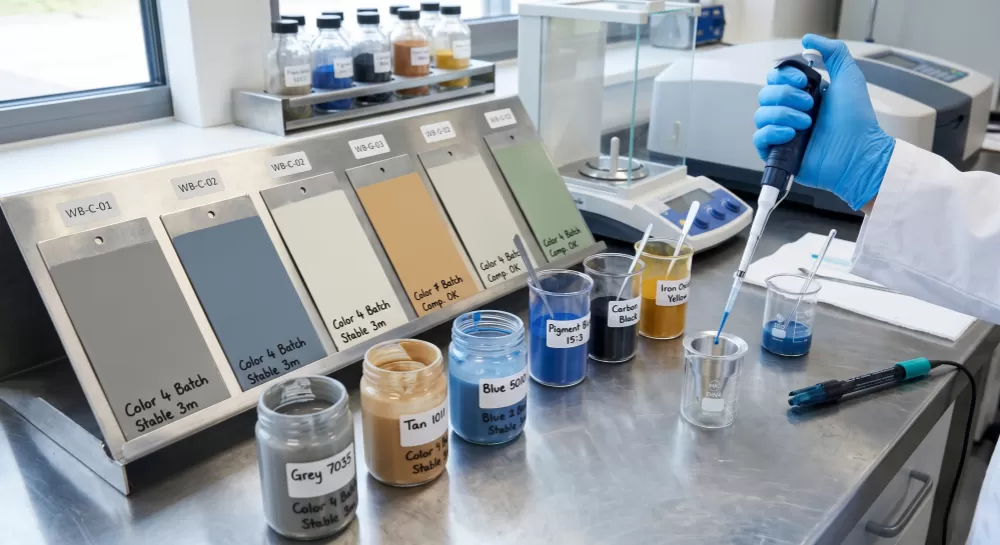
Evaluating Zinc Phosphate Price per Ton in 2026
When searching for where to buy zinc phosphate, purchasing agents quickly notice wide spreads in pricing. The global zinc phosphate price per ton varies based on three primary market dynamics:
- London Metal Exchange (LME) Zinc Values: High-grade zinc metal serves as the primary cost foundation. Spikes in refined zinc prices directly lift production expenses for zinc oxide and downstream phosphate pigments.
- Phosphorus Ore and Acid Availability: Thermal process phosphoric acid delivers the lowest trace metal contamination, but commands higher energy costs. Variations in raw phosphorus processing directly alter the baseline cost of synthesis.
- Processing and Milling Specifications: Standard grades processed through coarse sieves remain the most economical. Micronized variants (D50 < 3 microns) require secondary jet milling and anti-caking surface treatments, which adds a minor premium per metric ton.
Buying directly from verified production lines in full container loads (FCL) remains the most effective hedge against local distributor price markups.
Frequently Asked Questions
Q1: What is the typical loading level of zinc phosphate in
anti-corrosive coatings?
A1: Loading levels generally range from 5%
to 20% by total formulation weight. The precise percentage depends on the resin
platform (such as short-oil alkyd, two-component epoxy, or polyurethane), the
targeted dry film thickness (DFT), and the required corrosive category rating
(ranging from C2 to C5 under ISO 12944).
Q2: What is the technical difference between standard and micronized
zinc phosphate?
A2: Standard grades exhibit an average particle size
(D50) between 6 and 12 microns, making them suitable for heavy structural steel
primers. Micronized grades are milled to a D50 below 3 microns (yielding Hegman
grind readings of 6.5+). Micronized particles improve thin-film appearance, stop
early settlement in low-viscosity dipping paints, and improve barrier
density.
Q3: Zinc phosphate vs aluminum tripolyphosphate: which should I
choose?
A3: Zinc phosphate provides long-term protective barrier
passivity through slow, steady ion hydrolysis. Aluminum tripolyphosphate
hydrolyzes faster and forms dense tripolyphosphate complexes that passivate
fresh flash rust quickly. Many advanced epoxy primer formulations combine both
chemistries to deliver both rapid passivation and durable long-term barrier
protection.
Q4: What certifications and quality documents should accompany my
chemical shipment?
A4: Every batch must include an authentic
Certificate of Analysis (COA) specifying exact zinc content, P2O5 ratio,
moisture, water-soluble salts, and particle size metrics. Shipments should also
include an updated 16-section Safety Data Sheet (SDS) and official proof of
regional regulatory compliance, such as EU REACH registration numbers.
Q5: How can I request testing samples and verify minimum order
quantities (MOQ) from Xinsheng?
A5: Xinsheng provides free 500g to
2kg evaluation samples to industrial coating formulators upon request. Standard
factory MOQs start at 1 metric ton (one pallet), with customized contract terms
and mixed-container options available for recurring commercial accounts.
Request Factory Direct Pricing and Technical Samples
Eliminate intermediaries, eliminate unverified batches, and secure stable raw material pricing for your manufacturing plants. Partner with Xinsheng to access more than three decades of specialized inorganic chemical manufacturing expertise.
Contact our export desk today to get an active quote, request comprehensive technical data sheets (TDS), or order your free test samples.