
Environmental regulations continue to reshape the protective coatings industry. Directives like REACH and RoHS restrict the use of heavy metals, forcing formulators to move away from hexavalent chromates, lead compounds, and even standard zinc-based pigments. Modern coating chemists need high-efficiency, non-toxic anti-corrosion pigments that perform well in demanding environments without violating environmental compliance.
Aluminum tripolyphosphate has stepped into this gap as an established, sustainable solution. Known across the industry as ATP, this synthetic condensed phosphate provides active chemical passivation and barrier enhancement. Manufacturers like Xinsheng produce specialized grades of this white pigment to help formulators hit long-term salt spray targets across waterborne and solventborne industrial primers.
If you are re-engineering your primer formulations or seeking an effective zinc phosphate alternative, review the technical parameters below or contact our technical sales team directly to request a sample batch for bench testing.
1. The Shift to Non-Toxic Anti-Corrosion Pigments
For decades, strontium chromate, basic zinc chromate, and red lead dominated heavy-duty corrosion prevention. They passivated steel surfaces effectively. However, their extreme toxicity and environmental persistence prompted severe regulatory bans. Standard zinc phosphate became the initial replacement. Yet, formulators quickly discovered its functional limitations, including low solubility, sluggish passivation kinetics, and inconsistent salt spray performance under heavy industrial exposure.
Aluminum tripolyphosphate represents a second-generation condensed phosphate chemistry. Instead of relying merely on slow zinc ion dissolution, ATP leverages condensed polyphosphate chains that react directly with metallic substrates. This active chemical process produces durable protective interfaces even under thin film builds.
Definition: Aluminum tripolyphosphate is a white, synthetic, non-toxic anti-corrosion pigment with the core chemical structure AlH2P3O10·2H2O. It serves as an active anti-rust agent in primers and direct-to-metal (DTM) coatings by releasing condensed phosphate ions that passivate the metal substrate.
2. Chemical and Physical Characteristics of ATP
Formulating successfully with aluminum tripolyphosphate requires a firm grasp of its structural chemistry and crystal configuration. The material is not a simple orthophosphate mixture; it is a precisely condensed coordination complex.
Molecular Structure and Synthesis
The standard chemical formula for aluminum tripolyphosphate is AlH2P3O10·2H2O. The tripolyphosphate anion (P3O10)5− consists of three phosphate tetrahedra linked together by shared oxygen atoms. Aluminum cations (Al3+) coordinate within this polymeric network, balancing the charge alongside acidic protons.
This condensed phosphate framework offers two major benefits: controlled ion release and steady thermal resistance. The compound remains thermally stable up to roughly 300°C, making it suitable for standard ambient cure systems as well as high-temperature baking enamels and coil coatings.
Physical and Chemical Properties
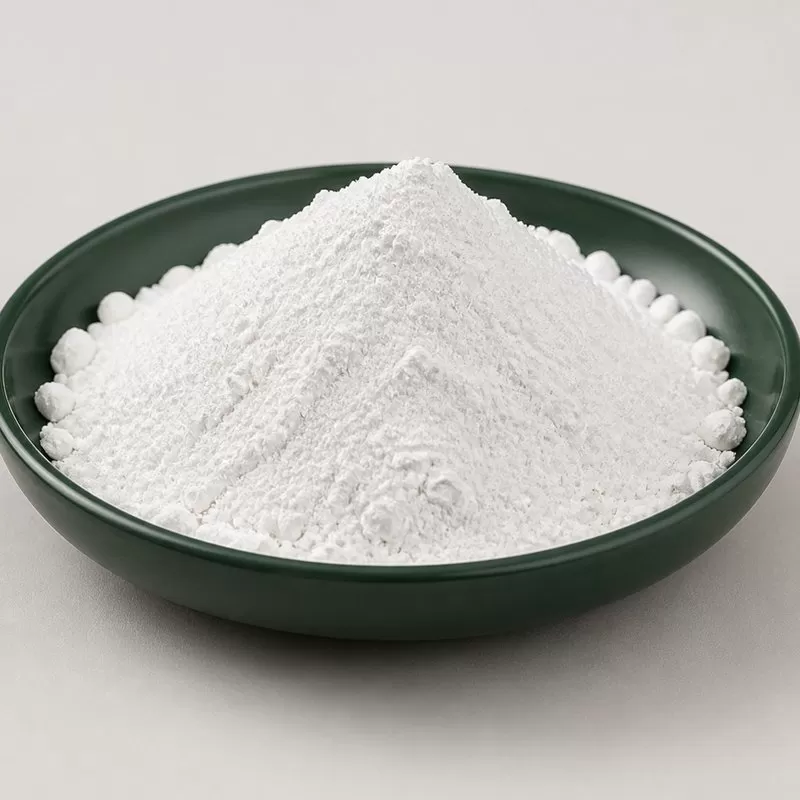
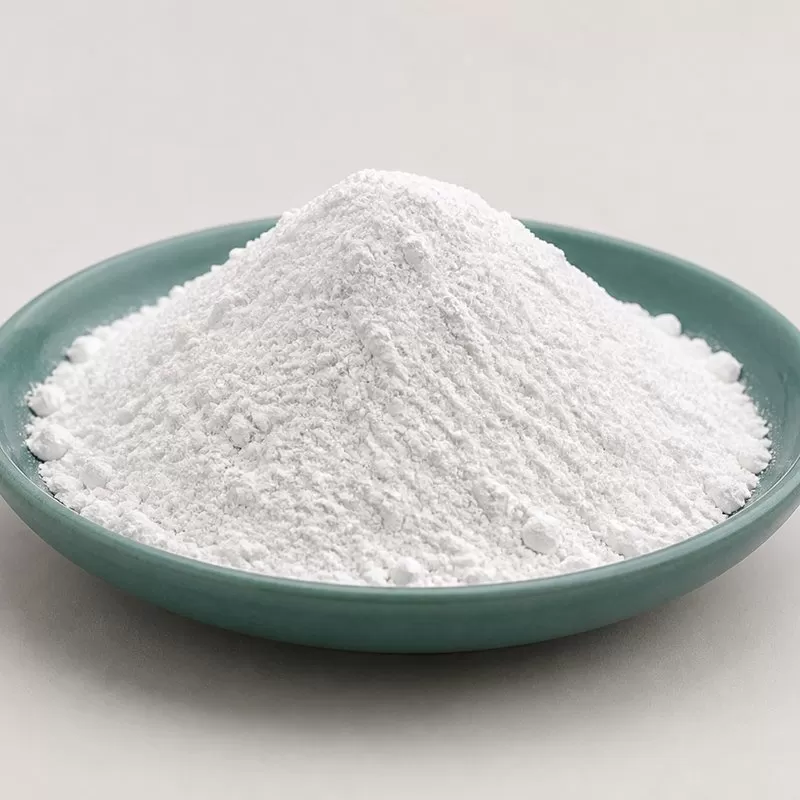
ATP typically presents as a fine, white powder. Its baseline physical metrics include:
- Chemical Formula: AlH2P3O10·2H2O
- Appearance: Bright white powder
- Whiteness: > 92%
- Oil Absorption: 25 – 40 g/100g
- Density: 2.6 – 3.0 g/cm³
- Aqueous pH (10% slurry): 5.5 – 7.0
- Water Solubility: Low (< 0.05 g/100ml at 20°C)
- Refractive Index: Approximately 1.55 – 1.60
Because of its clean white color and moderate refractive index, formulators can easily tint primers into grays, pastels, or safety colors. This gives ATP a practical edge over dark or tinted anti-corrosion options like iron oxides or calcium plumbate.
Modified Aluminum Tripolyphosphate
Standard ATP can sometimes exhibit rapid early hydration in high-water environments, which may lead to can stability issues or flash rust in sensitive waterborne systems. To solve this, chemical producers manufacture modified aluminum tripolyphosphate grades. These grades undergo surface modifications, commonly integrating silica, organic zinc complexes, or alkaline earth compounds.
Surface modification moderates the initial dissolution rate of the polyphosphate ions. It balances the acidic protons on the pigment surface, buffers the pH within the paint matrix, and improves compatibility with waterborne acrylic and epoxy emulsions.
3. Corrosion Inhibition Mechanism
The anti-corrosion mechanism of aluminum tripolyphosphate relies on a three-pronged action: active chelation, in-situ buffering, and physical barrier formation.
Anodic Chelation and Surface Passivation
When moisture diffuses through a dry paint film down to the steel substrate, the tripolyphosphate network hydrates slowly. It dissociates and releases tripolyphosphate anions (P3O10)5−.
As ferrous ions (Fe2+) begin to form at anodic sites, the tripolyphosphate groups chelate them instantly. This reaction generates an insoluble, dense, and amorphous organometallic/phosphate passivation layer, often characterized as a hydrated iron-aluminum phosphate complex:
Fe2+ + AlH2P3O10 + H2O → Fe[Al(PO4)3] complex + 2H+
This chemical deposition acts as a tough anodic barrier that stops the transfer of electrons and halts metallic dissolution right at the substrate surface.
Hydrolysis and Interface Buffering
As atmospheric corrosion continues, local micro-environments at the coating-steel interface tend to turn acidic due to cathodic-anodic differential aeration. ATP handles this through progressive hydrolysis. The polyphosphate chains slowly break down into pyrophosphate and orthophosphate groups, consuming excess hydronium ions and preventing aggressive localized acidification.
Furthermore, the aluminum ions themselves act as weak Lewis acids that interact with hydroxyl ions (OH−) generated at cathodic zones, establishing an equilibrium that protects the resin-metal interface from cathodic delamination.
Barrier Enhancement and Ion Exchange
ATP particles feature a distinct crystal morphology that lengthens the diffusion path for corrosive agents such as water, oxygen, and chloride ions. In environments laden with salts, the phosphate groups engage in ion-exchange behavior, scavenging free chloride ions and trapping them within the developing phosphate complex. This significantly curbs the blistering typically triggered by chloride migration.
4. ATP vs. Traditional Anti-Corrosion Pigments
Selecting the right anti-corrosion pigment usually comes down to three factors: regulatory safety, cost efficiency, and field durability. The table below compares aluminum tripolyphosphate with conventional alternatives:
| Performance Attribute | Aluminum Tripolyphosphate (ATP) | Standard Zinc Phosphate | Strontium / Zinc Chromate |
|---|---|---|---|
| Toxicity & Compliance | Non-toxic, heavy-metal free, REACH compliant | Eco-toxicity risks to aquatic environments | Extremely toxic, carcinogenic (banned across major markets) |
| Corrosion Efficiency | Very high (low effective loading required) | Moderate to low (requires high pigment loading) | High (historical standard) |
| Passivation Speed | Fast initial film passivation | Slow ion dissolution rate | Instantaneous passivation |
| Recommended Loading | 3% – 8% total formula weight | 10% – 25% total formula weight | 8% – 15% total formula weight |
| Non-Ferrous Adhesion | Excellent on Galvanized, Aluminum, Steel | Fair on steel, poor on aluminum | Excellent on light metals |
| Coating Hue | Pure White (easy to tint) | Off-white to white | Bright Yellow / Green |
While standard zinc phosphate demands dry-film pigment volume concentrations (PVC) between 15% and 25% to deliver adequate protection, aluminum tripolyphosphate achieves superior results at 3% to 8% loading. This wide difference in dosage frees up formula space, letting formulators cut raw material costs or add functional extenders like micaceous iron oxide or precipitated barium sulfate.
5. Formulation Best Practices for Industrial Coatings
Formulating with aluminum tripolyphosphate is straightforward once you account for its ionic activity and surface area. Below are laboratory-tested guidelines developed from work alongside industrial blenders and paint technicians.
Resin Compatibility
Aluminum tripolyphosphate functions smoothly across a broad span of modern binders:
- Two-Component Epoxy Systems: Ideal for heavy-duty marine primers, industrial flooring, and structural steel maintenance coatings. ATP pairs well with polyamide, phenalkamine, and polyamidoamine hardeners.
- Waterborne Acrylics and Polyurethane Dispersions (PUDs): Modified ATP delivers strong anti-corrosion properties in low-VOC primers, provided the wet system is properly buffered against flash rust.
- Short/Medium Oil Alkyds: Provides clean color retention and prevents under-film corrosion in standard industrial metal primers.
- Polyurethanes: Excellent choice for direct-to-metal (DTM) architectural and commercial transportation topcoats.
Dosage Optimization
Because ATP is chemically reactive, excessive levels are not recommended. High amounts can introduce excess water sensitivity or cause minor package thickening. Formulators should run an optimization ladder within the following parameters:
- Heavy-Duty Industrial Primers (Epoxy/Polyurethane): 4.0% – 8.0% of total formulation weight.
- Light-to-Medium Duty Maintenance Coatings: 3.0% – 5.0% by weight.
- Direct-To-Metal (DTM) Systems: 2.5% – 4.5% by weight.
Dispersion and Grinding Protocols
Tripolyphosphate crystals rely on their structured particle size to perform effectively. Over-grinding can crush their crystalline structure, whereas under-dispersing leaves agglomerates that compromise film barrier density.
- Grinding Equipment: Standard bead mills, basket mills, or horizontal sand mills work best.
- Dispersion Fineness: Target a grind gauge rating of 20 to 30 microns (Hegman 6 to 6.5) for high-performance primers.
- Temperature Control: Keep your grinding slurry temperature below 55°C (131°F). Excessive thermal build-up during processing can induce partial dehydration of the tripolyphosphate crystals, destabilizing your formulation.
- Dispersing Additives: Utilize non-ionic or structured acrylic copolymer dispersing agents. High molecular weight block copolymers stabilize the pigment charge without causing viscosity spikes.
Waterborne Coatings and Anti-Flash Rust Adjustments
In waterborne coatings formulation, standard aluminum tripolyphosphate can draw acidic traces into the initial liquid phase during water evaporation. If applied directly to bare, blast-cleaned mild steel, this can provoke flash rusting.
To avoid this issue, paint chemists should take two steps: first, select a modified, surface-neutralized ATP grade like those manufactured by Xinsheng; second, add 0.2% to 0.5% of an active liquid flash-rust inhibitor (such as a sodium nitrite-based blend, organic amine complex, or carboxylate salt) into the letdown phase.
Synergistic Extender Blends
Aluminum tripolyphosphate performs best when paired with complementary functional fillers:
- Precipitated Barium Sulfate (Blanc Fixe): Enhances packing density, controls overall gloss, and keeps raw material costs balanced.
- Lamellar Talc or Mica: Plate-like particles combine with ATP to create a physical labyrinth that blocks moisture ingress while ATP passivates the steel.
- Micaceous Iron Oxide (MIO): Standard choice for marine
intermediate coatings; pairs effectively with ATP in the primer coat to resist
aggressive salt fog.
6. Performance Testing and Industry Standards
Coating labs qualify the performance of ATP-based primers using standard accelerated exposure and electrochemical diagnostics.
ASTM B117 Neutral Salt Spray Test
In standard 2K polyamide epoxy primers tested on cold-rolled steel (CRS) panels at a dry film thickness (DFT) of 75 microns, formulations utilizing 6% modified ATP routinely surpass 1,000 to 1,500 hours of exposure with less than 1 mm creep from the scribe. This performance comfortably matches or exceeds historical chromate-bearing systems while outperforming traditional zinc phosphate at equivalent dry film builds.
Electrochemical Impedance Spectroscopy (EIS)
EIS testing provides a clear picture of long-term immersion durability. Coatings fortified with aluminum tripolyphosphate maintain high film resistance values ($R_f > 10^8 \ \Omega\cdot\text{cm}^2$) even after 30 days of immersion in a 3.5% NaCl solution. The phase angle across low-frequency domains remains stable, verifying that the formed iron phosphate-chelate complex actively stops electrolyte seepage at the metal interface.
Adhesion and Blistering Resistance
ATP helps preserve direct inter-coat and substrate adhesion under wet environments. According to ASTM D3359 cross-hatch adhesion protocols, properly formulated primers maintain 5B adhesion after salt spray cycling. They also demonstrate minimal blistering (ASTM D714 evaluation 10/dense) due to the low water-extractable salt concentration of refined ATP grades.
7. Troubleshooting & FAQs
Below are clear answers to technical questions frequently encountered by formulators working with aluminum tripolyphosphate pigments.
Q1: What causes viscosity drift or paint thickening when using
aluminum tripolyphosphate, and how can it be
resolved?
A1: Unmodified ATP surfaces contain
acidic protons that can interact with basic resin components, amine curatives,
or sensitive rheological additives. This can trigger viscosity drift or seeding
over time. To eliminate this issue, switch to a modified aluminum
tripolyphosphate treated with basic metal oxides or organic coatings.
Additionally, ensure the grinding paste maintains an alkaline-to-neutral pH, and
switch to non-ionic, high-molecular-weight dispersing additives.
Q2: Can aluminum tripolyphosphate completely replace zinc phosphate
in heavy-duty specifications?
A2: Yes. ATP
regularly serves as a direct, full replacement for zinc phosphate. Because it
offers higher passivating efficiency, you can usually replace zinc phosphate at
a substantially lower loading level—often 4% to 6% ATP replaces 12% to 18%
standard zinc phosphate by total weight. Formulators should then backfill the
formula space with neutral extenders such as fine barytes or lamellar talc.
Q3: How do formulators eliminate flash rust when using ATP in
waterborne primers applied over steel?
A3: Flash
rusting occurs during the initial dry-out phase of waterborne coatings. Aluminum
tripolyphosphate passivates through ionic reactions, which are not fast enough
to stop oxidation during water evaporation. Combine a surface-treated ATP grade
with 0.3% to 0.8% of an organic amine-carboxylate or nitrite-based flash-rust
additive. Also, keep the wet coating pH around 8.5 to 9.2 using a stable
volatile amine such as AMP-95.
Q4: Does aluminum tripolyphosphate impair intercoat adhesion in
multi-layer coating systems?
A4: No, provided the
pigment volume concentration remains within the critical pigment volume
concentration (CPVC) limits. Unlike metallic zinc dust primers, which form loose
zinc salts on the surface that require sweeps before topcoating, ATP stays
locked inside the crosslinked matrix. It leaves behind an even, clean surface
suitable for polyurethane, epoxy, or polysiloxane topcoats.
Q5: What is the main operational difference between basic ATP and
modified ATP?
A5: Basic ATP is pure aluminum
tripolyphosphate without secondary coatings, which can make it reactive in
waterborne or sensitive resin formulations. Modified ATP is surface-treated with
materials like zinc oxide, silica, or organic phosphate barriers. This treatment
tempers the surface charge, lowers active moisture absorption, and improves
can-stability in waterborne paints and sensitive acrylics.
8. Conclusion and Inquiries
Aluminum tripolyphosphate provides modern coating chemists with an effective, compliant option for rust prevention. It bridges the gap between old, restricted toxic pigments and the demanding durability targets set by modern protective standards. By using ATP's controlled chelation, steady pH stabilization, and barrier packing, your team can design durable industrial primers suitable for marine, transit, and structural steel applications.
At Xinsheng, we engineer and supply tailored anti-corrosion pigments, including high-purity aluminum tripolyphosphate grades designed for demanding solventborne and waterborne systems. Our laboratory staff can evaluate your system specifications, suggest starting point formulations, and solve pigment dispersion or stability problems.
Ready to improve your primer formulations? Contact our technical sales team today to request a sample, receive comprehensive technical data sheets (TDS), or discuss your custom formulating requirements.