
Industrial corrosion protection relies on the chemical stability and barrier efficiency of underlying primer matrices. For decades, coating formulators faced the dual challenge of maximizing electrochemical substrate protection while meeting stringent environmental directives that phase out toxic heavy metals like hexavalent chromium and lead. Within this regulatory and performance landscape, synthetic orthophosphate pigments emerged as the definitive benchmark for active, non-toxic corrosion inhibition.
Among the specialized grades engineered for demanding environments, zinc phosphate pz20 occupies a critical position. Designed specifically to overcome the solubility and dispersion limitations of standard technical-grade zinc orthophosphates, this micronized variant offers paint chemists predictable leaching kinetics, superior packing density, and broad vehicle compatibility. Understanding the crystalline morphology, electrochemical behavior, and rheological influence of this pigment allows formulators to optimize protective systems across industrial maintenance, coil coating, and marine applications.

Chemical Identity and Physical Morphology
Zinc orthophosphate exists predominantly as a crystalline dihydrate or tetrahydrate, chemically represented as Zn3(PO4)2·2H2O or Zn3(PO4)2·4H2O. In its native mineral form, hopeite, the crystal structure belongs to the orthorhombic system, presenting tabular or lamellar habits. Standard zinc phosphate pigments frequently suffer from wide particle size distributions and aggregated crystalline clusters, which limit their packing efficiency in dry film layers and leave void spaces prone to moisture ingress.
The engineering behind zinc phosphate pz20 addresses these physical anomalies through controlled precipitation followed by targeted mechanical micronization. Particle morphology is tailored to achieve a refined, narrow particle size distribution, typically centered around a median diameter (d50) between 2.5 and 4.5 microns, with an upper cut-off (d98) kept strictly below 18 microns. This calibrated fineness corresponds to a Hegman grind gauge rating of 6.0 or higher directly upon proper dispersion.
Physical parameters defining this high-grade pigment include:
Chemical Composition: Synthetic hydrated zinc orthophosphate
Zinc Content (calculated as ZnO): 50.0% – 53.0%
Phosphate Content (calculated as P2O5): 34.0% – 37.0%
Specific Gravity: Approximately 3.2 to 3.4 g/cm³
Oil Absorption Value: 18 – 25 g / 100 g pigment
Sieve Residue (45 µm / 325 mesh): Less than 0.05%
Aqueous Extract Conductivity: Controlled below 150 µS/cm to eliminate blister-promoting free salts
The controlled oil absorption value plays an instrumental role during coating formulation. Pigments exhibiting erratic surface areas absorb unpredictable quantities of the liquid binder, shifting the Critical Pigment Volume Concentration (CPVC). The uniform surface area of this micronized grade ensures stable viscosities during processing and guarantees that resin binders fully wet every individual pigment particle without requiring excessive solvent additions.
Electrochemical Passivation and Inhibitive Mechanism
Zinc phosphate functions through active passivation rather than sacrificial cathodic protection. Unlike metallic zinc dust, which oxidizes sacrificially to protect the ferrous substrate, orthophosphates operate by establishing an inorganic barrier layer at the metal-coating interface.
When atmospheric moisture and ionic species permeate the cured film, zinc phosphate pz20 initiates a controlled, slight dissolution process. Standard zinc phosphate exhibits very low aqueous solubility, but the optimized surface area of the PZ20 grade allows adequate solubility to deliver phosphate anions (PO4^3-) to micro-anodic sites across the steel substrate. The released phosphate ions interact directly with nascent ferrous ions (Fe2+) produced at initial anodic dissolution sites:
3 Fe2+ + 2 PO4^3- + 8 H2O → Fe3(PO4)2·8H2O (Vivianite)
Simultaneously, the zinc cations react within the alkaline cathodic zones, combining with hydroxyl ions generated by oxygen reduction:
O2 + 2 H2O + 4 e- → 4 OH-
Zn2+ + 2 OH- → Zn(OH)2
Over time, these compounds interlock with substrate iron oxides to crystallize into an insoluble, coherent, passivating layer composed of mixed iron-zinc phosphates, often structurally analogized to phosphophyllite (Zn2Fe(PO4)2·4H2O). This complex crystalline film inhibits electron transfer, suppresses the anodic dissolution reaction, and substantially delays the propagation of underfilm corrosion creep.
Advanced chemical engineering from manufacturers like Xinsheng ensures that residual water-soluble salts, such as chlorides and sulfates, are minimized during synthesis. High concentrations of residual electrolyte salts would reverse this protective mechanism by generating osmotic pressure gradients, drawing water through the film and generating destructive osmotic blisters long before the chemical passivation threshold could be reached.
Formulation Engineering in Modern Binder Systems
Successful implementation of an active anti-corrosive pigment depends on its chemical integration within the host polymer matrix. The inert nature of the primary crystal lattice allows this grade to integrate into a broad spectrum of organic binders without destabilizing curing chemistry or triggering premature gelling.
Two-Component Epoxy Primers
Epoxy-polyamide and epoxy-polyamine systems represent the primary domain for heavy-duty industrial coatings. The micronized profile of the pigment allows it to integrate smoothly into high-solids, low-VOC formulations. Because the pigment particles pack efficiently between larger extender minerals like barium sulfate or micaceous iron oxide, the primer achieves high mechanical barrier density. The basic nature of the pigment surfaces also provides mild acid-scavenging properties, neutralizing acidic atmospheric degradation products that penetrate the binder network.
Short and Medium-Oil Alkyds
In traditional maintenance primers where economic constraints govern raw material selection, this pigment grade offers rapid dispersibility on high-speed dissolvers without prolonged bead milling cycles. It resists reacting unfavorably with free fatty acids present in the alkyd resin, preventing the viscosity build-up and hard settling frequently encountered when using more reactive basic pigments like basic zinc potassium chromate or zinc oxide.
Waterborne Industrial Coatings
Water-reducible and emulsion polymers present unique formulation challenges, notably flash rusting during initial film drying and long-term shelf stability issues caused by pigment hydrolysis. With surface-treated variants and closely managed pH profiles, zinc phosphate pz20 operates effectively within aqueous systems. Maintaining an equilibrium extract pH between 6.5 and 7.5 preserves the colloidal stability of acrylic or waterborne epoxy dispersions while maintaining ready availability of phosphate ions upon final film dry.
Formulators typically incorporate the pigment at replacement or primary loadings between 5% and 15% of total dry film weight, depending on the corrosivity category targeted under ISO 12944 classifications (ranging from C2 up to C5-High environments). Balancing the ratio of zinc phosphate against platy barrier extenders, such as talc and mica, forms a tortuous path that delays moisture ingress while ensuring sufficient active inhibitor remains accessible along the coating-substrate boundary.
Dispersion Kinetics and Manufacturing Efficiency
Processing costs in paint manufacturing plants are fundamentally governed by grind times and energy throughput on industrial dispersing equipment. Coarse mineral pigments require intensive milling in horizontal bead mills, wearing down equipment and slowing batch turnaround times. Due to its precise micronization profile, zinc phosphate pz20 achieves high dispersion states under high-speed cowles dissolvers under optimized shear conditions.
Industrial processing parameters benefit markedly:
Reduced Milling Times: Reaches fineness requirements (Hegman 5.5 to 6.5) often within single-pass or minimal dwell-time milling operations.
Lower Dispersant Demand: Controlled surface area prevents excessive uptake of expensive polymeric dispersants, lowering raw material costs.
Settling Resistance: The uniform, fine distribution minimizes rapid gravitational settlement in storage containers, eliminating the formation of unmixable hard cakes at the bottom of drums.
Film Smoothness: The absence of oversized, agglomerated particles permits usage in thin-film applications, such as automotive electrophoretic coatings and industrial appliance topcoats, where surface defects cannot be tolerated.
During the manufacturing processes utilized by Xinsheng, advanced classifying technologies isolate consistent particle cuts. This precision eliminates coarse out-of-spec fractions that could serve as stress concentrators within the dry coating film, which would otherwise compromise the ultimate tensile strength and impact resistance of the cured paint system.
Performance Testing and Substrate Protection Profiles
Validating the performance of zinc phosphate pz20 requires standardized accelerated weathering and electrochemical diagnostic procedures. Across comparative evaluations against traditional non-micronized zinc phosphates, primers formulated with this refined grade consistently display distinct performance improvements.
Neutral Salt Spray Testing (ASTM B117 / ISO 9227)
Steel panels coated with high-solids epoxy primers formulated with this grade display marked resistance to scribe creep after 1,000 to 3,000 hours of continuous neutral salt fog exposure. Scribe rust creep typically remains confined within a 1.0 to 2.0 mm margin from the original mechanical scratch. The dense accumulation of the phosphophyllite-hopeite crystalline passivation film prevents moisture and chloride ions from undercutting the interface adjacent to the mechanical break.
Cyclic Corrosion Testing (ISO 11997-1 / Prohesion)
Constant wet salt spray does not fully replicate atmospheric dry-wet transitions. Under cyclic exposure involving repeating wet salt mist and dry thermal phases, the crystalline lattice formed by zinc phosphate pz20 demonstrates superior structural integrity. The dynamic hydration and dehydration cycles do not induce micro-cracking within the protective boundary layer, ensuring long-term adhesion retention on both carbon steel and hot-dip galvanized substrates.
Electrochemical Impedance Spectroscopy (EIS)
EIS testing provides a quantitative analytical measure of coating resistance and capacitance over immersion time. Formulations incorporating this micronized pigment grade maintain high low-frequency impedance modulus values (|Z| at 0.01 Hz > 10^8 Ω·cm²) over extended continuous immersion periods in 3.5% NaCl solutions. These sustained electrical impedance values confirm that the primer matrix resists ionic transport and limits the double-layer capacitance that marks the inception of localized corrosion.
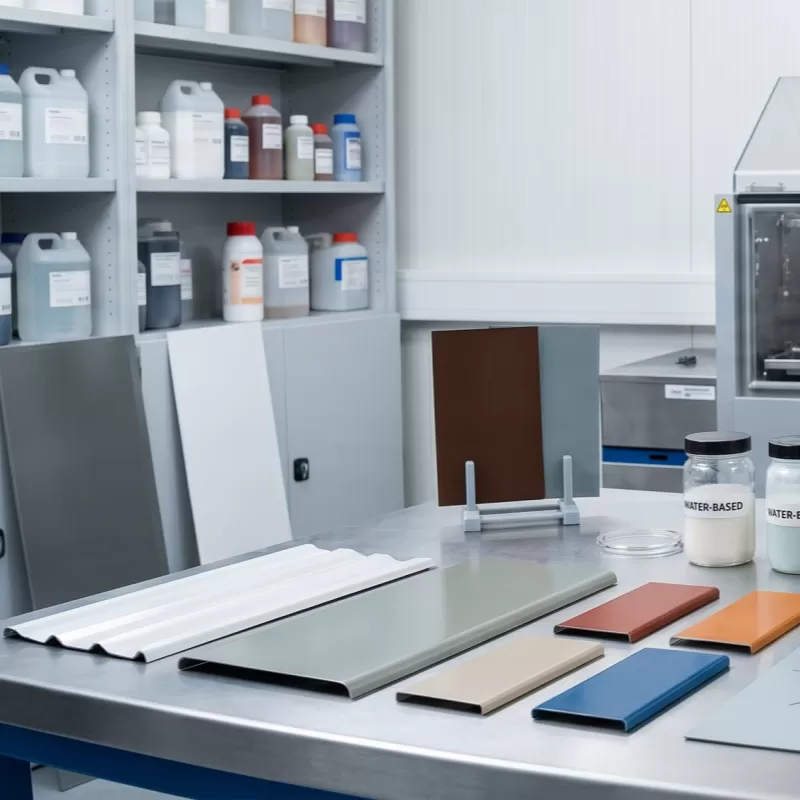
Technical Comparison: PZ20 Versus Standard Zinc Phosphate
To assist formulation chemists in pigment selection, the structural differences between standard zinc orthophosphate and the PZ20 grade are detailed below:
Mean Particle Size (d50): Standard grades average 8.0 – 15.0 µm; PZ20 maintains 2.5 – 4.5 µm, promoting a substantially denser barrier packing matrix.
Active Surface Area: Standard grades provide low surface area, slowing dissolution kinetics; PZ20 provides an optimized specific surface area, ensuring consistent passivation ion delivery.
Dispersion Grind: Standard grades rarely exceed Hegman 4.5 without bead milling; PZ20 disperses smoothly to Hegman 6.0+ via dissolver disc alone.
Film Thickness Suitability: Standard grades are restricted to heavy primer applications (>80 µm dry film thickness); PZ20 functions seamlessly in both thin-film systems (20–40 µm) and high-build coatings.
Frequently Asked Questions
What differentiates PZ20 from standard technical zinc phosphate?
PZ20 is distinguished by its controlled synthesis and precision micronization. While chemically similar in core zinc orthophosphate content, PZ20 possesses a significantly smaller, more uniform particle size distribution and higher chemical purity. This morphology translates into improved dispersibility, higher Hegman fineness ratings, reduced mill times, and faster passivation film development on the metal substrate.
Can this pigment be utilized in waterborne coating formulations?
Yes, provided the overall formulation maintains stable pH management (ideally between 7.0 and 8.5) and appropriate wetting agents are selected. The pigment features low conductivity and minimal free electrolyte content, which limits the potential for emulsion destabilization, coagulation, or osmotic blistering during water evaporation.
How does PZ20 perform compared to zinc chromate?
Zinc chromate acts as an aggressive anodic inhibitor via hexavalent chromium release, but it faces severe global bans due to carcenogenicity. Zinc phosphate pz20 serves as the primary non-hazardous replacement. While it exhibits slightly slower initial passivation kinetics than chromates, when formulated with suitable barrier minerals and proper binder ratios, it achieves equivalent long-term corrosion resistance without health or environmental safety concerns.
What is the recommended loading level of PZ20 in anti-corrosive primers?
Typical incorporation rates range between 5% and 15% by weight of the total formula, correlating to approximately 10% to 25% of the total pigment volume concentration (PVC). The exact loading depends upon the target corrosive environment, substrate type, dry film thickness, and whether secondary inhibitive pigments or barrier fillers are present.
Does PZ20 impact the mechanical flexibility or impact resistance of the cured coating?
Because the particles are fine and free from oversized aggregate fractions, the pigment integrates smoothly into the polymer network without forming stress-concentration zones. When compared to coarse technical grades, coatings containing PZ20 exhibit superior flexibility, scratch resistance, and direct/indirect impact values in standard conical mandrel and falling-weight tests.
Procurement and Technical Evaluation
Selecting the appropriate anti-corrosive pigment grade requires rigorous alignment with performance standards, plant processing capabilities, and long-term regulatory frameworks. When engineering next-generation primers for harsh industrial, structural, or marine environments, high-purity synthetic raw materials ensure predictable durability and batch-to-batch consistency.
Technical support teams at Xinsheng are prepared to provide comprehensive product specifications, safety data sheets, and representative trial samples of zinc phosphate pz20 for laboratory evaluation. Inquire today to discuss your formulation requirements, request a Certificate of Analysis, or arrange technical support tailored to your manufacturing process.