
The industrial coatings industry has experienced a major shift over the past several decades. Traditional anti-corrosive pigments, particularly those based on hexavalent chromium and lead, have faced strict regulatory restrictions globally due to their environmental and health profiles. This transition created a demand for non-toxic, highly effective alternative pigments that can protect steel, aluminum, and other metallic substrates under diverse environmental conditions.
Among the various alternatives developed, aluminum tripolyphosphate has emerged as a reliable and versatile active anti-corrosive pigment. It offers a combination of electrochemical passivation, physical barrier enhancement, and formulation compatibility. This article provides a comprehensive analysis of its chemical mechanisms, performance characteristics, formulation integration, and industrial applications, reflecting the manufacturing standards maintained by Xinsheng.
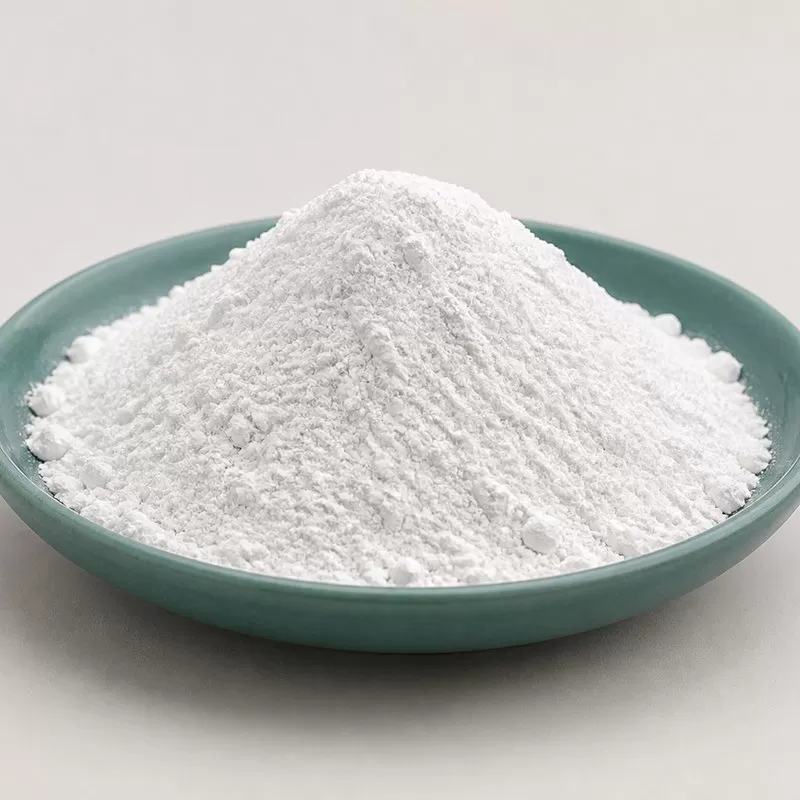
Chemical Mechanism of Aluminum Tripolyphosphate
To understand the performance of aluminum tripolyphosphate, it is necessary to examine its chemical structure and how it interacts with metal substrates. The compound is typically represented as $AlH_2P_3O_{10} \cdot 2H_2O$. It functions not merely as a passive barrier block, but as an active participant in the electrochemical processes at the metal-coating interface.
Dissociation and Hydration Chemistry
When moisture penetrates a coating film, aluminum tripolyphosphate undergoes slow, controlled hydrolysis. This process releases tripolyphosphate ions into the micro-environment of the coating matrix. The rate of this hydrolysis is key; if the pigment dissolves too rapidly, it can lead to osmotic blistering and early coating failure. Conversely, if dissolution is too slow, the concentration of active ions will be insufficient to inhibit corrosion. Manufacturers like Xinsheng control the particle properties to ensure a balanced, sustained release of these active species over the service life of the coating.
Passivation and Film Formation
Once dissolved, the tripolyphosphate ions ($\text{P}_3\text{O}_{10}^{5-}$) migrate toward the metallic substrate. At the anode of the corrosion cell, these ions react with iron ions ($\text{Fe}^{2+}$ and $\text{Fe}^{3+}$) generated by the initial oxidation of the steel. This reaction forms a highly stable, insoluble complex chelate layer, primarily composed of iron tripolyphosphate complexes, on the metal surface.
This chelate film acts as a physical and electrochemical barrier, polarising the anode and effectively stopping the oxidation reaction. This passivation layer is much denser and more adherent than the loose iron oxides (rust) that would otherwise form, preventing the lateral spread of corrosion under the paint film, a phenomenon known as scribe creep.
pH Buffering Capacity
Corrosion processes are highly dependent on local pH variations. The cathodic reaction typically generates hydroxyl ions ($\text{OH}^-$), creating a highly alkaline micro-environment that can degrade the binder system of the paint, leading to adhesion loss. Aluminum tripolyphosphate possesses an inherent buffering capacity. It helps maintain the local pH at the metal-primer interface within a stable, neutral-to-slightly acidic range. This stabilization protects the organic binder from alkaline degradation, preserving the adhesion of the primer to the substrate.
Performance Advantages in Industrial Paint Systems
Integrating active pigments into industrial coatings requires a balance between anti-corrosive efficacy and the physical properties of the wet and cured paint. Aluminum tripolyphosphate offers several distinct advantages over alternative non-toxic pigments such as standard zinc phosphate.
Superior Chelating Ability: The tripolyphosphate chain has a higher coordination capacity for metal ions compared to orthophosphate. This results in a faster formation of the passivating layer when the coating is subjected to mechanical damage or environmental exposure.
Low Specific Gravity: Compared to lead- or zinc-based pigments, this compound has a lower density. This reduces the risk of hard settling in paint cans during storage and allows for lighter wet paint weights, which is beneficial in transport and application.
Color Neutrality: Being a white pigment, it does not interfere with the color matching of topcoats. This allows formulators to design high-performance primers in various shades, including light greys and whites, without requiring high levels of opacifying pigments.
Solving Common Formulation Challenges
While the chemical benefits of aluminum tripolyphosphate are clear, formulators must address specific physical characteristics to achieve optimal results in finished paint systems.
Addressing High Oil Absorption
One characteristic of aluminum tripolyphosphate is its moderate-to-high oil absorption value, which typically ranges from 30 to 50 g/100g depending on the grade and particle size distribution. High oil absorption can increase the viscosity of the paint formulation, limiting the maximum pigment volume concentration (PVC) that can be achieved.
To address this, formulators use modern polymeric dispersants that wet the pigment surfaces efficiently, reducing water demand in waterborne systems and solvent demand in solvent-borne systems. Xinsheng manages the particle size distribution during the milling phase to help formulators balance oil absorption with anti-corrosive performance.
Managing Water Soluble Matter
The anti-corrosive action relies on the dissolution of active ions, but excessive water-soluble matter can lead to osmotic blistering, especially in immersion services or high-humidity environments. Formulators must select grades with tightly controlled water-soluble salt content. Incorporating barrier pigments, such as micaceous iron oxide (MIO) or talc, alongside the active pigment helps control the moisture vapor transmission rate through the film, ensuring that the active ions are released at a controlled, non-destructive rate.
Key Application Scenarios in Modern Protective Coatings
Due to its versatile chemical nature, aluminum tripolyphosphate is utilized across a wide range of industrial coating formulations.
Waterborne Industrial Primers
The transition toward waterborne systems presents challenges, particularly flash rusting—the rapid corrosion of steel substrates as the water-based paint dries. Modified grades of aluminum tripolyphosphate are highly suitable for waterborne acrylic and epoxy primers. They assist in preventing flash rust by providing immediate passivation as the water evaporates, while maintaining long-term stability in the wet paint without causing premature gelation or viscosity drift.
Marine and Offshore Protective Coatings
Marine environments are highly aggressive due to continuous exposure to sodium chloride ions, which accelerate electrochemical corrosion. In these applications, epoxy primers formulated with aluminum tripolyphosphate are applied to ship hulls, offshore platforms, and coastal infrastructure. The pigment works in tandem with the high barrier properties of epoxy resins to prevent chloride ions from reaching the steel substrate, maintaining coating adhesion under cyclic wet and dry conditions.
Coil and Automotive Coatings
Coil coatings require thin, highly flexible films that can withstand deformation during forming processes. Because of its fine particle size options and good dispersion properties, this pigment can be incorporated into thin-film polyester or polyurethane coil primers. It provides corrosion protection without compromising the flexibility or impact resistance of the cured film.
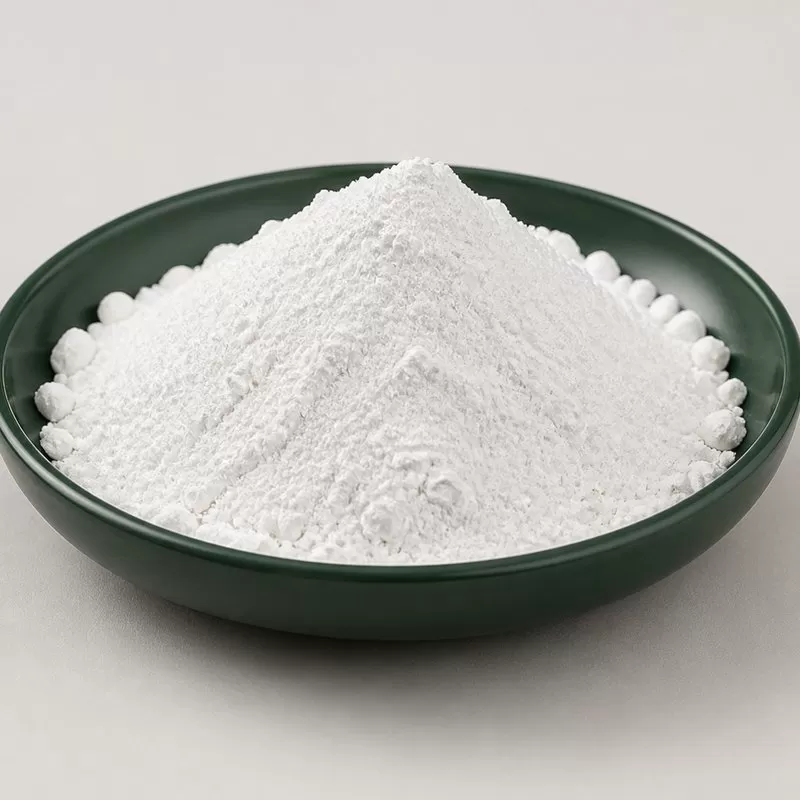
Selection Criteria for Industrial Sourcing
When sourcing aluminum tripolyphosphate for industrial coating manufacturing, several technical parameters must be verified to ensure consistent performance. Xinsheng focuses on the standardization of these parameters to meet the strict requirements of international paint manufacturers.
| Technical Parameter | Standard Range | Influence on Paint Formulation |
|---|---|---|
| $\text{P}_2\text{O}_5$ Content (%) | 35.0 – 45.0 | Directly correlates with the chemical activity and passivating capability of the pigment. |
| pH Value (10% suspension) | 5.5 – 7.5 | Ensures compatibility with both acid-sensitive and alkali-sensitive resin systems. |
| Oil Absorption (g/100g) | 30 – 45 | Determines the amount of binder required and influences the final viscosity of the paint. |
| Water Soluble Matter (%) | ≤ 1.5 | Low values are essential to minimize the risk of osmotic blistering in humid environments. |
| Average Particle Size ($D_{50}$, μm) | 2.0 – 8.0 | Affects dispersion efficiency, Hegman grind gauge readings, and final film smoothness. |
From a manufacturing perspective, ensuring consistency in these specifications from batch to batch is vital. Variations in pH or particle size can alter the rheology of the paint, leading to application difficulties or inconsistent dry film properties.
Frequently Asked Questions
Q1: What is the primary role of aluminum tripolyphosphate in industrial primers?
A1: It functions as an active, non-toxic anti-corrosive pigment. It slowly dissolves in the presence of moisture to release tripolyphosphate ions, which react with the metal substrate to form a protective passivation layer, inhibiting electrochemical corrosion.
Q2: Can aluminum tripolyphosphate completely replace zinc chromate?
A2: Yes, it is widely used as a direct, environmentally compliant replacement for toxic zinc chromate pigments. While the chemistry differs, when properly formulated with appropriate barrier pigments, it offers comparable long-term corrosion protection in salt spray testing.
Q3: How does this pigment perform in waterborne vs. solvent-borne coatings?
A3: It performs well in both systems. However, for waterborne coatings, modified or treated grades are often preferred to ensure high stability, prevent paint thickening during storage, and provide effective protection against flash rust.
Q4: Why is the water-soluble matter content of this pigment kept low?
A4: Keeping the water-soluble matter low is necessary to prevent osmotic blistering. High concentrations of soluble salts draw moisture through the cured coating film, creating pressure pockets that damage coating adhesion and lead to premature failure.
Q5: What resin systems are most compatible with aluminum tripolyphosphate?
A5: It shows broad compatibility with a variety of binder systems, including epoxy, alkyd, polyurethane, acrylic, and polyester resins. It is stable and does not cause unwanted gelation in these systems when standard formulation guidelines are followed.
Technical Collaboration and Inquiries
Selecting the appropriate grade of aluminum tripolyphosphate depends heavily on your specific resin chemistry, VOC requirements, and target exposure environments. Xinsheng manufactures a range of high-purity, chemically stable anti-corrosive pigments designed to meet modern industrial and environmental standards.
Our technical team is available to assist you with formulation adjustments, particle size selection, and compatibility testing. If you are looking to improve the durability of your protective coatings or transition away from heavy-metal-based pigments, please contact us with your technical specifications and application requirements. We look forward to providing the reliable material solutions your products demand.