
The formulation of heavy-duty anticorrosive coatings relies heavily on the physicochemical properties of the active pigments incorporated into the resin matrix. As environmental regulations phase out hexavalent chromium and lead-based inhibitors, orthophosphates have emerged as the primary defense mechanism against metallic oxidation. Sourcing these materials requires careful vetting, as the purity, crystalline structure, and particle size distribution directly influence the salt spray resistance of the final primer. Partnering with an experienced zinc phosphate supplier guarantees that these specific metrics remain consistent across multiple production batches, preventing unexpected formulation failures on the factory floor.
Transitioning from toxic legacy inhibitors to modern phosphate-based alternatives demands a rigorous understanding of molecular interactions at the substrate interface. Coating manufacturers face the daily challenge of balancing anticorrosive efficacy with stringent volatile organic compound (VOC) limits. Resolving these challenges begins with raw material selection. Working with a dedicated manufacturing partner like Xinsheng ensures that the pigments integrated into epoxy, polyurethane, or acrylic systems meet exact international standards for both performance and environmental compliance.
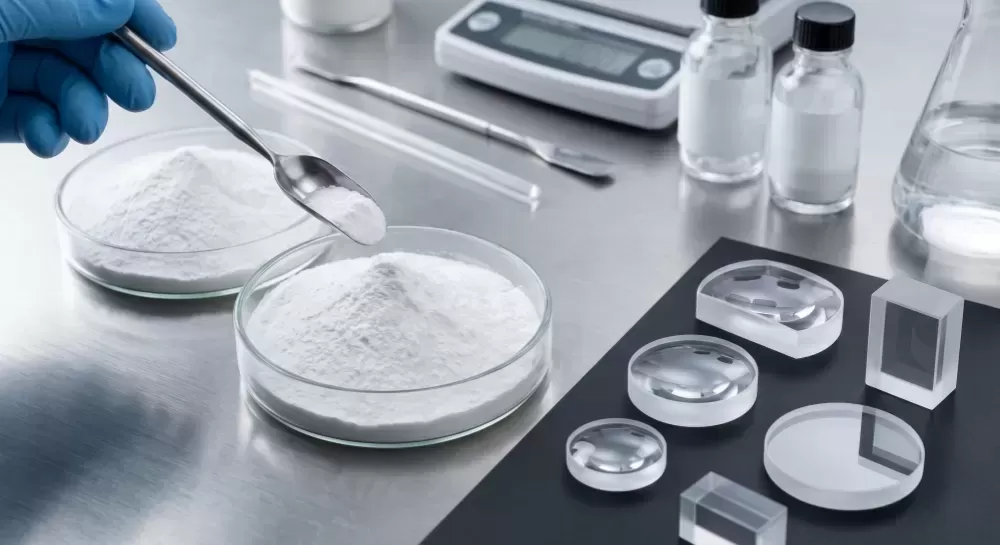
The Chemical Mechanics of Phosphatization in Anticorrosion Systems
To fully grasp why pigment specifications matter, one must examine the specific reactions occurring beneath a cured paint film. Zinc phosphate operates through a complex mechanism of anodic passivation. When moisture permeates the microscopic pores of a protective coating, it initiates the hydrolysis of the zinc phosphate particles suspended in the primer. This slow, continuous release of phosphate ions migrates toward the metallic substrate.
Upon reaching the iron surface, these ions react with iron (Fe2+) generated at the anodic sites during the initial stages of corrosion. The resulting chemical reaction forms an insoluble, dense layer of ferric phosphate and zinc-iron phosphate complexes. This newly formed protective layer strongly adheres to the metal lattice, effectively blocking further penetration of moisture, oxygen, and corrosive electrolytes like chloride ions. The effectiveness of this passivation heavily depends on the controlled solubility of the pigment. If the solubility is too high, the pigment depletes rapidly, leading to early coating failure. If the solubility is too low, insufficient phosphate ions are released to form the protective complex.
A proficient zinc phosphate supplier engineers the pigment's crystalline structure—typically maintaining the dihydrate or tetrahydrate form—to achieve this exact balance of controlled hydrolysis. The precision of the precipitation reaction during the manufacturing of the pigment dictates the subsequent release rate of ions, which is the primary determinant of long-term metal protection in highly corrosive environments.
Manufacturing Variables Distinguishing a Top-Tier Zinc Phosphate Supplier
The industrial synthesis of these pigments is a nuanced process. Variations in temperature, pH levels during precipitation, and drying times yield vastly different pigment grades. Manufacturers evaluating a zinc phosphate supplier must scrutinize several baseline physical parameters that dictate how the powder will behave inside a milling machine.
Particle size distribution, commonly measured by D50 and D90 values, ranks among the most important metrics. Standard grades typically feature a median particle size of around 10 to 15 microns. Advanced formulations demanding ultra-thin film applications, such as aerospace primers or automotive coil coatings, require micronized versions with D50 values below 5 microns. Finer particles offer a higher specific surface area, allowing for a more uniform distribution throughout the resin matrix and a closer packing density within the dry film.
Oil absorption is another metric directly impacted by the manufacturing process. Measured in grams of linseed oil per 100 grams of pigment, this value influences the viscosity of the liquid paint and determines the maximum pigment volume concentration (PVC) achievable before compromising the integrity of the resin binder. High oil absorption requires more resin to wet the pigment particles, which increases the formulation cost. Xinsheng calibrates the surface morphology of its zinc phosphate to maintain low to medium oil absorption, enabling coating chemists to formulate high-solids primers without unwanted viscosity spikes.
Heavy metal control remains a non-negotiable requirement for international trade. End-users in the European Union and North America demand strict adherence to REACH and RoHS directives. The production process must utilize high-purity zinc oxide and phosphoric acid to prevent contamination from lead, cadmium, or arsenic. Suppliers must provide detailed certificates of analysis (CoA) proving that impurities remain well below the strict threshold limits established by global regulatory bodies.
Application Matrix: Matching Pigment Grades to Resin Systems
The versatility of orthophosphate pigments allows their integration into a wide array of industrial binders. Their performance heavily depends on their chemical compatibility with the chosen resin system.
Solvent-Borne Epoxy and Polyurethane Primers
In heavy machinery, shipbuilding, and structural steel applications, two-component epoxy systems dominate the market. Zinc phosphate exhibits exceptional compatibility with bisphenol-A and bisphenol-F epoxies. The slightly acidic nature of the phosphate ions does not interfere with the amine or polyamide curing agents, ensuring a proper cross-linking density. When specifying raw materials for marine environments (classified under ISO 12944 as C4 or C5 corrosive categories), formulators frequently request high-purity grades from their zinc phosphate supplier to maximize the hours passed in ASTM B117 salt spray chambers.
Waterborne Acrylic and Alkyd Emulsions
The shift toward environmentally friendly, low-VOC coatings presents distinct formulation hurdles. Waterborne systems are highly susceptible to early flash rust—the immediate oxidation of the metal substrate upon application of the water-rich liquid paint. Standard zinc phosphate sometimes acts too slowly to prevent this instantaneous rusting. To combat this, advanced suppliers offer modified versions, such as aluminum-modified or organically treated zinc phosphate. These modified pigments provide a faster initial release of passivating ions, arresting flash rust while maintaining long-term barrier protection.
Coil Coatings and Baking Enamels
Coil coatings require paints that can withstand extreme physical deformation, such as bending and stamping, without cracking or losing adhesion. The pigments used in these polyester or melamine-cured systems must possess exceptional thermal stability and a very fine Hegman grind. Coarse particles create stress concentration points within the thin baked film, leading to micro-fractures. Micronized zinc phosphate grades distribute evenly, enhancing inter-coat adhesion and maintaining the flexibility of the painted metal sheet.
Resolving Common Paint Formulation Pain Points
Coating chemists frequently battle physical instability in their liquid formulations. Sedimentation, or hard settling, occurs when heavy pigment particles sink to the bottom of the storage can over time, forming a dense, un-stirrable mass. Given the high specific gravity of zinc phosphate (typically around 3.3 g/cm³), settling is a frequent defect.
Addressing this issue requires a dual approach involving both the formulator and the zinc phosphate supplier. Formulators employ anti-settling agents like fumed silica or bentonite clays to create a thixotropic network within the paint. The raw material supplier contributes by tightly controlling the particle size and surface characteristics of the pigment powder. A narrower particle size distribution devoid of oversized agglomerates significantly reduces the tendency for hard packing. Xinsheng ensures rigorous milling and classification protocols to eliminate coarse particles, aiding the formulator in achieving excellent in-can stability and prolonged shelf life.
Dispersion efficiency poses another challenge. Agglomerated pigment powders require extensive milling times in bead mills or basket mills to achieve the desired Hegman fineness. Extended milling consumes excessive energy and slows down production throughput. Selecting a pigment that wets out rapidly in the chosen solvent blend drastically reduces the mechanical energy required to achieve a stable dispersion. Proper moisture control during the pigment drying phase prevents particles from clumping together in the packaging, ensuring a free-flowing powder that disperses smoothly into the mill base.
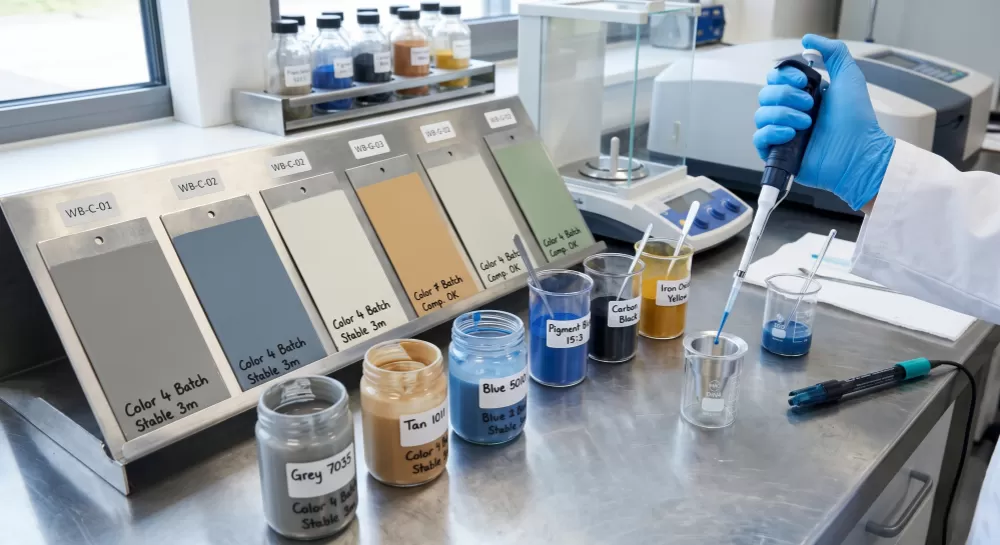
Evaluating Procurement Metrics and Global Supply Chain Stability
The chemical specifications of the pigment represent only one half of the procurement equation. The logistical capabilities and quality management systems of the manufacturer dictate the reliability of the supply chain. Formulating a high-performance coating requires extensive laboratory validation. Once a specific pigment is approved and written into the formulation, switching to an alternative source becomes an expensive and time-consuming process involving weeks of accelerated weathering tests.
Maintaining long-term continuity requires partnering with a zinc phosphate supplier operating under strict ISO 9001 quality management protocols. Batch-to-batch consistency ensures that color, tinting strength, and specific gravity remain uniform, preventing the need for formulators to adjust their recipes for every new delivery. Packaging also plays a significant role in maintaining raw material integrity. High-quality moisture barrier bags or specialized bulk bags (FIBCs) protect the hygroscopic powders from absorbing ambient humidity during oceanic transit. Elevated moisture content in the powder can trigger premature cross-linking in moisture-cured urethane systems or cause severe agglomeration before the bag is even opened.
Industrial scale and production capacity must align with the buyer's projected growth. A reliable partner like Xinsheng maintains sufficient manufacturing output to absorb sudden spikes in demand, preventing factory downtime for the coating manufacturer. Transparent documentation, including accurate Material Safety Data Sheets (MSDS) and regulatory compliance declarations, expedites customs clearance and ensures the finished paint meets local environmental legislation.
Frequently Asked Questions
Q1: What is the primary advantage of using zinc phosphate over
traditional zinc chromate?
A1: The main advantage lies in
environmental and occupational safety. Hexavalent chromium is highly toxic and
carcinogenic, leading to severe regulatory restrictions worldwide. Zinc
phosphate provides effective anodic passivation and substrate adhesion without
the severe health and environmental hazards associated with chromates, making it
globally compliant for industrial applications.
Q2: How does particle size distribution affect the performance of an
epoxy primer?
A2: Particle size directly impacts the packing density
and specific surface area within the dry film. Finer particles (D50 under 5
microns) offer better dispersion, smoother film appearance, and higher
reactivity due to increased surface area, which enhances early rust protection.
Coarser particles may lead to micro-voids in thin films, compromising the
barrier effect.
Q3: Can standard zinc phosphate be used in waterborne acrylic
emulsions?
A3: While standard grades can be used, they sometimes
lack the rapid ion release needed to prevent early flash rust in water-based
systems. For waterborne emulsions, modified versions (such as aluminum or
molybdate-modified zinc phosphate) are highly recommended, as they offer
accelerated initial passivation to protect the metal during the drying
phase.
Q4: How does Xinsheng ensure batch-to-batch consistency in its
manufacturing process?
A4: Consistency is achieved through automated
control of the precipitation reaction, precise temperature regulation, and
strict pH monitoring. Following synthesis, the drying and milling stages are
carefully calibrated. Every batch undergoes rigorous laboratory testing for
particle size, oil absorption, and chemical purity before receiving a
Certificate of Analysis.
Q5: What are the standard packaging options for bulk industrial
orders?
A5: To protect the integrity of the material during global
transit, the standard packaging typically consists of 25 kg multi-wall paper
bags with inner plastic moisture barriers. For larger manufacturing operations,
500 kg or 1000 kg bulk bags (FIBCs) are available to facilitate automated
dispensing and reduce handling labor.
Request a Technical Consultation and Quotation
Formulating highly durable protective coatings requires precision raw materials engineered to exacting specifications. Submit your formulation requirements, target resin systems, and estimated annual volumes to our commercial team for a detailed quotation, material data sheets, and representative samples tailored to your manufacturing process.
Inquiry: Contact Xinsheng today to discuss your specific pigment requirements and secure a stable, compliant supply chain for your industrial coatings production.