
In the field of industrial metal protection, selecting the right chemical components determines the longevity and durability of protective coatings. Zinc phosphate has long served as a standard active anticorrosive pigment, widely used in both primer formulations and metal surface pretreatment lines. When preparing protective coatings or managing metal pretreatment operations, understanding the variables that govern zinc phosphate ph is key to achieving long-term corrosion resistance.
The chemical stability, solubility, and reactivity of zinc phosphate are highly dependent on the pH environment in which it operates. This variable influences how the pigment behaves in the wet paint state, how it responds during storage, and how it reacts when corrosive moisture penetrates the dry paint film. For industrial chemical manufacturers and coating formulators, managing this value is a primary factor in preventing product degradation and ensuring consistent performance on steel, iron, and aluminum substrates.
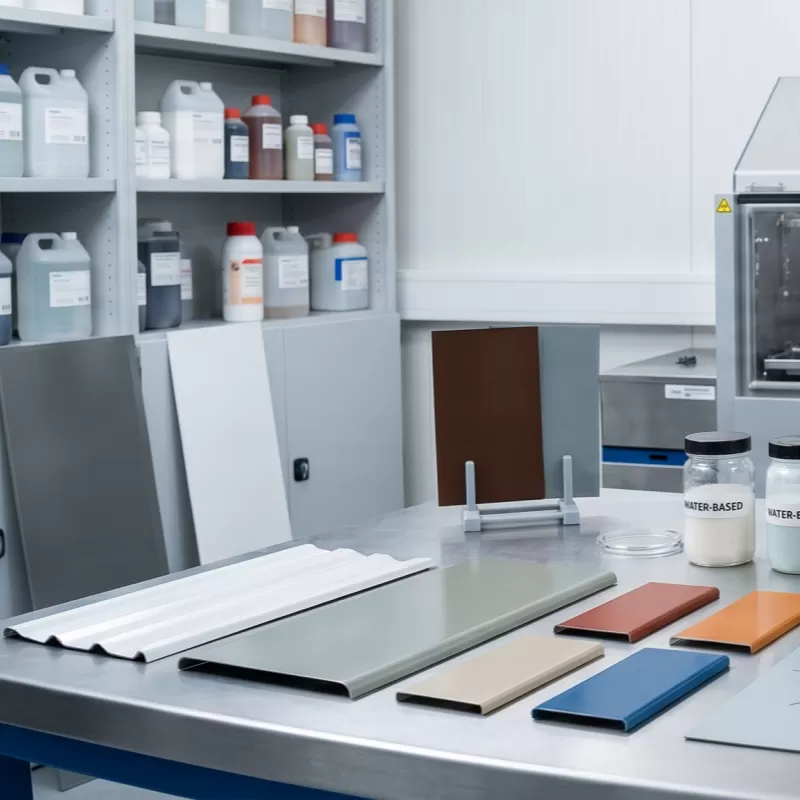
The Chemical Foundations of Zinc Phosphate and Its Solubility
Zinc phosphate, chemically represented as Zn3(PO4)2, often exists in its dihydrate or tetrahydrate crystal forms. In its pure, dry state, the compound is nearly insoluble in water. However, when introduced into aqueous environments or exposed to moisture under a paint film, its solubility is governed by the surrounding pH level. The zinc phosphate ph value determined during water extraction reflects the chemical balance of the pigment, indicating the presence of residual soluble ions or unreacted manufacturing precursors.
The dissolution of zinc phosphate in water occurs through a series of chemical equilibria. At neutral pH levels, the solubility product constant (Ksp) remains low, meaning very few zinc or phosphate ions dissociate into the solution. However, when the environment shifts toward acidity, orthophosphate ions undergo protonation, converting into more soluble hydrogen phosphate (HPO42-) and dihydrogen phosphate (H2PO4-) species. This increased solubility is vital for the pigment's protective action, as it allows the release of active zinc and phosphate ions to form a passive, protective layer on the metal surface.
Conversely, in highly alkaline environments, zinc phosphate can also dissolve due to the formation of soluble zincate complexes. This amphoteric nature means that the chemical stability of the pigment is highly sensitive to both ends of the pH scale. Manufacturing processes at [Xinsheng] focus on maintaining a consistent, near-neutral pH range in the finished pigment to ensure that premature dissolution does not occur during paint formulation or storage.
Role in Industrial Pretreatment and Phosphating Baths
In the automotive and industrial machinery sectors, metal surfaces undergo a phosphating process prior to painting. This step creates a microcrystalline layer that improves subsequent paint adhesion and provides secondary corrosion protection. During the phosphating process, maintaining the zinc phosphate ph within a narrow acidic range is necessary to facilitate the deposition of microcrystalline phosphate layers on the substrate.
A typical phosphating bath operates under acidic conditions, usually maintained between a pH of 2.5 and 3.5. This controlled acidity is required for the initial pickling reaction, where the acid attacks the metal substrate, releasing iron, zinc, or manganese ions into the boundary layer. As the acid is consumed at the metal interface, the local pH increases, causing the solubility limit of the zinc phosphate in the bath to be exceeded. This triggers the precipitation of crystalline hopeite, Zn3(PO4)2·4H2O, or phosphophyllite, FeZn2(PO4)2·4H2O, directly onto the metal surface.
Several operational challenges arise if the bath chemistry deviates from these specifications:
Excessive Acidity (Low pH): If the bath pH remains too low, the pickling reaction dominates, causing excessive metal loss and preventing the crystallization of a continuous phosphate film. This results in poor paint adhesion and inadequate corrosion protection.
Insufficient Acidity (High pH): If the pH rises too high, premature precipitation occurs in the bulk solution rather than at the metal interface. This leads to the formation of excessive sludge, which clogs nozzles, wastes raw materials, and produces a powdery, poorly adhered coating on the metal.
Imbalanced Free-to-Total Acid Ratio: The ratio of free acid to total acid must be monitored constantly. An imbalance directly affects the dissolution kinetics of the zinc phosphate, leading to inconsistent crystal sizes and compromised paint bonding.
Formulation Challenges in Paint and Coating Systems
When zinc phosphate is incorporated directly into paint formulations as an anticorrosive pigment, its chemical properties must be compatible with the binder matrix. In water-borne systems, drift in the zinc phosphate ph can lead to binder destabilization and viscosity changes. Water-borne resins, such as acrylic or epoxy emulsions, are typically stabilized at a specific pH range, often between 8.0 and 9.0, using volatile amines.
If the zinc phosphate pigment has an acidic extractable pH, it can neutralize these stabilizing amines when dispersed into the paint. This neutralization leads to a localized reduction in pH, which can cause the polymer particles to coagulate, resulting in grit formation, phase separation, or complete gelling of the paint batch during storage. To prevent these formulation issues, manufacturers must ensure that the pigment exhibits a stable, near-neutral pH when suspended in water.
In solvent-borne coatings, while the threat of emulsion coagulation is absent, the pigment's pH can still affect the curing kinetics of acid-catalyzed systems or the efficiency of anti-settling additives. Some organoclay rheology modifiers rely on specific polar activators and are sensitive to acidic or basic shifts. A highly acidic pigment can interfere with these additives, leading to pigment settling, syneresis, or poor sag resistance during application.
The Passive Protection Mechanism and Underfilm Buffering
The protective function of zinc phosphate becomes active when moisture and corrosive agents penetrate the dried paint film. Under the coating, localized electrochemical cells form on the steel substrate. The anodic reaction involves the dissolution of iron, which generates hydrogen ions and lowers the local pH. Meanwhile, the cathodic reaction reduces oxygen, generating hydroxyl ions and increasing the local pH.
This is where the buffering action associated with the zinc phosphate ph plays a protective role. In the acidic anodic areas, the zinc phosphate slowly dissolves, releasing phosphate ions. These ions react with the newly formed iron ions to precipitate an insoluble iron-phosphate barrier layer, which passivates the anode. In the alkaline cathodic areas, the zinc ions react with the hydroxyl ions to form zinc hydroxide, which precipitates and blocks the cathodic sites. This dual-action buffering helps stabilize the local chemical environment under the film, reducing the rate of cathodic delamination and preventing the spread of corrosion from scratches or defects.
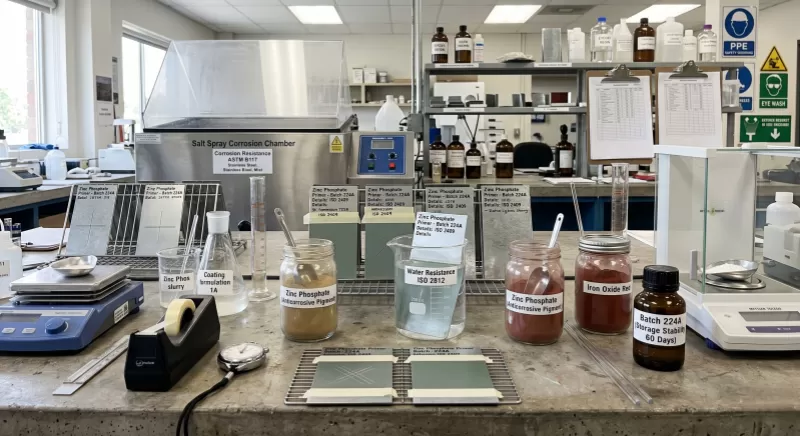
Manufacturing Standards and Quality Control at [Xinsheng]
To ensure that zinc phosphate performs reliably in both pretreatment baths and paint formulations, strict control of the manufacturing process is required. [Xinsheng] employs precise synthesis routes where high-purity zinc sources are reacted with phosphoric acid under controlled temperature, concentration, and agitation parameters. These variables directly influence the crystal structure, particle size distribution, and final pH of the pigment.
After the precipitation reaction, the slurry undergoes washing steps to remove soluble byproducts, such as sodium or chloride ions, and any unreacted phosphoric acid. Residual soluble salts can increase the electrical conductivity of the paint film, promoting osmotic blistering when the coating is exposed to humid environments. Residual acid will lower the pigment's pH, leading to the formulation challenges discussed earlier. [Xinsheng] utilizes standardized testing methods, such as ISO 787-9, to measure the pH of the aqueous suspension of each production batch, verifying that the values remain within the specified neutral range before packaging and delivery.
Frequently Asked Questions
Q1: Why is the water extract pH of zinc phosphate pigment important
for paint formulators?
A1: The water extract pH indicates the
chemical neutrality of the pigment. A neutral pH ensures that the pigment does
not react with the paint binder, which is highly important for water-borne
systems where acidic pigments can cause emulsion destabilization, coagulation,
or viscosity drift during storage.
Q2: What is the recommended pH range for a zinc phosphating bath in
metal pretreatment?
A2: The operational pH of a zinc phosphating
bath is typically maintained between 2.5 and 3.5. This acidic environment allows
for the controlled etching of the metal surface, which is necessary to trigger
the localized precipitation of protective zinc phosphate crystals.
Q3: How does zinc phosphate assist in buffering pH changes under a
damaged paint film?
A3: When moisture penetrates a paint film,
corrosion creates acidic anodic zones and alkaline cathodic zones. Zinc
phosphate dissolves slowly in these localized areas, releasing ions that react
to form insoluble barrier films, thereby buffering the pH and slowing down the
corrosion process.
Q4: Does the particle size of zinc phosphate influence its chemical
reactivity and pH stability?
A4: Yes, finer particle sizes increase
the specific surface area of the pigment. This leads to more rapid dissolution
and reaction kinetics when exposed to corrosive environments, making precise
control of the pigment's pH and solubility characteristics even more
significant.
Q5: How does [Xinsheng] ensure consistent pH values across different
production batches?
A5: [Xinsheng] maintains consistent pH values by
controlling the raw material ratios during precipitation, utilizing thorough
multi-stage washing processes to remove soluble impurities, and performing
systematic batch testing in accordance with ISO 787-9 standards.
Inquiry for Technical Support and Product Samples
Selecting the correct grade of zinc phosphate with a stable pH profile is an important step in developing high-performance primers and maintaining reliable surface pretreatment lines. [Xinsheng] manufactures a range of high-purity zinc phosphate pigments designed to meet the requirements of modern coating systems. For detailed technical specifications, safety data sheets, or to request product samples for your laboratory evaluations, please contact our technical sales team to submit your inquiry.