
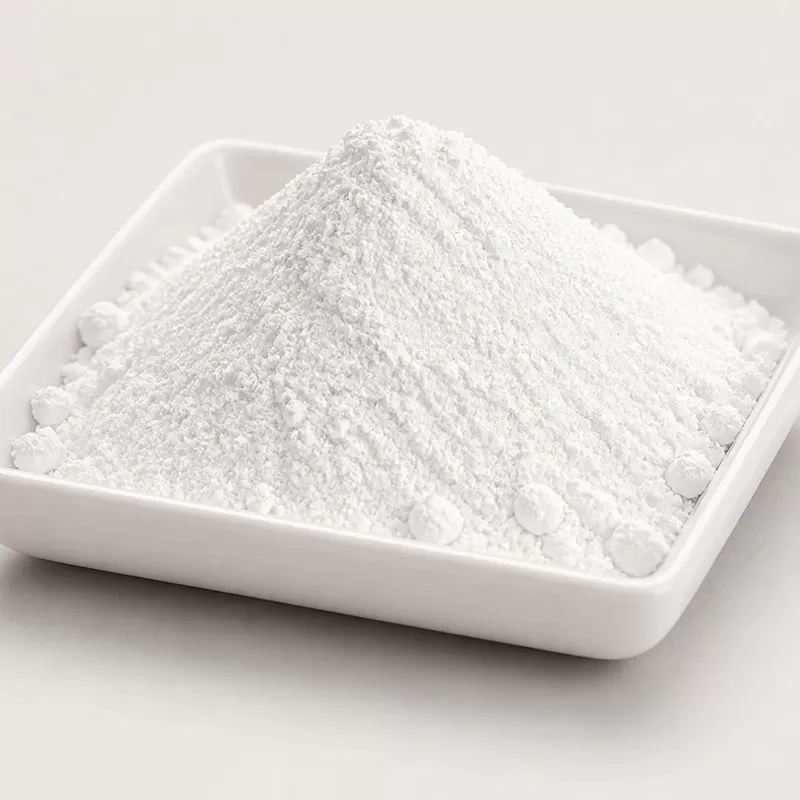
The prevention of metal oxidation remains a primary focus in the development of industrial protective coatings. Historically, systems relied on toxic lead and chromate-based pigments to passivate metal surfaces. Environmental regulations and industrial safety standards have led to a transition toward non-toxic, highly effective alternatives. Among these, zinc phosphate zp 10 has emerged as a widely adopted active pigment for rust prevention. Prepared as a white crystalline powder, this compound provides durable protection to ferrous metals without the toxicity profile associated with earlier heavy-metal solutions.
For manufacturers like Xinsheng, supplying high-quality zinc phosphate zp 10 involves precise control over physical and chemical parameters to meet the demanding requirements of global coating formulators. This study examines the chemical behavior, formulation integration, and performance testing of this pigment in modern protective systems.
Chemical Mechanisms of Zinc Phosphate ZP 10
The anti-corrosive efficacy of zinc phosphate zp 10 relies on chemical interactions at the steel-primer interface. Chemically designated as zinc orthophosphate dihydrate, this pigment operates through a controlled dissolution process. When water and dissolved oxygen diffuse through the cured organic binder, they contact the pigment particles dispersed within the matrix. The pigment undergoes low-rate hydrolysis, slowly releasing zinc ions and phosphate ions into the micro-aqueous film at the substrate surface.
The liberated phosphate ions migrate toward the anode of the microscopic corrosion cell. Here, they react with dissolved iron species formed during the early stages of oxidation. This reaction precipitates an insoluble, dense layer of iron-zinc phosphate complexes on the bare steel surface, establishing passivation. The cathodic reaction, which involves the reduction of oxygen to hydroxide ions, is also affected. The presence of zinc ions helps form zinc hydroxide precipitates in local areas of high pH, slowing down electron transfer at cathodic sites.
The chemical process can be structured into several sequential stages:
Moisture Ingress: Water vapor and dissolved oxygen penetrate the organic polymer film.
Pigment Dissolution: The zinc phosphate zp 10 slowly releases zinc and phosphate ions into the localized micro-environment.
Substrate Passivation: Phosphate ions react with iron oxides and bare iron at the metal-primer interface.
Insoluble Crystal Growth: A microscopic layer of phosphophyllite forms, establishing a physical and electrochemical barrier against aggressive species like chloride ions.
This resulting protective layer blocks the movement of aggressive environmental ions, particularly chloride and sulfate ions, which would otherwise accelerate steel degradation. By forming a passive inorganic barrier directly on the substrate, zinc phosphate zp 10 minimizes the occurrence of under-film corrosion, preventing rust creep from mechanical scratches or physical damage to the coating.
Physical Parameters and Particle Size
Incorporating zinc phosphate zp 10 into paint formulations requires attention to physical parameters that govern paint manufacturing and dry film performance. The specific gravity of this pigment ranges between 3.3 and 3.5 g/cm³, providing a balanced density that allows for manageable settling behavior during storage when compared to heavier metal oxides.
Another parameter of high significance is the oil absorption value, which typically falls between 18 and 22 grams of linseed oil per 100 grams of pigment. A low oil absorption value indicates that the pigment requires minimal binder to wet its surface completely. Consequently, formulators can maintain high pigment volume concentrations in primer systems without causing an exponential rise in viscosity, ensuring proper application properties during spraying or brushing.
Particle size distribution is a key parameter influencing the final film quality:
Film Homogeneity: Finely milled grades with a d50 value under 5 microns allow for uniform distribution throughout the binder matrix, resulting in a homogenous film structure.
Surface Quality: Uniform particle size prevents the formation of localized weak spots or agglomerates in thin-film systems, such as automotive OEM coatings and coil coatings.
Barrier Density: Controlled particle sizing increases the packaging density of the dry coating film, reinforcing the physical barrier against moisture penetration.
Xinsheng employs advanced milling processes to maintain these consistent particle size distributions of zinc phosphate zp 10. This control ensures that industrial manufacturers experience minimal batch-to-batch variation, leading to stable grind levels and efficient production cycles.
Resin Matrix Compatibility
The versatility of zinc phosphate zp 10 is demonstrated by its compatibility with a wide array of solventborne and waterborne resin systems. Because it exhibits a near-neutral aqueous extract pH (typically between 6.0 and 8.0), the pigment does not cause stability issues in acid-sensitive or alkali-sensitive polymer networks.
In two-component epoxy-polyamide primers, which are standard for heavy machinery and marine environments, the pigment acts in synergy with the highly crosslinked epoxy network. The robust barrier properties of the epoxy combined with the chemical passivation of zinc phosphate zp 10 yield high resistance to industrial environments. In alkyd and modified alkyd resin systems, the pigment interacts slowly with the carboxyl groups of the binder. This interaction leads to the formation of metallic soaps over time, which increases the cohesive strength of the cured film and improves adhesion to steel substrates.
For waterborne coatings, the application of zinc phosphate zp 10 requires specific handling. High levels of free water in the liquid paint can cause premature dissolution of the pigment, which may lead to viscosity instability or gelling. To prevent this, formulators often employ surface-treated versions of the pigment or select dedicated dispersing agents that physically isolate the particles until the film cures. The low natural solubility of the zinc phosphate zp 10 grade is useful here, as it limits the concentration of free ions in the liquid phase during storage.
Resolving Industrial Formulation Challenges
Industrial coating applications often take place under less-than-ideal field conditions. A frequent challenge is the application of protective primers over manually prepared or poorly cleaned metal surfaces. Residual rust and contaminants can lead to premature coating failure. The chemical action of zinc phosphate zp 10 assists in mitigating this challenge by reacting with remaining iron oxides on the surface, converting them into stable phosphate phases and delaying the formation of rust under the coating.
Another challenge in modern formulation is compliance with environmental regulations without sacrificing salt-spray performance. Traditional chromates provided protection but are restricted due to toxicity. Replacing these inhibitors with zinc phosphate zp 10 offers a regulatory-compliant solution for global markets, allowing companies to distribute products internationally without environmental restrictions.
Pigment settling during transportation and storage also represents a concern for industrial paint manufacturers. Due to its balanced density and refined particle size, zinc phosphate zp 10 remains stable in suspension when paired with standard rheological additives such as organoclays, fumed silica, or modified hydrogenated oils. Xinsheng assists formulators by providing analytical data on pigment settling trends and recommended compound balances to ensure long-term shelf stability of the paint.
Testing and Performance Evaluation
Evaluating the performance of coatings containing zinc phosphate zp 10 involves standardized testing methods designed to simulate aggressive environments. The neutral salt spray test (ASTM B117) is the standard method used to evaluate anti-corrosive efficiency. Coated panels with a controlled scratch (scribe) are exposed to a continuous warm saline fog. Over several hundred or thousand hours of exposure, primers containing zinc phosphate zp 10 are monitored for creep from the scribe. Well-formulated epoxy primers utilizing this pigment regularly pass the 1000-hour mark with minimal sub-film corrosion.
In addition to salt spray testing, Electrochemical Impedance Spectroscopy (EIS) is used to monitor coating health non-destructively. EIS measures the total electrical resistance of the coating over time. High resistance values indicate that the coating remains impermeable to moisture and ions. Primers containing zinc phosphate zp 10 consistently maintain high impedance values during exposure, proving the long-term integrity of the barrier and the active passivation of the pigment.
Physical adhesion tests, such as cross-cut testing (ASTM D3359), are performed to evaluate wet adhesion. By passivating the metal and forming stable complexes, the pigment prevents moisture from displacing the binder from the metal surface, minimizing the risk of blistering and delamination under high humidity.
Procurement and Custom Options from Xinsheng
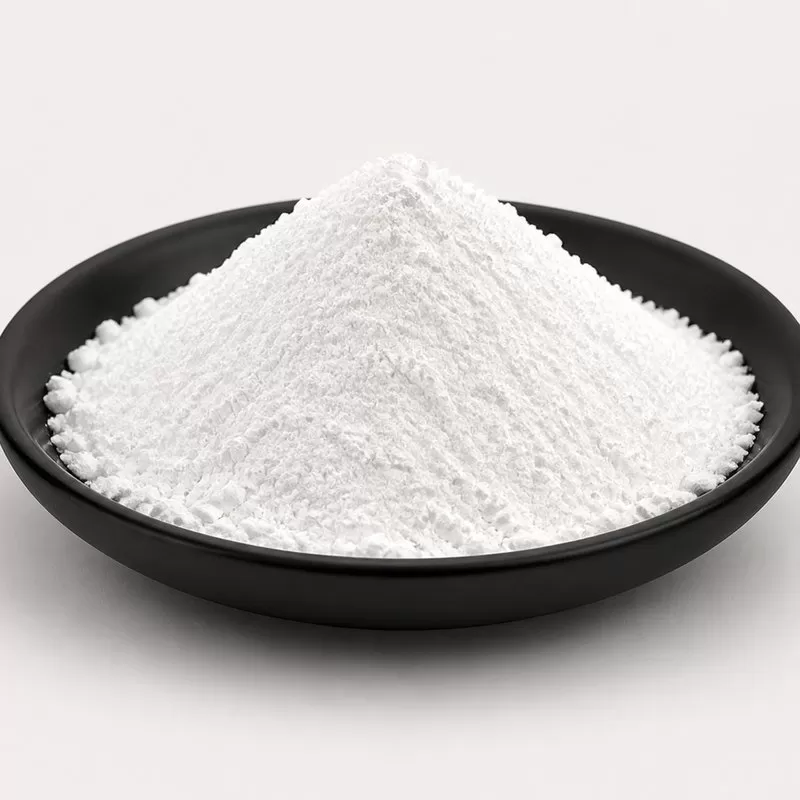
To ensure consistent performance in anti-corrosive coatings, industrial manufacturers must secure raw materials of verified purity and particle consistency. Xinsheng is a specialized supplier of inorganic pigments, offering zinc phosphate zp 10 manufactured under rigorous quality management systems. Our pigment is produced using high-purity raw materials to guarantee low water-soluble salt content, which is a key factor in preventing early blister formation in industrial coatings.
We offer diverse packaging options, including 25kg multi-layer paper bags and larger bulk bags, to accommodate different production scales. For manufacturers with specific requirements, Xinsheng can adjust grinding parameters to deliver customized particle size distributions optimized for thin-film applications.
Inquiries and Collaboration
Developing high-performance industrial coatings requires reliable raw materials and precise formulating. If you are looking to update your anti-corrosive primer formulations or require raw materials for upcoming projects, our team is available to help. Xinsheng provides comprehensive documentation, safety data sheets, and representative samples of zinc phosphate zp 10 for laboratory validation. To discuss pricing, delivery schedules, or to request a product sample, please contact our sales department. We are committed to supporting your manufacturing processes with dependable pigment solutions.
Frequently Asked Questions
Q1: What is the primary chemical compound in zinc phosphate zp 10?
A1: Zinc phosphate zp 10 is composed of zinc orthophosphate dihydrate, with the chemical formula Zn3(PO4)2·2H2O. It is a synthesized crystalline powder designed for use as a non-toxic rust-inhibitive pigment in primers.
Q2: How does zinc phosphate zp 10 prevent rust on steel surfaces?
A2: It operates by releasing phosphate ions when moisture penetrates the coating. These ions react with iron at the substrate surface to form an insoluble, passivating layer of iron-zinc phosphate, which blocks further electrochemical oxidation.
Q3: Can zinc phosphate zp 10 be used in waterborne primer systems?
A3: Yes, it is compatible with waterborne systems. Formulators should manage the formulation pH and use suitable wetting agents to prevent premature dissolution of the pigment in the aqueous phase.
Q4: What is the typical oil absorption value of zinc phosphate zp 10, and why does it matter?
A4: The oil absorption value is typically between 18 and 22 grams of oil per 100 grams of pigment. This low range allows formulators to use higher pigment loading without significantly increasing paint viscosity.
Q5: Does zinc phosphate zp 10 withstand high-temperature baking cycles?
A5: Yes, the compound is thermally stable, often resisting temperatures up to 250°C and higher, making it suitable for powder coatings and industrial coil coatings that require high-temperature curing.