
Aluminum orthophosphate, identified by the molecular formula AlPO4 and CAS registry number 7784-30-7, represents a critical inorganic compound within refractory engineering, catalyst manufacture, anti-corrosive pigments, and high-performance ceramic systems. Navigating the regulatory landscape and workplace handling standards for this material requires examining the comprehensive aluminum phosphate msds to evaluate its chemical reactivity, toxicological thresholds, storage stability, and transportation classifications. In high-output manufacturing environments, understanding these foundational baseline parameters ensures uniform formulation behavior while maintaining full compliance with international occupational safety authorities, including the Globally Harmonized System of Classification and Labelling of Chemicals (GHS), OSHA, and European REACH frameworks.
Modern production facilities require uncompromised chemical purity and strictly documented physical characteristics. Industrial suppliers such as Xinsheng provide specialized technical documentation alongside baseline certificates of analysis to ensure processing units maintain precise stoichiometric balance. Evaluating a material safety sheet involves more than verifying statutory regulatory status; it necessitates exploring crystallographic transformations, surface area metrics, moisture sorption kinetics, and decomposition kinetics under extreme thermal loads.
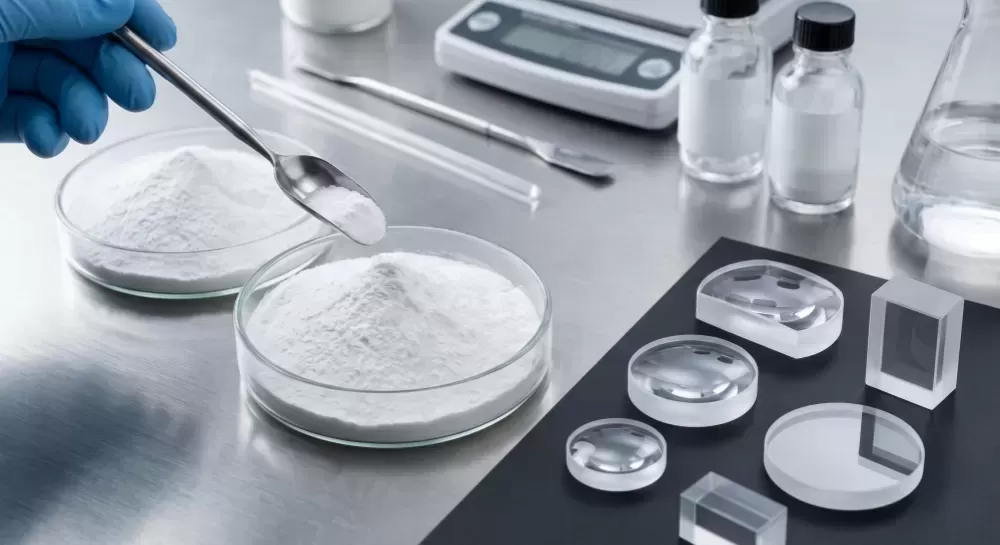
Physicochemical Identity and Crystallographic Fundamentals
Aluminum phosphate exhibits structural behavior that closely parallels silicon dioxide (SiO2). The compound displays isostructural polymorphism, demonstrating phase transitions analogous to quartz, tridymite, and cristobalite networks. The aluminum-oxygen-phosphorus alternating coordination tetrahedron provides exceptional thermal stability and chemical inertness under neutral and mildly acidic conditions.
Chemical Formula: AlPO4
Molecular Weight: 121.95 g/mol
CAS Number: 7784-30-7
EINECS Number: 232-056-9
Physical State: White crystalline or amorphous powder / Dense liquid (for aqueous acidic binder solutions)
Specific Gravity / Density: 2.56 g/cm³ at 20°C
Melting Point: Exceeds 1800°C (undergoes sub-solidus phase transition rather than simple congruency)
Solubility: Insoluble in pure water; sparingly soluble in concentrated mineral acids; reactive in hot, concentrated alkaline solutions
The crystallographic analog of quartz, known mineralogically as berlinite, transitions at approximately 586°C into high-temperature phases. This structural feature underpins its deployment as a high-integrity binder in monolithic refractories, refractory castables, and heat-resistant structural mortars. Under high thermal exposure, the crystal lattice maintains dimensional stability, suppressing spalling and localized mechanical failure across kiln linings and furnace hearths.
Critical Parameters within the Aluminum Phosphate MSDS
Safety data documentation translates crystalline and thermodynamic realities into workplace protocols, toxicological limits, and transportation baselines. Interpreting an aluminum phosphate msds mandates thorough review of specific operational sections to align internal processing protocols with standardized handling benchmarks.
Section 2: Hazard Identification and GHS Classification
In its standard solid, pure orthophosphate state, aluminum phosphate does not meet the criteria for severe physical or environmental classification under GHS Rev. 8. It presents lower systemic toxicity compared to soluble aluminum compounds. Primary occupational classifications focus on localized mechanical irritation:
Skin Irritation: Category 2 (Causes mild skin irritation under prolonged direct contact)
Eye Irritation: Category 2A (Causes serious eye irritation via particulate abrasion or slight chemical action)
Specific Target Organ Toxicity - Single Exposure: Category 3 (May cause respiratory irritation upon inhalation of airborne dust)
Special consideration is required when handling liquid binder variants. These formulations frequently incorporate free orthophosphoric acid (H3PO4), lowering the pH below 2.0. Consequently, liquid grades fall under Corrosive to Metals (Category 1) and Skin Corrosion/Irritation (Category 1B), demanding acid-resistant handling equipment.
Section 8: Exposure Controls and Industrial Hygiene Benchmarks
Managing particulate evolution remains the standard priority when processing dry aluminum phosphate powders. Regulatory exposure boundaries are calculated based on general nuisance dust metrics and specific insoluble aluminum fractions:
OSHA Permissible Exposure Limit (PEL): 15 mg/m³ for total dust; 5 mg/m³ for the respirable fraction (8-hour TWA)
ACGIH Threshold Limit Value (TLV): 1 mg/m³ (respirable particulate mass) designated for aluminum insoluble compounds
Engineering Controls: Enclosed transfer chutes, local exhaust ventilation at feeding hoppers, and negative-pressure dust extraction units equipped with HEPA filtration media
Personal Protective Equipment (PPE): NIOSH-certified N95 or P100 particulate respirators, chemical safety goggles equipped with indirect ventilation, nitrile gloves (minimum thickness 0.11 mm), and antistatic operational coveralls
Section 10: Chemical Stability and Thermal Degradation Paths
Aluminum phosphate demonstrates superior chemical passivity under ambient atmospheric storage. It exhibits zero polymerization potential. Thermal decomposition occurs only under extreme temperatures far beyond standard manufacturing parameters, typically above 1400°C to 1600°C. Under these specialized conditions, thermal disassociation releases phosphorus pentoxide (P2O5) fumes, which hydrolyze immediately in atmospheric moisture to generate localized phosphoric acid mists.
Section 14 and 15: Transport Logistics and Regulatory Registration
Solid aluminum phosphate is non-regulated for commercial shipping routes, presenting no transport restrictions across international sea (IMDG), air (ICAO/IATA), or road (ADR/RID, US DOT) conduits. It is not categorized as a marine pollutant. The chemical entity maintains complete active registration across significant global registries, including the United States TSCA Inventory, European Union REACH, China IECSC, and Canadian DSL.
Industrial Applications and Processing Behavior
The unique attributes recorded across safety and technical sheets dictate the material's viability across diverse downstream industrial sectors. High-purity aluminum phosphate serves specific functions where standard silicates, aluminates, and organic matrices fall short.
Monolithic Refractories and High-Temperature Binders
Refractory applications depend on the compound's capacity to form cold-setting and heat-activated ceramic bonds. When combined with tabular alumina, bauxite, or silicon carbide aggregates, aluminum phosphate initiates chemical bonding at temperatures as low as 150°C to 500°C. This eliminates the curing delays associated with standard hydraulic calcium aluminate cements. The resultant matrix provides resilience against thermal shock, carbon monoxide disintegration, and erosive molten slag penetration. Xinsheng engineers high-density phosphate formulations that maintain structural integrity past 1750°C, providing the stability required by modern metallurgic vessels.
Anti-Corrosive and Passivating Surface Treatments
Coatings technology relies on condensed and orthophosphate matrices to build non-toxic anti-corrosive primer systems. Acting as an environmentally compatible alternative to hexavalent chromium, the phosphate anion interacts with underlying steel substrates, precipitating an ultra-thin, insoluble iron-aluminum-phosphate passivation layer. This chemical barrier prevents moisture ingress, suppresses chloride-induced electrolytic corrosion, and maintains long-term adhesion for high-solids polyurethane and epoxy topcoats.
Catalysis Substrates and Molecular Sieve Synthesis
Aluminophosphate (AlPO) molecular sieves constitute an essential family of non-zeolitic catalysts. Their crystalline lattices, composed of alternating AlO4 and PO4 units, provide precisely engineered pore diameters suitable for hydrocarbon isomerization, alkylation, and methanol-to-olefins (MTO) reactions. Processing requires pristine raw materials free of alkaline earth impurities and transit metal residues, maintaining absolute control over the catalytic active site density.
Synthesis Precision and Industrial Manufacturing Quality Control
Industrial synthesis of aluminum phosphate typically proceeds through the reaction of technical-grade aluminum hydroxide (gibbsite, Al(OH)3) with concentrated thermal-process phosphoric acid (H3PO4). The synthesis dynamic requires exacting stoichiometric control:
Al(OH)3 + H3PO4 → AlPO4 + 3 H2O
Variations in synthesis temperatures, digestion kinetics, and precipitation pH drastically alter the resulting particulate morphology. Fast precipitation produces amorphous, highly hygroscopic powders characterized by elevated specific surface areas. Conversely, hydrothermal digestion yielding crystalline berlinite phases displays low surface area, minimal chemical reactivity, and robust resistance to moisture absorption.
Manufacturers like Xinsheng maintain automated continuous crystallization lines to stabilize particle size distributions, keeping D50 values tightly clustered between 2.5 and 5.0 microns. Analytical verification involves X-ray fluorescence (XRF) to confirm the Al2O3 to P2O5 ratio, inductively coupled plasma mass spectrometry (ICP-MS) to regulate heavy metal traces (guaranteeing lead below 10 ppm and arsenic below 3 ppm), and laser diffraction to avoid uncontrolled particle agglomeration.
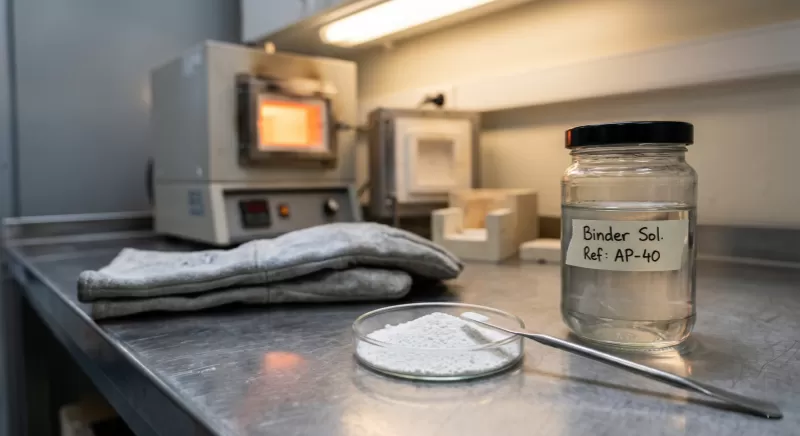
Bulk Packaging, Storage Hygiene, and Logistics Stability
Maintaining chemical stability throughout transoceanic logistics requires strict control over moisture ingress and physical compression. While anhydrous crystalline aluminum phosphate does not exhibit intense deliquescence, amorphous forms are susceptible to atmospheric water absorption, resulting in surface caking and reduced dispersion performance.
Standard Bulk Packaging: 25 kg multi-ply kraft paper sacks featuring inner heat-sealed polyethylene (PE) barrier linings; 1000 kg polypropylene flexible intermediate bulk containers (FIBC) with anti-static liners.
Warehouse Environmental Controls: Store in tightly sealed containers within dry, well-ventilated operational spaces. Maintain ambient relative humidity below 60% and temperature regimes between 10°C and 35°C to avoid consolidation within lower pallet layers.
Storage Separation: Segregate from strong caustic bases (such as concentrated sodium hydroxide), strong reducing agents, and halogenated compounds to prevent exothermic interactions.
Modern bulk logistics require synchronized documentation. Shipments arranged by Xinsheng include synchronized batch certificates of analysis alongside the standard aluminum phosphate msds, verifying that physical shipments directly match technical property parameters before unloading at client production facilities.
Frequently Asked Questions
How does amorphous aluminum phosphate differ from crystalline berlinite on a safety sheet?
Amorphous aluminum phosphate displays increased surface reactivity and minor solubility within specific physiological systems, resulting in tighter workplace dust monitoring compared to crystalline phases. Berlinite possesses higher mechanical hardness and thermal stability, presenting primarily as an inert nuisance dust that demands particulate extraction to preserve clean working environments.
What are the primary PPE protocols required when discharging dry powder bulk bags?
Bulk bag unloading generates localized dust clouds. Personnel should utilize particulate respirators (minimum NIOSH N95 classification), close-fitting safety goggles to avoid mechanical particulate abrasion, heavy-duty industrial nitrile or neoprene gloves, and antistatic uniforms. Operating the discharge through closed-system dust-tight iris valves connected to extraction ventilation mitigates exposure challenges.
Is aluminum phosphate classified as an environmental pollutant for ocean freight?
Pure aluminum phosphate is not categorized as a marine pollutant according to the International Maritime Dangerous Goods (IMDG) code. It exhibits extremely low acute toxicity toward aquatic organisms due to its low aqueous solubility. Industrial discharge into closed waterways must still be strictly avoided to prevent local phosphate accumulation and potential eutrophication anomalies.
What secondary compounds form during thermal degradation within kilns?
Under conventional processing up to 1200°C, the compound remains stable without volatile off-gassing. Beyond 1400°C, particularly under reducing atmospheres, gradual phase breakdown initiates, releasing gaseous phosphorus pentoxide (P2O5). This compound hydrolyzes upon contact with atmospheric moisture, forming dilute phosphoric acid aerosols within exhaust ducting.
How does the stoichiometry of acidic aluminum phosphate solutions change handling safety?
Acidic solutions contain non-neutralized free phosphoric acid, driving pH values between 1.0 and 2.5. This elevates the classification to Corrosive (Class 8 transport profile). Solid neutral orthophosphate (AlPO4) maintains a neutral slurry pH (typically between 5.5 and 7.5), completely bypassing corrosive transport and containment requirements.
Does the material contain hazardous crystalline silica components?
While aluminum phosphate shares isostructural lattice similarities with silica polymorphs (such as quartz and cristobalite), it does not contain crystalline silicon dioxide. The technical grade supplied by high-tier producers contains total crystalline silica concentrations below the analytical detection limit (0.01%), avoiding classification under regional silica dust standards.
Industrial Inquiries and Technical Specification Access
High-volume manufacturing lines require reliable raw material inputs validated by uncompromised technical data. For detailed technical data sheets (TDS), current compliance certificates, custom particle sizing, or formulation support for refractory, coating, or catalyst applications, submit your processing parameters directly to our technical engineering group. Xinsheng provides custom synthesis pathways and industrial-scale chemical shipments designed to meet strict production specifications.