
Xinsheng Chemical Highlights Zinc Phosphate Applications and Product Testing
Zinc Phosphate is one of the most important phosphate-based anti-corrosion pigments used in industrial protective coatings. As coating manufacturers continue to improve coating performance, environmental compatibility, and long-term metal protection, Zinc Phosphate remains a practical material choice for different coating systems, including solvent-based coatings, water-based coatings, anti-rust primers, and industrial protective coatings.
Shijiazhuang City Xinsheng Chemical Co., Ltd. has long focused on phosphate-based anti-corrosion pigments and functional materials for the coating industry. Through continuous product development and application testing, Xinsheng Chemical provides Zinc Phosphate products for coating manufacturers that require corrosion protection, good coating compatibility, color formulation flexibility, water resistance, and stable storage performance.
This company news article introduces the key properties, application scope, and technical value of Zinc Phosphate in protective coating systems.
Product Overview
Zinc Phosphate is also known as zinc phosphate white or zinc phosphate dihydrate. Its molecular formula is Zn₃(PO₄)₂·2H₂O, and its CAS number is 7779-90-0.
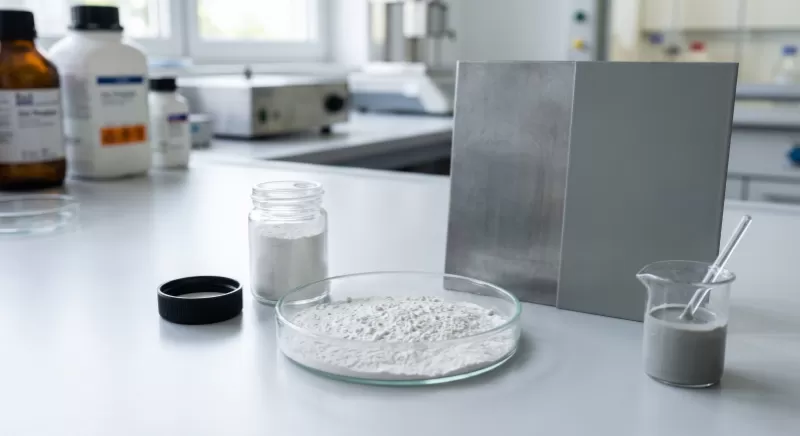
As an anti-rust and anti-corrosion pigment, Zinc Phosphate is widely used in coatings where metal protection is required. It appears as a white, odorless powder and belongs to the orthorhombic crystal system, typically showing needle-like or plate-like crystalline characteristics.
Zinc Phosphate is difficult to dissolve in water and is insoluble in ethanol, but it can dissolve in dilute inorganic acids, acetic acid, ammonia water, nitric acid, and hydrochloric acid. These physical and chemical characteristics make it suitable for use in industrial coating formulations where stability, compatibility, and protective performance are important.
Zinc Phosphate as an Anti-Corrosion Pigment
Among phosphate anti-rust pigments, Zinc Phosphate is one of the most important product types. It can be used to prepare different kinds of anti-rust paints and protective coatings for metal substrates.
Compared with some traditional anti-corrosion pigments, Zinc Phosphate is valued because it can provide corrosion protection while also supporting coating formulation flexibility. Its relatively low refractive index and high transparency make it easier for coating manufacturers to adjust coating colors. It can be combined with other pigments to prepare coating systems in different colors without creating unnecessary limitations in color design.
This characteristic is especially useful for manufacturers producing industrial coatings, decorative protective coatings, machinery coatings, and metal coatings where both protection and appearance are required.
Compatibility with Different Coating Systems
Zinc Phosphate can be used with many types of coating binders and resin systems. It is suitable for coating formulations based on chlorinated rubber, epoxy, alkyd, phenolic, polyurethane, and other resin systems.
In alkyd, modified alkyd, and polyurethane coating systems, Zinc Phosphate can support fast drying performance. In suitable formulations, the coating can be ready for topcoat application in about two hours while maintaining anti-corrosion performance. This makes Zinc Phosphate a practical pigment option for coating manufacturers that need both production efficiency and reliable protection.
In addition to drying performance, Zinc Phosphate also supports good adhesion. Adhesion is essential for protective coatings because the coating film must remain firmly attached to the metal substrate during handling, application, and service.
Application in Water-Based Coatings
Zinc Phosphate is also suitable for water-based coating systems. In water-based paints, it functions as a colorless anti-rust pigment with good stability.
Water-based coatings often require careful pigment selection because the formulation must maintain dispersion stability, viscosity stability, film formation, and corrosion protection at the same time. Zinc Phosphate can support good water resistance and anti-corrosion performance in waterborne coating systems.
It also has good affinity with various coating materials, helping the coating maintain proper consistency and storage stability. This is important for coating manufacturers because water-based anti-rust paints must remain stable before application and provide reliable protection after coating formation.
For modern coating manufacturers, Zinc Phosphate provides a useful material direction for water-based protective coatings, especially where corrosion resistance, formulation stability, and environmental coating development are important.
Industrial Application Scope
Zinc Phosphate is widely used in coating materials for multiple industries. Its application scope includes marine coatings, container coatings, automotive and rail transit coatings, engineering machinery coatings, color steel renovation coatings, household appliance coatings, and metal containers for food-related uses.
In these industries, coated metal parts and structures are often exposed to moisture, temperature changes, industrial environments, handling damage, and corrosive conditions. Anti-corrosion pigments play an important role in improving the protective function of the coating system.
Zinc Phosphate can be used in primers, anti-rust paints, industrial protective coatings, and other coating systems that require long-term metal protection. It helps coating manufacturers build more reliable coating systems for different substrates and working environments.
Additional Application Fields
In addition to coatings, Zinc Phosphate can also be used in other industrial fields. It can be used as a flame retardant for chlorinated rubber and synthetic polymer materials. It may also be applied as a bonding and sintering aid in electronics, glass, and ceramics.
Zinc Phosphate can also be used in phosphating treatment for steel materials. In this type of application, it is associated with metal surface treatment and preparation processes that help improve subsequent coating or processing performance.
The material has also been used in dental impression-related applications. However, for coating customers, its most important application remains anti-corrosion pigment use in protective coating systems.
Xinsheng Chemical’s Product Development
Xinsheng Chemical continues to develop phosphate-based products for coating and industrial material applications. In addition to conventional Zinc Phosphate products, the company has developed related product grades and phosphate materials such as Zinc Phosphate Molybdate ZPM, MY-SL, MY-CAP, ZP-L, and ZP-Y.
These products provide coating manufacturers with more material options for different formulation needs. Depending on the coating system, application environment, resin type, color requirement, and anti-corrosion performance target, customers can select suitable phosphate-based pigments for further testing and application development.
Xinsheng Chemical’s product development work reflects its long-term focus on anti-corrosion pigments, protective coatings, and phosphate material solutions.
Product Testing and Technical Evaluation
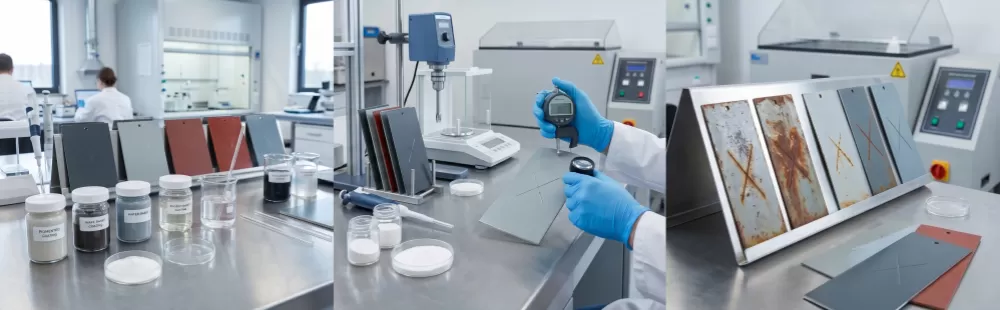
For industrial coating applications, product selection should not rely only on product name or chemical category. Coating manufacturers usually need to evaluate pigment performance through formulation testing, dispersion testing, coating application, drying observation, adhesion testing, water resistance testing, corrosion resistance testing, and storage stability observation.
Xinsheng Chemical supports product testing and application evaluation for Zinc Phosphate and related phosphate-based anti-corrosion pigments. Through testing, customers can better understand how the material performs in their specific coating systems.
Because each coating formulation is different, the actual performance of Zinc Phosphate may be influenced by resin type, pigment loading, dispersion process, solvent or waterborne system design, coating thickness, substrate condition, curing or drying conditions, and test method. Therefore, formulation testing is an important step before large-scale application.
Why Zinc Phosphate Matters for Coating Manufacturers
For coating manufacturers, Zinc Phosphate offers several practical advantages.
First, it supports anti-corrosion protection in metal coating systems. This is the core reason why Zinc Phosphate is widely used in industrial coatings.
Second, it has good compatibility with multiple resin systems, including alkyd, epoxy, polyurethane, phenolic, chlorinated rubber, and other coating binders.
Third, it helps support color flexibility because of its relatively low refractive index and high transparency.
Fourth, it can be used in water-based coating systems where stability, water resistance, and storage stability are important.
Fifth, it is suitable for multiple industrial coating fields, including marine, container, automotive, rail transit, engineering machinery, color steel renovation, household appliances, and metal packaging-related applications.
These advantages make Zinc Phosphate a valuable anti-corrosion pigment for manufacturers developing protective coatings and metal coating systems.
Conclusion
Zinc Phosphate remains an important phosphate-based anti-corrosion pigment for modern industrial coatings. Its use in solvent-based and water-based coating systems demonstrates its formulation flexibility, protective value, and compatibility with different resin systems.
For coating manufacturers seeking anti-corrosion pigments for alkyd coatings, epoxy coatings, polyurethane coatings, water-based anti-rust paints, industrial protective coatings, and metal protection systems, Zinc Phosphate provides a practical and widely applicable material solution.
As a specialized supplier of phosphate-based anti-corrosion pigments, Shijiazhuang City Xinsheng Chemical Co., Ltd. will continue to provide Zinc Phosphate and related phosphate materials for customers in the coating industry, supporting product testing, formulation development, and industrial coating applications.