
Industrial facilities, including metallurgical blast furnaces, cement rotary kilns, and glass melting chambers, operate under extreme thermal environments that regularly exceed 1000°C. In these severe conditions, organic polymers and standard hydraulic binders lose their structural integrity, resulting in binding failure and mechanical collapse. This reality necessitates the use of specialized inorganic binding agents that maintain structural cohesion under high thermal stress. Inorganic phosphorus chemistry offers some of the most reliable options for these environments. Among these inorganic compounds, aluminum phosphate has established itself as an effective high-temperature binder, catalyst component, and specialty additive. Manufacturers such as Xinsheng produce high-grade formulations of this chemical to support modern metallurgical, ceramic, and chemical engineering needs.
The performance of the compound stems from its unique polymeric behavior when subjected to thermal energy. Rather than melting or thermal cracking, the phosphate groups undergo condensation polymerization, forming a highly stable, heat-resistant inorganic network. This characteristics makes the material highly useful in both monolithic refractories and specialized protective coatings where conventional binders fail.
Chemical Classification and Synthesis Pathways
The term aluminum phosphate describes several chemical species that differ based on the ratio of aluminum oxide to phosphorus pentoxide, as well as the degree of protonation in the phosphate anion. The primary industrial variants include:
Aluminum Orthophosphate (AlPO4): This is the neutral salt, which exhibits a crystalline structure structurally analogous to quartz (berlinite). It is highly insoluble in water and exhibits excellent thermal and chemical stability.
Monoaluminum Phosphate (Al(H2PO4)3): Also known as acid aluminum phosphate or dihydrogen aluminum phosphate, this compound is highly soluble in water. It is primarily utilized in liquid form as a high-strength binder for refractories.
Aluminum Metaphosphate (Al(PO3)3): A polymeric form with cyclic or long-chain structures, often utilized in glass formulations and specialty ceramic glazes to improve thermal shock resistance.
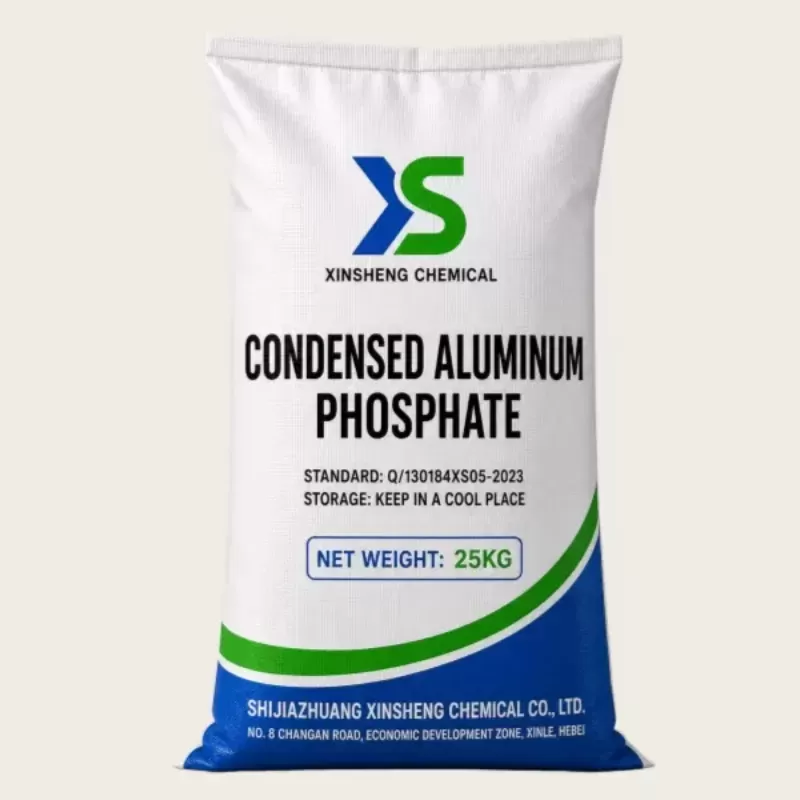
The synthesis of these compounds typically involves a controlled wet-chemical reaction between high-purity phosphoric acid and aluminum hydroxide. By adjusting the stoichiometric ratio of the reactants, temperature, and reaction duration, manufacturers can target specific chemical profiles. For example, maintaining a specific phosphorus-to-aluminum ratio is key when producing liquid monoaluminum phosphate binders to prevent spontaneous crystallization or premature precipitation during storage. Following the reaction phase, liquid binders are either packaged directly or subjected to spray-drying processes to yield free-flowing powder variants. Xinsheng utilizes precise control systems to regulate these reaction parameters, ensuring consistent viscosity, density, and pH across different production batches.
The Inorganic Curing and Polymerization Mechanism
To implement aluminum phosphate binders effectively, formulation engineers must understand the underlying dehydration and condensation reactions that occur during the curing process. When liquid monoaluminum phosphate is heated, it undergoes a series of phase transitions that convert the soluble monomeric salt into an insoluble polymeric matrix.
The initial phase of curing occurs between 100°C and 120°C, where free water is evaporated from the binder solution. As the temperature rises to approximately 150°C to 250°C, the dihydrogen phosphate ions begin to lose constitution water, initiating a condensation reaction. This reaction links individual phosphate tetrahedra through shared oxygen atoms, producing pyrophosphates and triphosphates. This condensation continues, forming long-chain metaphosphates at temperatures between 350°C and 500°C.
At temperatures exceeding 800°C, these polymeric chains undergo a structural reorganization. In the presence of refractory aggregates containing alumina, the metaphosphates react to form highly stable aluminum orthophosphate crystals. This final phase transition produces a three-dimensional crystalline network that locks aggregate grains (such as alumina, silica, or silicon carbide) into a rigid structure. The resulting ceramic bond provides high mechanical strength, erosion resistance, and structural stability up to 1800°C.
Key Industrial Application Scenarios
The unique combination of thermal stability, acid resistance, and binding capability allows aluminum phosphate to be used across several heavy industrial sectors.
Monolithic Refractories and Castables
Monolithic refractories are unshaped materials that are cast, rammed, or gunned into place to form furnace linings. Binders based on monoaluminum phosphate are widely used in alumina-silica refractory castables, plastics, and ramming mixes. Unlike calcium aluminate cements, which can lose strength in intermediate temperature ranges (between 800°C and 1100°C) due to mineralogical phase changes, phosphate-bonded refractories exhibit a steady increase in strength as the temperature rises. Furthermore, these binders provide high resistance to slag attack and mechanical abrasion, making them suitable for the high-wear zones of steel ladles and cement kilns.
High-Temperature Adhesives and Mortars
Assembling refractory bricks and insulating blocks requires adhesives that can withstand the same operational temperatures as the bricks themselves. Mortars formulated with aluminum phosphate binders show excellent adhesion to both dense and insulating firebricks. These mortars cure to form thin, high-strength joints that prevent gas leakage and resist penetration by molten metals or corrosive slags. The low thermal expansion coefficient of the phosphate bond helps maintain joint integrity during rapid heating and cooling cycles.
Specialty Coatings and Electrical Steel Insulation
In electrical engineering, silicon steel sheets used in transformer cores and electric motors require inter-lamellar electrical insulation. Coatings formulated with aluminum phosphate and chromates or alternative inorganic modifiers are applied to the steel strip before baking. Upon curing, these coatings form a micro-thin, glassy insulating layer that exhibits high dielectric strength, excellent thermal stability, and good adhesion during subsequent punching and forming operations. Additionally, the coating imparts tension to the steel substrate, which helps reduce magnetostriction and core loss.
Catalyst Support Matrices
In the petrochemical industry, the demand for stable catalyst supports has led to the utilization of crystalline aluminophosphates (ALPOs). These microporous materials share structural similarities with traditional aluminosilicate zeolites. They exhibit high surface area, customizable pore sizes, and exceptional thermal stability, making them effective catalyst supports for isomerization, alkylation, and fluid catalytic cracking processes.
Formulation Challenges and Engineering Solutions
Despite the operational advantages of aluminum phosphate, formulation chemists must address several processing challenges to ensure consistent performance in the field.
One major bottleneck is the high acidity of liquid monoaluminum phosphate binders, which typically exhibit a pH between 1.0 and 2.0. This acidity makes the liquid corrosive to standard steel mixing vessels and application equipment, requiring the use of acid-resistant stainless steel or plastic-lined systems. More importantly, this acidic nature can cause rapid, premature setting when the binder comes into contact with basic aggregates such as magnesia (MgO) or dolomite. The reaction is highly exothermic, causing the castable to stiffen before it can be properly placed or compacted.
To overcome this setting issue, formulators can implement several strategies:
Retarders: Incorporating organic chelating agents like citric acid or tartaric acid can temporarily shield the metal ions, slowing down the neutralizing reaction and extending the working time (pot life) of the mixture.
Solid-State Binders: Utilizing dry, powdered forms of aluminum phosphate with lower solubility allows for dry-mixing of the refractory component. The hydration and curing reactions only initiate when water is added at the job site, providing better control over the setting profile.
Buffer Aggregates: Selecting aggregates with neutral or slightly acidic surfaces, or pre-coating reactive basic aggregates with a protective barrier layer, prevents premature neutralization reactions.
Another challenge involves the escape of water vapor during the initial heating cycle of green refractories. If the heating rate is too rapid, the rapid steam generation can build high internal pressure, leading to cracking or spalling of the lining. To mitigate this concern, formulators must design precise drying schedules that allow moisture to escape gradually. Incorporating small amounts of organic fibers can also create micro-channels for steam release during the initial heating phase, protecting the integrity of the phosphate-bonded structure.
Quality Criteria and Procurement Parameters
For industrial buyers, purchasing consistent raw materials is a necessary step to ensure final product reliability. When evaluating aluminum phosphate grades, procurement and quality control laboratories should focus on several chemical and physical parameters.
The molar ratio of phosphorus to aluminum (P:Al) is a key parameter. A ratio that is too high indicates excess free phosphoric acid, which increases the hygroscopicity of the cured binder and can cause surface stickiness or reduced moisture resistance in the final product. A ratio that is too low can lead to reduced binding strength and premature precipitation of aluminum orthophosphate during storage of liquid binders. Analytical laboratories verify this ratio using Inductively Coupled Plasma Optical Emission Spectroscopy (ICP-OES) or wet chemical titration methods.
Another important factor is the content of water-soluble impurities, specifically sodium, potassium, and chloride ions. Alkaline impurities act as fluxes at high temperatures, lowering the melting point of the refractory matrix and reducing its creep resistance under load. Chloride ions can also promote localized corrosion of metallic elements embedded within the refractory, such as reinforcing fibers or anchors. Xinsheng addresses this by employing purified precursors and rigorous washing stages during synthesis to maintain these impurities below industrial thresholds.
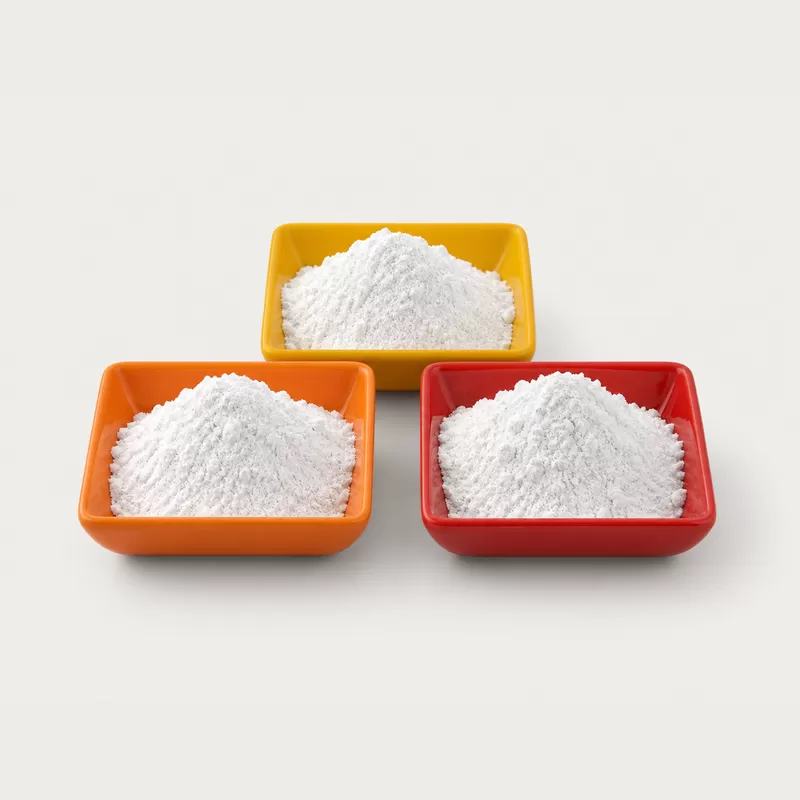
For powder grades, particle size distribution and bulk density must be kept within tight tolerances. Fine particles disperse more uniformly in dry mixes, ensuring even distribution of the binder and consistent mechanical properties across the cast body. Standard laser diffraction particle sizing is typically used to monitor these parameters during the milling stage.
Frequently Asked Questions
Q1: What is the main difference between monoaluminum phosphate and neutral aluminum orthophosphate?
A1: Monoaluminum phosphate is an acidic, water-soluble compound primarily utilized as a liquid binder in refractories and specialty coatings due to its high reactivity. Neutral aluminum orthophosphate is water-insoluble and chemically stable, often used as an anti-corrosive pigment, a component in ceramic bodies, or a catalyst support.
Q2: Why do phosphate-bonded refractories perform better at intermediate temperatures than cement-bonded ones?
A2: Calcium aluminate cement binders undergo mineralogical phase changes and dehydration between 800°C and 1100°C, which can cause a drop in mechanical strength. Aluminum phosphate binders form continuous polymeric and ceramic bonds that steadily increase in strength as temperature rises, preventing structural weakness in this intermediate range.
Q3: How should liquid monoaluminum phosphate be stored to prevent crystallization?
A3: Liquid binders should be stored in plastic, fiberglass, or rubber-lined steel containers to avoid corrosion. They should be kept in temperature-controlled environments, typically between 5°C and 30°C. Exposure to freezing temperatures can trigger crystallization, while extreme heat can accelerate premature polymerization and viscosity increase.
Q4: Can aluminum phosphate be used in waterborne protective coatings?
A4: Yes, specific grades are designed for use in waterborne systems, such as electrical steel coatings. In these formulations, the binder is neutralized or stabilized with specific additives to maintain dispersion stability and prevent premature reaction with other formulation ingredients.
Q5: Does aluminum phosphate pose environmental hazards during disposal?
A5: The compound is chemically stable and non-toxic. Unlike chromate-based binders or primers, it does not release harmful heavy metals into the environment. Disposal of cured phosphate-bonded refractories is typically managed as standard non-hazardous industrial mineral waste, in compliance with local regulations.
Q6: How does the presence of free phosphoric acid affect the performance of the binder?
A6: A small amount of free acid can assist with chemical bonding to certain aggregates. However, excessive free acid increases the hygroscopicity of the cured binder, which can absorb moisture from the air, causing a reduction in mechanical strength and promoting surface efflorescence over time.
Contact Us for Technical Consultation and Samples
Selecting the correct grade of aluminum phosphate requires a thorough evaluation of aggregate composition, curing temperatures, processing equipment, and target performance parameters. Xinsheng offers high-purity liquid and powder grades tailored to meet specific metallurgical and chemical formulation demands. Our technical team is available to assist you in fine-tuning your binder formulations and resolving processing challenges. Please submit an inquiry with your operational parameters, and we will provide technical datasheets, material safety information, and laboratory samples for your evaluation.