
Corrosion prevention represents a major economic and engineering focus for industrial infrastructure globally. Steel structures, maritime assets, automotive components, and chemical processing equipment constantly face exposure to moisture, oxygen, and atmospheric pollutants. Without adequate protection, these substrates suffer rapid degradation, leading to structural failures and premature maintenance cycles. To mitigate this degradation, protective coatings serve as the primary line of defense. The performance of these coatings relies heavily on the active pigments incorporated into the primer layer.
For decades, chromate-based pigments served as the industry standard for corrosion inhibition. However, severe regulatory restrictions due to environmental and health concerns prompted a transition toward non-toxic alternatives. Among the various candidates evaluated by paint chemists, zinc phosphate emerged as a highly reliable replacement. It has established itself as a foundational ingredient in modern anti-corrosive primer formulations. Industrial manufacturers, such as Xinsheng, produce various grades of this pigment to satisfy demanding performance specifications across multiple sectors.
The Chemistry and Physical Characteristics of Zinc Phosphate
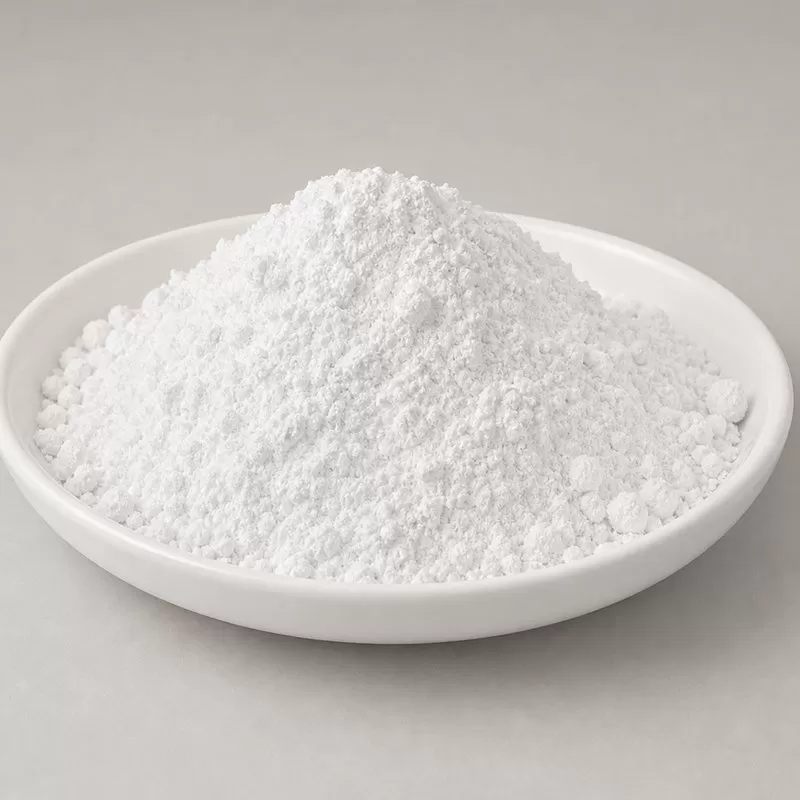
Chemically, the active ingredient is an inorganic compound with the formula Zn3(PO4)2. In industrial paint formulations, it is most frequently utilized in its hydrated forms, primarily as a dihydrate (Zn3(PO4)2 · 2H2O) or a tetrahydrate (Zn3(PO4)2 · 4H2O). The degree of hydration influences both the thermal stability and the dissolution kinetics of the pigment within the cured paint film. Under standard conditions, it presents as a white, non-toxic, odorless powder with low water solubility.
The low solubility of the compound is a deliberate design parameter. If a pigment dissolves too rapidly, it leaches out of the coating film quickly, leaving voids and offering only short-term protection. Conversely, if solubility is too low, the pigment cannot release sufficient ions to passivate the metal substrate. The balanced hydration chemistry of zinc phosphate ensures a controlled, slow release of active ions over extended periods, providing long-term corrosion protection. The compound typically exhibits a density of 3.2 to 3.8 g/cm³ and a refractive index of approximately 1.5 to 1.6, allowing it to be incorporated easily into various resin systems without significantly altering paint coloration or gloss profiles.
The manufacturing process of the pigment involves a controlled precipitation reaction between high-purity zinc oxide and phosphoric acid. The resulting precipitate undergoes filtration, washing to eliminate soluble salt impurities, drying, and micronization. The removal of soluble salts is a decisive step; any residual sodium, chloride, or sulfate ions left in the pigment can promote osmotic blistering in the finished paint film. Consequently, reputable manufacturers like Xinsheng enforce strict washing protocols during production to keep soluble salt content to a minimum.
The Passivation and Protection Mechanism
At the substrate interface, the anti-corrosive action of zinc phosphate is primarily chemical rather than purely physical. When moisture and oxygen inevitably permeate the organic binder layer of a coating, they initiate the dissolution of the pigment at the coating-metal boundary. This dissolution yields zinc ions (Zn2+) and phosphate ions (PO43-).
The protective mechanism unfolds through several sequential chemical steps:
Anodic Passivation: On steel substrates, the newly released phosphate ions react with the anodically dissolving iron ions (Fe2+) generated by early-stage corrosion. This reaction forms an insoluble, crystalline layer of iron-zinc phosphate, often identified as hopeite (Zn3(PO4)2 · 4H2O) or phosphophyllite (FeZn2(PO4)2 · 4H2O). This crystalline layer tightly adheres to the steel surface, polarizing the anode and halting further metal dissolution.
Cathodic Polarization: Concurrently, the zinc ions react with hydroxyl ions (OH-) generated at cathodic sites where oxygen reduction occurs. This reaction deposits zinc hydroxide, a sparingly soluble compound, which restricts oxygen diffusion to the metal surface, thereby stifling the cathodic reaction.
Synergistic Barrier Support: The accumulation of these insoluble reaction products at the metal-primer interface effectively plugs the micro-pores of the coating, reinforcing the overall physical barrier properties of the paint system.
Beyond the electrochemical pathway, the pigment interacts favorably with the acid groups present in certain binder resins. This interaction forms complex soaps that improve the wet adhesion of the coating to the metal substrate. Enhanced wet adhesion is a key factor in preventing under-film corrosion propagation when the coating sustains physical damage.
Addressing Common Formulation Challenges
Formulating protective coatings with zinc phosphate requires balancing several variables to avoid performance issues. While the compound is highly effective, simply adding it to a resin matrix does not guarantee adequate protection. Formulators must account for chemical compatibility, pigment volume concentration, and particle size distribution.
To address early corrosion or "flash rust" on steel surfaces, standard zinc phosphate may exhibit a lag time before releasing sufficient passivating ions. Formulators often resolve this by combining the primary pigment with organic corrosion inhibitors or using modified variants. These modified pigments, which may include aluminum, molybdate, or organic modifications, provide a faster initial release of protective ions to establish early passivation, while the core zinc phosphate provides sustained, long-term inhibition.
Waterborne system stability represents another area requiring careful formulation. The global industry is transitioning toward water-reducible epoxies, acrylics, and alkyd dispersions to lower volatile organic compound (VOC) emissions. However, introducing inorganic pigments into waterborne systems can cause stability issues, such as viscosity drift, pigment settling, or premature coagulation of the binder. Using ultra-fine, surface-treated pigment grades helps overcome these difficulties. Surface modification improves the steric or electrostatic stabilization of the pigment particles in aqueous environments, ensuring a stable paint shelf life.
Determining the correct Pigment Volume Concentration (PVC) to Critical Pigment Volume Concentration (CPVC) ratio is also highly important. If the PVC is too high, the coating becomes porous, allowing water and corrosive agents to bypass the inhibitor entirely. If the PVC is too low, there may not be enough pigment-to-pigment contact to facilitate the necessary ion transport to the substrate. Maintaining a balanced PVC/CPVC ratio ensures cohesive film formation while keeping active pigment levels high enough for continuous protection.
Performance Across Diverse Industrial Applications
Industrial environments dictate different performance baselines, and zinc phosphate adapts well to these varying requirements through targeted paint formulations.
Industrial structural steel used in bridges, pipeline networks, and refinery infrastructure operates under harsh atmospheric conditions. Standard ISO 12944 classifies these environments from C1 (very low corrosivity) to C5 (very high corrosivity). For C4 and C5 environments, protective coating systems typically specify high-build epoxy primers containing zinc phosphate. These primers provide a robust base layer that resists continuous humidity, cyclic temperatures, and salt spray exposure. The pigment prevents rust creep at points where mechanical impact scratches the coating.
Marine environments present extreme challenges due to high chloride concentrations in sea spray and marine atmospheres. Chloride ions accelerate corrosion by penetrating organic coatings and destabilizing passive oxide films on metal surfaces. In marine primers, zinc phosphate is frequently combined with zinc oxide or barrier pigments like micaceous iron oxide (MIO). This combination creates a tortuous path for moisture and ions while maintaining active chemical passivation at the steel surface.
Coil coating applications present a different set of engineering demands. In this process, flat steel or aluminum sheets are continuously coated, cured in seconds at high temperatures, and subsequently formed into building panels or appliance casings. This sequence requires primers with high flexibility and fast curing profiles. Primers formulated with fine-particle zinc phosphate provide high adhesion and corrosion resistance without compromising the flexibility of the cured paint film during bending and profiling.
Quality Metrics and Selection Criteria
When selecting a pigment supplier, procurement managers and laboratory chemists evaluate several physical and chemical properties to ensure batch-to-batch consistency and paint performance.
A major factor is oil absorption, which is measured as the weight of linseed oil required to completely wet a specific mass of pigment. This value directly influences the amount of resin binder needed in the paint formulation. High oil absorption values increase binder demand, which can lower the maximum allowable pigment loading. Consistency in oil absorption values across batches is necessary to prevent variations in paint viscosity and gloss during production.
Particle size metrics, typically expressed as d50 and d90 values, are similarly important. Micronized grades with a d50 of under 3 microns are preferred for thin-film applications like coil coatings or automotive primers. These fine particles disperse more easily, reduce the risk of paint film defects, and provide a higher active surface area for ion release. Coarser grades may be acceptable for thick-film industrial maintenance primers, where surface finish is less critical than overall dry film thickness.
Testing methodologies for validating pigment quality are well-established. Manufacturers and paint formulators subject coated panels to accelerated testing, such as salt spray exposure under ASTM B117 or cyclic weathering tests according to ISO 20340. These tests provide empirical data on rust creep, blistering, and adhesion retention. Electrochemical Impedance Spectroscopy (EIS) is also used in laboratory settings to measure the electrical resistance of the coating over time, indicating the effectiveness of the pigment in maintaining a barrier against ion transport.
Xinsheng maintains rigorous quality control frameworks to monitor these parameters, ensuring that the moisture content, pH of the aqueous extract, and overall chemical purity remain within tight tolerances. This level of quality control helps prevent unexpected behavior during the paint manufacturing process and ensures long-term field performance.
Frequently Asked Questions
Q1: Why is zinc phosphate preferred over traditional chromate pigments?
A1: Chromates, specifically zinc chromate, are classified as highly toxic and carcinogenic, leading to severe regulatory restrictions globally under frameworks like REACH. Zinc phosphate offers a non-toxic, environmentally acceptable profile while providing reliable passivation and barrier properties, making it the industry-standard replacement for modern protective coatings.
Q2: Can zinc phosphate be used in waterborne paint formulations?
A2: Yes, it is compatible with waterborne systems. However, to prevent formulation issues such as pigment settling or viscosity drift, formulators should select micronized, surface-treated grades designed for aqueous systems to ensure stable dispersion and consistent active ion release.
Q3: How does the hydration state of the pigment affect its performance?
A3: The hydration state, such as dihydrate versus tetrahydrate, influences both the release rate of passivating ions and the thermal stability of the pigment. Tetrahydrate grades generally release ions faster but have lower thermal stability, whereas dihydrate grades are preferred for baking finishes or coil coatings that undergo high-temperature curing processes.
Q4: Does zinc phosphate provide galvanic protection to steel substrates?
A4: No, it does not provide galvanic protection. Galvanic protection requires metallic zinc dust in high concentrations to establish electrical contact with the steel. Instead, this inorganic compound provides protection through chemical passivation and barrier enhancement at the metal-primer interface.
Q5: What is the typical loading level of zinc phosphate in an anti-corrosive primer?
A5: The typical loading level ranges from 10% to 30% of the total pigment volume concentration (PVC), depending on the specific resin system, the severity of the target environment, and whether it is used alone or in combination with synergistic co-pigments.
Q6: Is zinc phosphate suitable for protecting non-ferrous metals like aluminum or galvanized steel?
A6: Yes, it is highly effective on non-ferrous substrates. On aluminum, it prevents filiform corrosion, and on galvanized steel, it provides a stable passivating layer that improves the adhesion of subsequent coating layers to the zinc surface.
Request a Consultation and Samples
Selecting the appropriate pigment grade for your specific resin system, environmental exposure requirements, and manufacturing capabilities is a precise process. Xinsheng offers a comprehensive range of high-purity, micronized, and modified pigment solutions designed to meet the demands of modern protective coatings. If you are developing new waterborne primers, high-solid epoxies, or specialized coil coatings, please submit an inquiry to obtain technical datasheets, regulatory compliance documentation, or evaluation samples tailored to your formulation needs.