
In structural engineering, marine logistics, and heavy manufacturing, managing metal oxidation is a primary design consideration. For decades, chromate-based pigments served as the industry standard for anti-corrosive primers. However, tightening environmental regulations worldwide have largely phased out these toxic compounds. Today, zinc phosphate has established itself as the leading non-toxic, environmentally acceptable alternative for corrosion inhibition. When industrial procurement teams look to buy zinc phosphate for protective coating formulations, they must navigate a complex array of chemical parameters, physical properties, and particle distributions to ensure long-term coating integrity.
Selecting the appropriate grade of zinc phosphate is not merely a purchasing transaction; it requires a deep understanding of how the pigment interacts with specific binder systems, environmental exposure levels, and application methods. Manufacturers like Xinsheng produce specialized variations of this pigment to satisfy diverse industrial requirements. This guide examines the physical chemistry, application environments, and quality parameters that procurement managers must evaluate to secure high-performing raw materials.
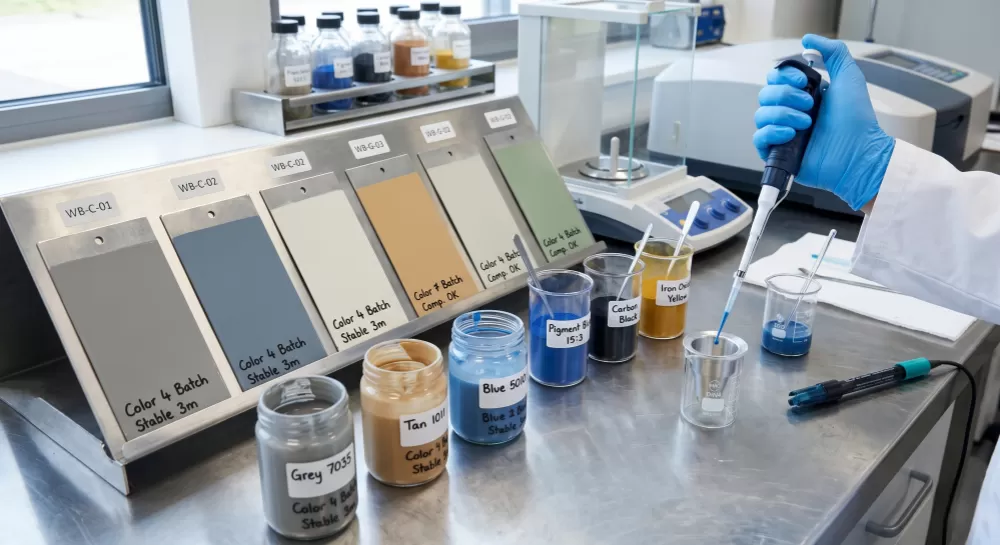
Chemical Properties and Performance Specifications
Zinc phosphate, chemically represented as Zn3(PO4)2 · nH2O, typically exists in hydrated forms, most commonly as a dihydrate (n=2) or tetrahydrate (n=4). Its function as an active anti-corrosive pigment depends on its solubility, purity, and physical structure. Unlike inert barrier pigments that merely block moisture physically, zinc phosphate participates in chemical reactions at the metal-substrate interface.
When evaluating different grades of zinc phosphate, several physical and chemical specifications dictate how the pigment will perform in liquid paints and dried films:
| Specification Parameter | Standard Range | Impact on Formulation Performance |
|---|---|---|
| Zinc Content (as Zn) | 50.0% – 52.0% | Determines the concentration of active zinc ions available for passivation reactions. |
| Phosphate Content (as PO43-) | 46.0% – 49.0% | Directly influences the formation of the protective iron-phosphate passivating film. |
| Oil Absorption (g/100g) | 15 – 30 | Affects the amount of binder needed; higher values increase viscosity and alter pigment volume concentration (PVC). |
| Moisture Content (105°C) | < 1.0% | Excess moisture can lead to clumping during storage and affect polyurethane or moisture-cure systems. |
| Water-Soluble Matter | < 0.1% | High levels of soluble salts promote osmotic blistering under the paint film when exposed to moisture. |
| pH Value (Aqueous Extract) | 6.0 – 8.0 | Neutral pH prevents premature gelling or instability in acid-sensitive or water-borne binders. |
Particle size distribution is another physical property that buyers must specify. Standard grades generally have an average particle size (D50) ranging from 5 to 10 microns, making them suitable for traditional heavy-duty industrial primers. For high-gloss finishes, thin-film applications, or coil coatings, micronized grades with a D50 of under 3 microns are necessary. Finer particles offer a higher surface area, which improves dispersion stability and increases the speed of the chemical passivation process.
The Electro-Chemical Corrosion Inhibition Mechanism
Understanding how zinc phosphate prevents rust helps procurement teams choose the right grade for their specific application environments. The protection mechanism is chemical rather than purely mechanical. When water and oxygen inevitably diffuse through the organic binder of a coating, they reach the underlying steel substrate. At this interface, electrochemical corrosion begins, creating anodic (iron dissolution) and cathodic (oxygen reduction) sites.
The presence of zinc phosphate modifies this destructive process. Although the compound has very low solubility in neutral water, the localized acidic environment generated during the early stages of anodic iron dissolution increases its solubility. The pigment dissociates into zinc ions (Zn2+) and phosphate ions (PO43-). These liberated ions react with the dissolving iron species at the anode, forming a dense, tightly adhering crystalline layer of iron-zinc-phosphate (such as phosphophyllite, FeZn2(PO4)2 · 4H2O) on the metal surface.
This crystalline layer acts as a permanent passive barrier directly on the steel. It prevents further migration of iron ions into the coating matrix, effectively halting the anodic reaction. At the same time, zinc ions react with hydroxyl ions produced at the cathode to form zinc hydroxide, which blocks the cathodic areas. The combination of these anodic and cathodic passivation processes significantly reduces under-film corrosion creep, preventing the paint from peeling away from scratches or mechanical damage.
Industrial Application Scenarios
The versatility of zinc phosphate makes it compatible with a wide range of resin binders and application environments. Depending on the substrate and the severity of the atmosphere, coating formulations must be adapted accordingly.
Marine and Coastal Infrastructure Coatings
Offshore structures, ship hulls, and coastal installations are subjected to high humidity and high chloride concentrations, categorized under C5-M corrosive environments. Marine primers require a robust combination of barrier protection and active corrosion inhibition. For these systems, zinc phosphate is frequently blended with epoxy binders. Epoxy-polyamide primers containing high loadings of zinc phosphate provide the necessary chemical resistance and mechanical toughness to withstand salt spray and wave impact. The low water solubility of the pigment is advantageous here, as it ensures the active inhibitor is not rapidly leached out by seawater, maintaining long-term protection.
Automotive Primers and OEM Coatings
In the automotive industry, coatings must deliver both reliable corrosion resistance and a highly aesthetic finish. Electrodeposition (E-coat) primers and liquid surfacer coats utilize ultra-fine, micronized zinc phosphate. The tight particle size distribution of micronized pigments prevents surface defects and grit in the subsequent color and clear coats. Because these coatings are applied to complex shapes with tight tolerances, the pigment must disperse perfectly without settling in holding tanks or clogging spray nozzles.
Industrial Coil Coatings
Coil coating involves painting flat sheets of steel or aluminum in a continuous, high-speed process before the metal is cut and formed into final products, such as building panels or appliance casings. Because the metal is bent and stamped after painting, the primer must possess excellent flexibility. Standard large-particle pigments can create weak points in the dry film, leading to cracking during forming. Using fine-particle zinc phosphate ensures that the primer remains highly flexible while providing continuous edge protection where the sheet metal is sheared and exposed.
Water-Borne Industrial Finishes
As environmental regulations place stricter limits on volatile organic compounds (VOCs), the coatings industry is shifting toward water-borne systems. Formulating with water-borne resins presents unique challenges because the water carrier can trigger premature corrosion of the steel substrate during application and drying (known as flash rusting). When formulating these systems, buyers must select specialized zinc phosphate grades with exceptionally low water-soluble salt content. High ionic concentrations in water-borne paints can destabilize the polymer emulsion, causing coagulation, viscosity drift, or loss of adhesion.
Procurement Challenges and Quality Control
When looking to buy zinc phosphate in commercial quantities, procurement managers face several common industry challenges that can impact production schedules and paint performance if left unmanaged.
One of the primary concerns is batch-to-batch consistency. If a pigment manufacturer does not maintain tight control over their precipitation and milling processes, the particle size distribution of the pigment can vary. A batch with excessive coarse particles can lead to rough primer surfaces and poor dispersion, requiring longer milling times and consuming excess energy in the paint factory. Conversely, a batch with too many ultra-fine particles can increase the oil absorption dramatically, making the paint too thick to pump or apply without adding extra solvent.
Another major quality risk is the presence of unreacted starting materials or water-soluble impurities. If the manufacturing reaction between zinc oxide and phosphoric acid is incomplete, residual soluble salts may remain in the pigment. When the finished paint is exposed to moisture in the field, these soluble salts dissolve, creating an osmotic pressure gradient that pulls water through the coating film. This leads to blistering, loss of adhesion, and rapid failure of the protective system. For this reason, buyers should request comprehensive analytical reports demonstrating water-soluble matter values well below the maximum thresholds defined by international standards like ISO 1247.
The hydration state of the pigment is also important for heat-cured coatings. If a paint formulation requires high-temperature baking (above 120°C), tetrahydrate zinc phosphate can release its chemically bound water of crystallization during the baking process. This released water vapor escapes through the curing paint film, leaving microscopic pinholes that compromise the barrier properties of the coating. For heat-cured systems, procuring the more thermally stable dihydrate form is necessary to prevent these curing defects.
Selecting a Qualified Industrial Supplier
Evaluating chemical suppliers involves looking beyond simple pricing metrics to assess production capacity, quality assurance protocols, and supply chain reliability. Industrial paint manufacturers operate on tight production schedules and cannot tolerate raw material delays or quality deviations.
A qualified manufacturer like Xinsheng employs rigorous quality control protocols at every stage of the production process, from raw material inspection to the final packaging of the pigment. Key verification steps that buyers should expect from a professional supplier include:
Laser Diffraction Particle Size Analysis: Ensures that every batch conforms to the specified D50 and D90 parameters, guaranteeing consistent dispersion behavior in the paint mill.
X-Ray Diffraction (XRD) and Chemical Titration: Verifies the correct chemical structure, hydration state, and pure zinc-to-phosphate ratio, ensuring optimal passive film formation.
Conductivity Testing of Aqueous Extracts: Measures the concentration of soluble ions to guarantee that the pigment will not contribute to osmotic blistering or emulsion instability.
Standardized Paint Trials: Involves dispersing the pigment batch into a standard epoxy or alkyd formulation and performing salt spray testing (ASTM B117) to confirm actual anti-corrosive performance.
Furthermore, reliable packaging and logistics are necessary to protect the pigment during transport and storage. Zinc phosphate is hygroscopic to a certain degree; therefore, standard packaging should feature multi-wall paper bags or heavy-duty plastic bulk bags with moisture-proof polyethylene inner liners. Proper sealing prevents moisture absorption during ocean transit or storage in humid warehouses, ensuring the powder remains free-flowing and easy to discharge into manufacturing vessels.
Frequently Asked Questions
Q1: What is the main difference between standard zinc phosphate and modified zinc phosphate?
A1: Standard zinc phosphate consists of pure orthophosphate compounds. Modified versions are co-precipitated or blended with other active species, such as aluminum, molybdenum, or organic inhibitors. These modifications are designed to accelerate the passivation process, improve performance in highly acidic environments, or provide synergistic protection in challenging water-borne systems.
Q2: Why is the oil absorption value of zinc phosphate important for paint formulators?
A2: The oil absorption value indicates the amount of linseed oil (or resin binder) required to completely wet a specific mass of the pigment. It dictates the Pigment Volume Concentration (PVC) of the coating. If a buyer switches to a grade with a higher oil absorption without adjusting the formula, the paint may become too viscous, lose gloss, or have reduced mechanical flexibility due to a shortage of free binder.
Q3: How does zinc phosphate perform compared to zinc chromate?
A3: While zinc chromate historically provided rapid, highly effective passivation, it is a known carcinogen and is heavily restricted. Zinc phosphate is non-toxic and safe to handle. While its initial passivation rate is slightly slower than chromate, it provides equivalent long-term corrosion protection when properly formulated with appropriate binders and complementary co-pigments.
Q4: Can zinc phosphate be used in primers for non-ferrous metals like aluminum or galvanized steel?
A4: Yes, it is highly effective on both aluminum and zinc-coated steel (galvanized). On aluminum substrates, the phosphate ions help form a stable metal-phosphate conversion layer that improves paint adhesion, which is often a major challenge with non-ferrous metals.
Q5: What storage conditions are required for bulk zinc phosphate?
A5: It should be stored in a dry, cool, well-ventilated warehouse, away from direct sunlight, rain, and sources of moisture. The bags should remain sealed until use. When stored under proper dry conditions, the pigment has an stable shelf life of several years without losing its anti-corrosive properties.
B2B Inquiry and Technical Consultation
For procurement officers and formulation chemists looking to buy zinc phosphate, securing a reliable, consistent supply chain is paramount. Xinsheng offers tailored grades designed to meet specific technical standards across different coating systems. To request samples, technical data sheets, or a customized quotation for your production requirements, please contact our technical sales department.