
The selection of raw materials in the protective coatings industry directly influences the longevity and durability of metal structures. Zinc phosphate, as a non-toxic anticorrosive pigment, has largely replaced chrome-based alternatives due to environmental mandates and performance reliability. Identifying competent zinc phosphate manufacturers requires an examination of chemical synthesis methods, particle size management, and impurity control. Chemical buyers must look beyond basic commercial pricing and analyze the engineering capabilities that govern pigment performance.
Xinsheng provides high-purity inorganic pigments tailored for demanding industrial environments. Understanding the synthetic processes and physical properties of zinc phosphate enables formulation chemists to balance cost, dispersibility, and corrosion resistance. This analysis examines the chemical properties, application challenges, and material selection criteria needed to secure a stable supply of high-grade zinc phosphate.
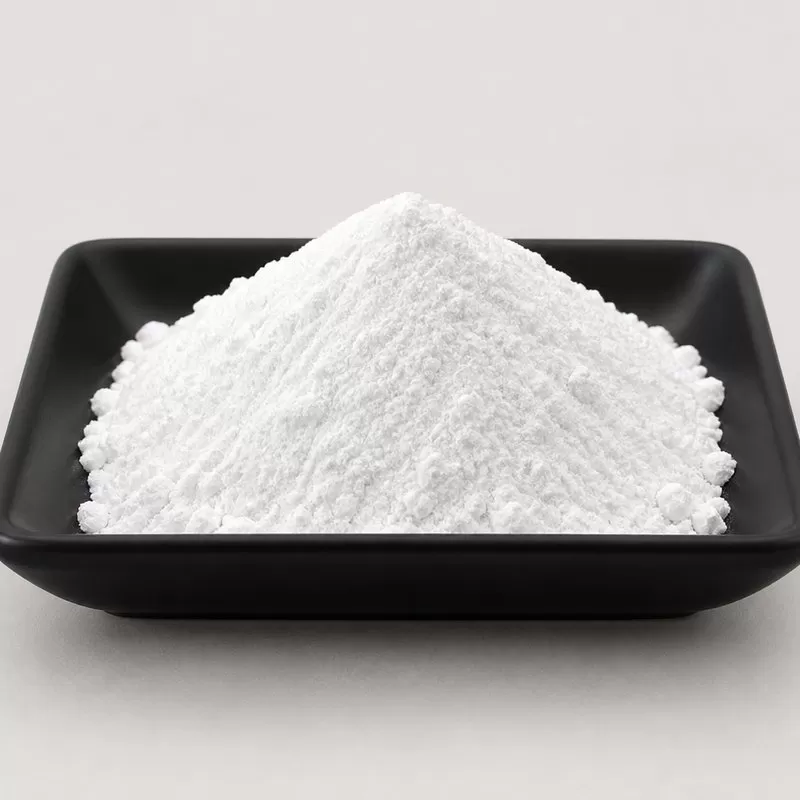
Chemical Composition and Synthesis of Zinc Phosphate
Zinc phosphate ($\text{Zn}_3(\text{PO}_4)_2 \cdot x\text{H}_2\text{O}$) is typically manufactured through a wet chemical precipitation process involving zinc oxide ($\text{ZnO}$) and phosphoric acid ($\text{H}_3\text{PO}_4$). The control of this reaction determines whether the resulting pigment exists as a dihydrate ($\text{Zn}_3(\text{PO}_4)_2 \cdot 2\text{H}_2\text{O}$) or a tetrahydrate ($\text{Zn}_3(\text{PO}_4)_2 \cdot 4\text{H}_2\text{O}$). Each hydration state imparts distinct thermal and physical characteristics to the coating matrix.
During synthesis, the reaction temperature, pH level, and agitation speed must be regulated. Deviations in pH can lead to the formation of basic zinc phosphates or unreacted phosphoric acid residues, both of which degrade the performance of the final coating. Acidic residues increase the moisture sensitivity of the paint film, leading to premature osmotic blistering during salt spray exposure.
Following precipitation, the pigment undergoes washing, filtration, drying, and micronization. The washing phase is highly decisive, as it removes soluble salts such as chlorides and sulfates. High residual salt concentrations increase the electrical conductivity of the pigment, which accelerates electrochemical corrosion under the paint film. Competent zinc phosphate manufacturers utilize deionized water systems during the washing phase to keep water-soluble matter below strict regulatory and industry thresholds.
The Role of Zinc Phosphate in Anticorrosive Mechanisms
The protective capability of zinc phosphate relies on its ability to form a passivating layer on steel substrates. When moisture penetrates the coating film, the pigment undergoes slow hydrolysis, releasing phosphate ions ($\text{PO}_4^{3-}$). These ions react with the dissolving iron ions ($\text{Fe}^{2+}$) at the anode to form a dense, insoluble film of vivianite-like compounds ($\text{Fe}_3(\text{PO}_4)_2 \cdot 8\text{H}_2\text{O}$) and other complex iron-phosphate salts.
Anodic Passivation and Barrier Protection
Inhibitor Deposition: The precipitate forms a physical barrier directly on the active anodic sites of the steel, blocking the transport of oxygen and water required for the corrosion reaction.
Alkaline Buffering: The hydrolysis of zinc phosphate helps buffer the pH at the metal-primer interface, mitigating the acidic conditions that typically accelerate rust formation under paint layers.
Interfacial Adhesion: The interaction between the phosphate crystals and the binder matrix enhances the mechanical adhesion of the primer to the blasted steel substrate, preventing delamination at scribe marks.
In addition to anodic passivation, the physical structure of the pigment particles contributes to the barrier effect of the coating. Needle-like or plate-like crystal morphologies block the path of diffusing water molecules, increasing the distance corrosive elements must travel to reach the substrate. Achieving this microstructural configuration requires precise control over the crystallization kinetics during the precipitation reaction.
Key Selection Metrics for Industrial Buyers
When evaluating zinc phosphate manufacturers, procurement and development teams must assess specific chemical and physical parameters. Standard safety data sheets do not always reveal the subtle differences that impact coating stability. The following parameters should form the basis of any quality assurance agreement:
Particle Size Distribution (PSD)
The particle size of zinc phosphate affects its dispersibility and the gloss profile of the primer. It is evaluated using laser diffraction, focusing on the D50 and D97 values. Standard primers often require a D50 of 2 to 5 microns, while high-build coatings can tolerate larger particles. Excessively large particles can protrude through thin primer films, creating weak spots where corrosion can initiate. Conversely, overly fine particles can increase the viscosity of the paint during manufacturing, limiting the maximum solids content of the formulation.
Oil Absorption Value
Expressed as grams of linseed oil per 100 grams of pigment (g/100g), this metric dictates the resin demand of the pigment. A high oil absorption value means more binder is required to wet the pigment surface, which can reduce the Pigment Volume Concentration (PVC) and increase overall formulation costs. Zinc phosphate manufacturers must supply consistent oil absorption values (typically between 15 and 25 g/100g) to prevent batch-to-batch variation in paint viscosity and dry film characteristics.
Conductivity of Aqueous Extract
This is a direct measure of the soluble ionic impurities present in the pigment. For high-performance marine and industrial coatings conforming to ISO 12944 standards, the conductivity of the aqueous extract should be kept as low as possible, ideally below 150 $\mu\text{S/cm}$. High conductivity indicates the presence of residual salts, which can lead to osmotic blistering and localized under-film corrosion when the coating is exposed to humid or marine environments.
Purity and Zinc Content
The actual zinc content ($\text{Zn}\%$) and phosphate content ($\text{PO}_4\%$) should closely match the theoretical stoichiometric ratios of the compound. Some lower-grade products contain fillers or extenders to reduce manufacturing costs. Reliable suppliers like Xinsheng maintain a pure orthophosphate composition, ensuring that the active chemical inhibition remains uncompromised over the design life of the coating.
Industry Pain Points in Zinc Phosphate Sourcing
Formulators frequently encounter challenges when introducing inorganic anti-corrosive pigments into modern paint systems. One primary concern is the trend toward waterborne epoxy and acrylic systems. Waterborne systems are highly sensitive to soluble ions and pH shifts. If a manufacturer’s zinc phosphate has unstable chemical properties, it can destabilize the resin emulsion, leading to gelling, phase separation, or loss of shelf stability.
Another challenge is the presence of heavy metal impurities. Regulatory frameworks like REACH and RoHS impose strict limits on lead, cadmium, and arsenic content in raw materials. Some raw materials used in zinc synthesis are derived from industrial by-products, which can introduce these contaminants if not properly refined. Industrial buyers must ensure their supplier utilizes high-grade zinc metal or refined zinc oxide to prevent regulatory compliance issues.
Finally, batch-to-batch inconsistency can disrupt automated paint production lines. Variations in particle size or oil absorption require formulators to adjust grinding times or additive dosages, which increases processing costs and cycle times. Establishing long-term agreements with manufacturers that utilize automated process control systems helps mitigate these operational risks.
Inorganic Pigment Solutions Offered by Xinsheng
Xinsheng addresses these formulation and regulatory challenges by employing advanced wet chemical synthesis processes. Our production lines feature automated dosing of raw materials, ensuring that the stoichiometry of the reaction remains within narrow tolerances. This minimizes unreacted precursors and prevents the formation of unwanted hydrate phases.
By using refined zinc precursors, we maintain heavy metal impurities far below standard international regulatory thresholds. Our washing systems use treated water to consistently deliver zinc phosphate with low aqueous conductivity. This makes our products suitable for high-performance marine primers, heavy industrial equipment coatings, and automotive pretreatments.
For waterborne systems, our engineered grades are processed to ensure compatibility with polar solvents and water-based binders. The surface characteristics of our pigments are controlled to reduce water demand and improve dispersion efficiency in high-speed dissolvers. This allows paint manufacturers to achieve stable grinds with reduced dispersant loading.
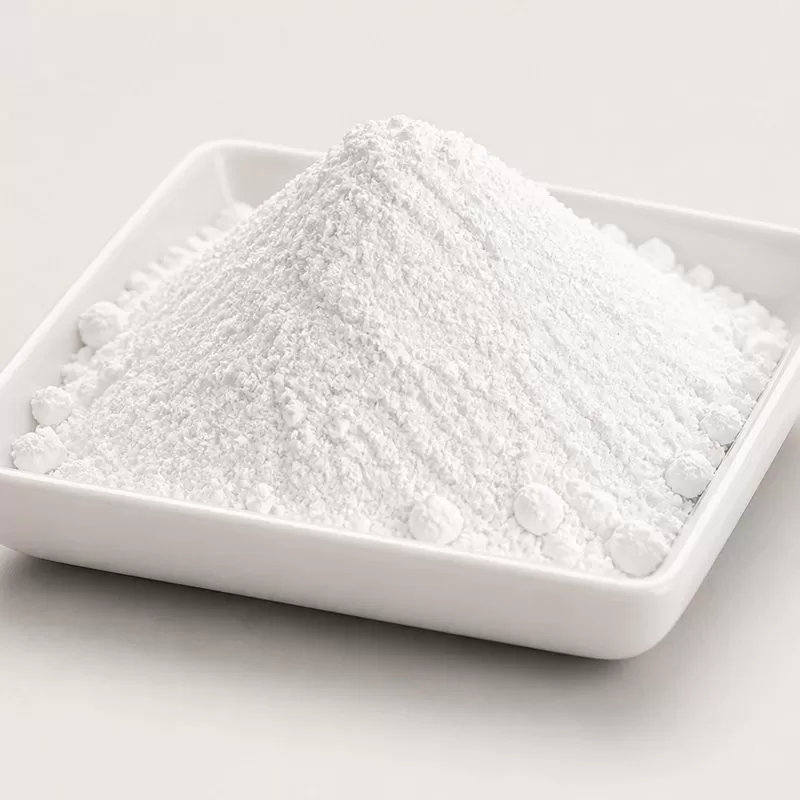
Comparative Evaluation of Zinc Phosphate Variants
Not all industrial applications can use the same type of pigment. Over time, specialized variants have been developed to address specific coating environments and substrates. Understanding these differences helps in selecting the correct grade from zinc phosphate manufacturers:
| Pigment Grade | Primary Composition | Key Characteristics | Typical Application |
|---|---|---|---|
| Standard Zinc Phosphate | Pure $\text{Zn}_3(\text{PO}_4)_2 \cdot 2\text{H}_2\text{O}$ or $4\text{H}_2\text{O}$ | Insoluble, stable, cost-effective non-toxic inhibitor | Standard industrial primers, alkyd paints |
| Micronized Zinc Phosphate | Ultra-fine particle size ($D_{50} < 3\,\mu\text{m}$) | High dispersibility, improved film smoothness, high surface area | Coil coatings, thin-film aerosol primers, automotive OEM |
| Modified Zinc Phosphate | Doped with Aluminum, Silica, or Organic compounds | Accelerated passivation, reduced water sensitivity, active ion exchange | Waterborne epoxy systems, fast-dry protective coatings |
Modified grades are often chosen when rapid corrosion protection is required. Standard zinc phosphate has a relatively low solubility, which delay its protective action in the early stages of exposure. By doping the crystal matrix with aluminum or organic compounds, manufacturers can modify the solubility profile, allowing faster ion release and quicker formation of the passivation layer on the steel surface.
Frequently Asked Questions
Q1: What is the standard shelf life of zinc phosphate pigment, and how should it be stored?
A1: Standard zinc phosphate has an almost indefinite chemical shelf life, typically guaranteed for at least 2 to 3 years from the date of manufacture, provided it is stored in a dry, cool warehouse. It must be protected from direct moisture exposure and humidity, as water absorption can cause agglomeration and increase the moisture content, negatively impacting its performance in solvent-borne systems.
Q2: How does the pH value of zinc phosphate affect paint stability?
A2: The pH value of the pigment (typically measured in a 10% aqueous suspension) should be neutral, ideally between 6.0 and 8.0. An acidic pH indicates residual phosphoric acid, which can react with alkaline binders or additives in waterborne systems, causing instability or gelling. A basic pH may indicate excess zinc oxide, which can react with carboxyl groups in alkyd or acrylic resins, leading to paint thickening during storage.
Q3: Can zinc phosphate be used in waterborne acrylic coatings without causing flash rust?
A3: Yes, but it requires careful formulation. Because zinc phosphate has low initial solubility, it may not release passive ions quickly enough to prevent flash rusting during the drying phase of waterborne coatings. In such formulations, it is common practice to combine zinc phosphate with organic flash rust inhibitors to provide immediate protection while the paint film is drying, allowing the zinc phosphate to provide long-term barrier and passive protection afterward.
Q4: Why is the moisture content of the pigment important for polyurethane primers?
A4: Polyurethane primers rely on isocyanate chemistry, where the isocyanate group ($-\text{NCO}$) is highly reactive with water. If the zinc phosphate pigment contains excess moisture (typically above 1.0%), the water will react with the isocyanate curing agent, producing carbon dioxide gas. This reaction leads to gas bubbles, pinholes, and loss of adhesion in the cured polyurethane film. For these formulations, buyers must source grades with a moisture content of less than 0.5%.
Q5: How do modified zinc phosphates compare to standard grades in salt spray testing?
A5: In standard ASTM B117 salt spray testing, modified zinc phosphates (such as those doped with aluminum or organic compounds) often show better performance in thin-film applications. The modification increases the solubility and ion-exchange rate in the early stages of exposure, leading to faster passivation of the scribe area and reduced rust creep under the coating compared to standard grades.
To receive technical datasheets, request samples, or discuss your formulation parameters with our laboratory team, please contact us.