
Difference Between High-Temperature Coatings and Fireproof Coatings
High-temperature coatings and fireproof coatings are both used in environments where heat resistance is required. Because both coating types are related to temperature, heat, and material protection, they are sometimes confused in industrial coating selection.
However, these two coating categories are not the same. High-temperature coatings are mainly designed to maintain stable coating performance under continuous or repeated high-temperature service conditions. Fireproof coatings, on the other hand, are mainly designed to delay ignition, slow flame spread, reduce heat transfer, or protect the substrate during fire exposure.
For coating manufacturers, engineering contractors, equipment users, and material suppliers, understanding the difference between high-temperature coatings and fireproof coatings is important for correct product selection and formulation development.
What Are High-Temperature Coatings?
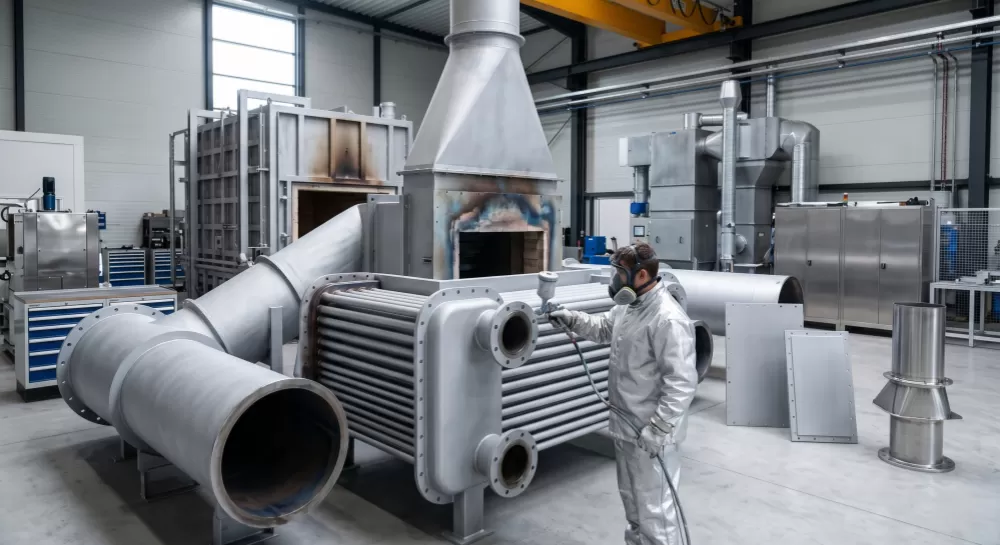
High-temperature coatings are also known as heat-resistant coatings, high-temperature paints, or heat-resistant paints. They are coating systems designed to withstand high-temperature oxidation and corrosion from other media during service.
In the coating industry, high-temperature applications commonly refer to environments ranging from approximately 100℃ to 800℃. Under these conditions, the coating film is expected to maintain stable physical performance. Typical requirements include no peeling, no blistering, no cracking, no powdering, and no rusting. Slight color change may be acceptable depending on the application environment and coating specification.
High-temperature coatings are often used where equipment, components, or structural surfaces are exposed to continuous heat, hot air, combustion gas, or thermal cycling.
Main Functions of High-Temperature Coatings
The primary function of a high-temperature coating is to protect the substrate under elevated temperature conditions.
In many industrial environments, materials are exposed not only to heat but also to oxygen, moisture, oil, chemicals, exhaust gas, or corrosive media. If the surface is not properly protected, metal may rust, cement-based materials may weather, and other substrates may gradually degrade.
By forming a protective coating film on the surface, high-temperature coatings can help delay these damage processes and extend the service life of equipment or structural materials.
The main functions of high-temperature coatings include:
Heat resistance
Oxidation resistance
Corrosion protection
Water resistance
Oil resistance
Chemical resistance
Light and weather resistance
Protection against high-temperature industrial media
Depending on the resin system and formulation design, high-temperature coatings may include organic silicon and inorganic silicon high-temperature coating systems.
Typical Applications of High-Temperature Coatings
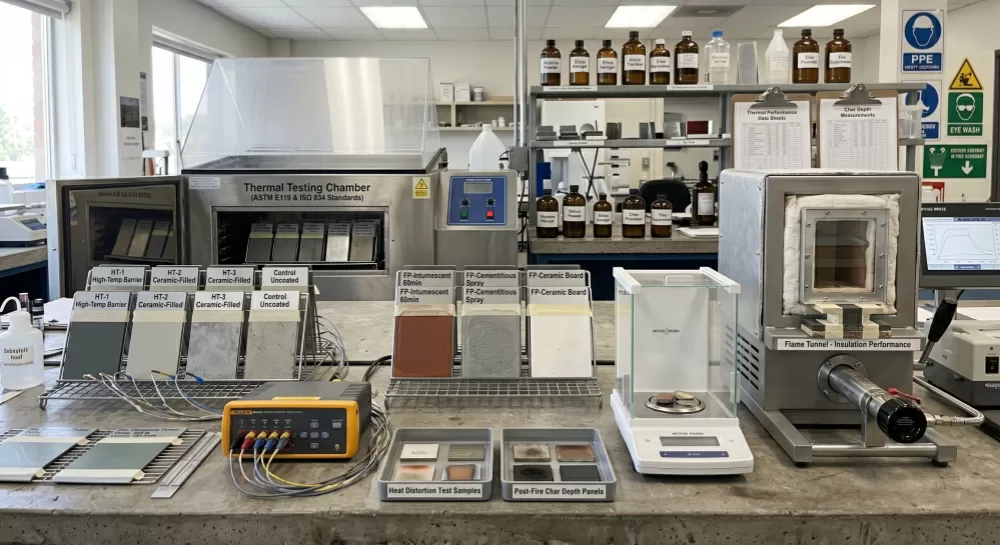
High-temperature coatings are widely used on metal and non-metal surfaces that require protection in high-heat environments.
Typical application fields include:
Blast furnaces
Hot blast stove inner and outer walls
Chimneys
Flues
Drying tunnels
Exhaust pipes
High-temperature hot air pipelines
Heating furnaces
Heat exchangers
Industrial thermal equipment
Metal and non-metal surfaces requiring high-temperature corrosion protection
These applications usually require the coating to remain stable during long-term exposure to heat. The coating must not fail quickly due to peeling, cracking, blistering, powdering, or rust formation.
What Are Fireproof Coatings?
Fireproof coatings are also called fire-retardant coatings or fire-resistant paints. Depending on the application, they may include decorative fireproof coatings, wood fireproof coatings, and steel structure fireproof coatings.
Fireproof coatings are generally made from film-forming materials, flame retardants, foaming agents, and other functional components. Their purpose is not simply to withstand high operating temperatures, but to reduce fire risk and protect the substrate during fire exposure.
Fireproof coatings are widely used because many building and industrial materials, such as wood, fabric, steel, and other substrates, may lose performance or become dangerous during fire conditions. A fireproof coating can help delay ignition, slow flame spread, reduce heat transfer, and provide additional protection time.
Fire Protection Mechanism
Fireproof coatings protect the substrate through several mechanisms.
First, the coating itself may have flame-retardant or non-combustible properties. This helps prevent the protected material from directly contacting air, delays ignition, and reduces the burning rate.
Second, fireproof coatings often have low thermal conductivity. This helps delay the transfer of flame temperature to the protected substrate.
Third, some fireproof coatings release non-combustible inert gases when heated. These gases dilute flammable gases generated from the protected material and reduce the possibility or speed of combustion.
Fourth, nitrogen-containing fireproof coatings may decompose under heat and generate groups such as NO or NH₃. These groups can interact with organic free radicals, interrupt combustion chain reactions, and reduce temperature development.
Fifth, intumescent fireproof coatings expand and foam when heated. This forms a carbonaceous foam insulation layer that covers the protected surface. The insulation layer delays heat transfer to the substrate and helps prevent ignition, combustion, or strength loss caused by temperature rise.
Key Differences Between High-Temperature Coatings and Fireproof Coatings
Although both coating types are related to heat, their protection goals are different.
High-temperature coatings are designed for continuous high-temperature service. Their main goal is to maintain coating integrity and protect the substrate during normal industrial operation under heat exposure.
Fireproof coatings are designed for fire protection. Their main goal is to delay burning, reduce heat transfer, protect the substrate during fire exposure, and provide additional safety time.
The difference can be understood from several aspects.
Difference in Protection Purpose
High-temperature coatings focus on protecting surfaces under regular high-temperature operating conditions.
Fireproof coatings focus on reducing fire damage and improving fire safety during abnormal fire events.
Difference in Application Environment
High-temperature coatings are used in environments such as furnaces, chimneys, exhaust pipes, drying tunnels, heat exchangers, and hot air pipelines.
Fireproof coatings are often used on steel structures, wood, decorative materials, and other substrates requiring fire resistance or flame-retardant protection.
Difference in Performance Evaluation
High-temperature coatings are evaluated based on heat resistance, oxidation resistance, corrosion resistance, coating film stability, peeling resistance, blistering resistance, and cracking resistance.
Fireproof coatings are evaluated based on flame retardancy, intumescence, heat insulation, fire resistance time, combustion delay, and substrate protection during fire conditions.
Difference in Material Formulation
High-temperature coatings often rely on heat-resistant resins, inorganic binders, heat-resistant pigments, and materials that can maintain stability at elevated temperatures.
Fireproof coatings often use film-forming agents, flame retardants, foaming agents, carbon-forming agents, and other functional materials designed to create a protective barrier under fire exposure.
How to Select the Right Coating
When selecting a coating, users should first define the actual service condition.
If the substrate will be exposed to continuous high-temperature operation, such as a furnace, exhaust pipe, chimney, hot air duct, or heat exchanger, a high-temperature coating is usually the correct direction.
If the goal is to improve fire safety, delay ignition, protect steel structure strength during fire, or reduce flame spread on wood or decorative materials, a fireproof coating should be considered.
In some industrial applications, both heat resistance and fire protection may be relevant. In such cases, coating selection should be based on detailed project conditions, including substrate type, operating temperature, fire safety requirement, exposure environment, coating thickness, application method, and relevant standards.
Role of Phosphate Materials in Heat-Resistant and Protective Coatings
For coating manufacturers, functional inorganic materials can play an important role in high-temperature and protective coating systems. Phosphate-based materials, such as aluminum dihydrogen phosphate, condensed aluminum phosphate, aluminum tripolyphosphate, and related products, can be used in certain high-temperature material systems, heat-resistant coatings, and industrial protective formulations.
These materials may support bonding, heat resistance, coating stability, corrosion resistance, and formulation performance, depending on the specific coating system and application environment.
Shijiazhuang City Xinsheng Chemical Co., Ltd. provides phosphate-based materials for coatings, anti-corrosion pigments, high-temperature materials, and related industrial applications. For coating manufacturers developing high-temperature coatings, fire-retardant coatings, or protective industrial coating systems, suitable phosphate materials can be selected according to the formulation requirements and tested in the customer’s own system.
Conclusion
High-temperature coatings and fireproof coatings both relate to heat protection, but they serve different purposes.
High-temperature coatings are designed to maintain stable coating performance under continuous high-temperature industrial service conditions. They are commonly used for furnaces, chimneys, flues, exhaust pipes, hot air pipelines, heating furnaces, heat exchangers, and other high-temperature equipment.
Fireproof coatings are designed to delay ignition, reduce flame spread, slow heat transfer, and protect the substrate during fire exposure. Their protection mechanism may include flame retardancy, low thermal conductivity, inert gas release, chain reaction interruption, and intumescent insulation layer formation.
For coating manufacturers and industrial users, the correct choice depends on whether the project requires long-term heat resistance, fire protection, or both. Understanding this difference helps avoid coating selection errors and supports better performance in real industrial applications.