
The protection of metallic substrates against atmospheric degradation is a primary objective in industrial coatings engineering. Infrastructure, automotive components, marine vessels, and heavy machinery are continuously subjected to moisture, oxygen, and corrosive ions such as chlorides. The resulting chemical degradation leads to high maintenance costs and structural vulnerabilities. To address this, coating manufacturers rely on active anti-corrosive pigments incorporated directly into primer formulations.
Among these pigments, zinc phosphate has emerged as an industry standard. Historically, the market relied on chromate-based pigments, which offered high corrosion protection but carried severe environmental and health concerns. The transition to non-toxic, eco-friendly alternatives made zinc phosphate the primary choice for modern anti-corrosive primers. If you are actively seeking zinc phosphate for sale to support your paint and coating production, understanding its chemical properties, mechanism of action, and formulation requirements is necessary to ensure long-term performance.
As a leading manufacturer, Xinsheng specializes in providing high-purity chemical pigments designed to meet the rigorous standards of global industrial coatings producers. This guide analyzes the practical factors involved in selecting, procuring, and formulating with this vital anti-corrosive agent.
Chemical Composition and Physical Properties
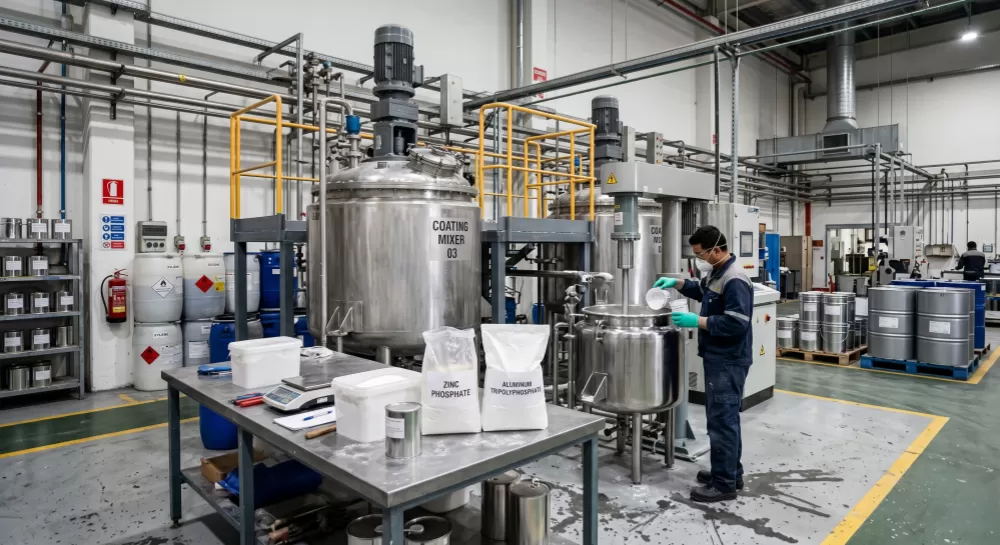
Zinc phosphate is an inorganic chemical compound with the formula Zn3(PO4)2. It is typically supplied as a white, odorless, non-toxic powder. For coating applications, the dihydrate (Zn3(PO4)2•2H2O) and tetrahydrate (Zn3(PO4)2•4H2O) crystal forms are the most common. The presence of water of crystallization is important because it influences the temperature stability of the pigment during paint manufacturing and subsequent curing processes.
The performance of zinc phosphate in a dry paint film is closely tied to its physical characteristics. Key properties include:
Specific Gravity: Typically ranges from 3.2 to 3.8 g/cm³, which affects the settling behavior of the pigment in liquid paint during storage.
Refractive Index: Approximately 1.6. Because this value is close to that of common binder resins (such as epoxies and alkyds), zinc phosphate exhibits low hiding power, allowing formulators to use it in primers without heavily impacting the final color coat.
Oil Absorption: Usually falls between 15 and 25 g/100g. This parameter is decisive when calculating the Pigment Volume Concentration (PVC) of a paint formulation, as it determines how much resin binder is required to fully wet the pigment particles.
pH Value: Generally maintained in a neutral range of 6.0 to 8.0, preventing premature gelation or unwanted chemical reactions with sensitive resins.
These properties make the compound a highly versatile raw material. When evaluating commercial zinc phosphate for sale, ensuring that these parameters remain consistent from batch to batch is a key factor in maintaining coating consistency.
Mechanism of Protective Action in Coatings
The protective capability of zinc phosphate relies on its controlled, low solubility in water. When moisture penetrates a cured coating film and reaches the underlying steel substrate, electrochemical cells are established. This moisture triggers the slow hydrolysis of zinc phosphate, releasing phosphate ions (PO43-) into the local environment.
Once released, these phosphate ions react with iron ions (Fe2+ and Fe3+) generated at the anodic sites of the corroding steel. This reaction forms a dense, tightly adhering, insoluble complex layer consisting of tertiary iron-zinc phosphate (FexZny(PO4)2). This passivation layer acts as a physical barrier directly on the metal surface, stopping the transfer of electrons and ions that drive the corrosion process.
Simultaneously, zinc ions react with hydroxyl ions (OH-) produced at the cathodic sites. This reaction yields zinc hydroxide (Zn(OH)2), which precipitates at the cathode and further impedes the transport of oxygen to the metal. This dual anodic and cathodic passivation mechanism significantly reduces under-film corrosion, prevents rust creep from physical scratches, and minimizes the occurrence of osmotic blistering.
Selecting the Right Grade of Zinc Phosphate for Sale
Not all pigment grades perform identically across different resin systems. Procurement teams and formulation chemists must analyze specific grade attributes to match their unique system requirements.
Particle Size Distribution and Dispersion
The efficiency of the passivation mechanism is directly proportional to the active surface area of the pigment. Coarser grades may settle rapidly in the liquid paint container and can lead to surface defects in thin-film applications. Conversely, micronized grades, which feature an average particle size of under 5 microns, offer a much larger active surface area. This finer distribution improves the packing density of the pigment within the dry paint film, creating a more tortuous path for moisture penetration and enhancing overall barrier properties.
Soluble Salt Content and Conductivity
High levels of water-soluble impurities, such as chlorides or sulfates, can be highly detrimental. These soluble ions increase the electrical conductivity of the paint film and promote osmotic water absorption, which accelerates substrate corrosion instead of preventing it. High-quality zinc phosphate for sale must undergo intensive washing steps during manufacturing. Xinsheng maintains strict control over the washing process to ensure exceptionally low conductivity and minimal soluble salt content in the finished pigment.
Modified and Hybrid Pigments
For demanding environments, standard orthophosphate may require assistance to achieve target performance levels. In such cases, modified zinc phosphate grades are utilized. These hybrid pigments may be doped with aluminum, molybdenum, or organic inhibitors. The addition of these compounds accelerates the formation of the passivation layer, offering improved performance in thin-film industrial primers and coil coatings where rapid curing and immediate protection are required.
Industrial Applications and Coating Systems
Zinc phosphate serves as a core active ingredient across a wide variety of paint formulations. Its chemistry allows it to function effectively in both solvent-borne and waterborne technologies.
In solvent-borne alkyd primers, which are widely used for general industrial maintenance, zinc phosphate provides cost-effective, long-term rust prevention. Its chemical neutrality prevents it from reacting with the fatty acids in alkyd resins, avoiding viscosity stability issues during storage.
For heavy-duty protection, such as marine environments, offshore wind turbines, and petrochemical plants, two-pack epoxy primer systems are preferred. Here, zinc phosphate is often formulated alongside barrier pigments like micaceous iron oxide (MIO) or glass flakes. The combination of chemical passivation from zinc phosphate and physical barrier protection from MIO provides robust performance under high-salinity conditions, easily passing rigorous salt spray testing (such as ASTM B117 standards).
The regulatory shift toward low-VOC (volatile organic compound) systems has driven the development of waterborne industrial coatings. Formulating waterborne primers introduces challenges, particularly flash rusting during the drying phase. Utilizing highly purified zinc phosphate with controlled pH buffering properties helps stabilize the wet paint on the steel surface, preventing immediate rust formation while the water evaporates.
Formulation Challenges and Targeted Solutions
While zinc phosphate is a highly reliable pigment, paint formulators occasionally encounter practical challenges during the manufacturing and storage stages. Addressing these challenges requires careful formulation design and high-quality raw materials.
One common issue is pigment settling, also known as hard caking, in the bottom of the paint container during extended storage. Because of the density difference between the inorganic pigment and the organic resin, particles tend to migrate downward. To mitigate this behavior, formulators must use appropriate anti-settling agents, such as bentonite clays, fumed silica, or hydrogenated castor oil waxes. Sourcing micronized zinc phosphate from Xinsheng also helps, as smaller particles experience lower gravitational settling velocities according to Stokes' Law.
Another challenge is balancing the Pigment Volume Concentration (PVC) relative to the Critical Pigment Volume Concentration (CPVC). If the PVC is too high (above the CPVC), there will not be enough resin binder to coat all pigment particles, leaving voids in the film that permit rapid water penetration. If the PVC is too low, the active pigment particles may be completely encapsulated by the resin, preventing the slow dissolution required to release protective phosphate ions. Maintaining an optimal PVC/CPVC ratio (typically between 0.7 and 0.8 for anti-corrosive primers) is vital for achieving the proper balance between physical barrier properties and active chemical passivation.
Consistency in raw materials is the most reliable way to prevent these formulation deviations. By sourcing high-quality zinc phosphate for sale with reliable particle size distributions and predictable oil absorption values, paint manufacturers can avoid costly adjustments during production scale-up.
Sourcing and Supply Chain Reliability with Xinsheng
Sourcing raw materials for industrial chemical manufacturing requires a focus on supplier reliability, consistent quality control, and robust logistics. A disruption in the supply of active pigments can halt paint production lines, causing project delays and financial losses for coating suppliers.
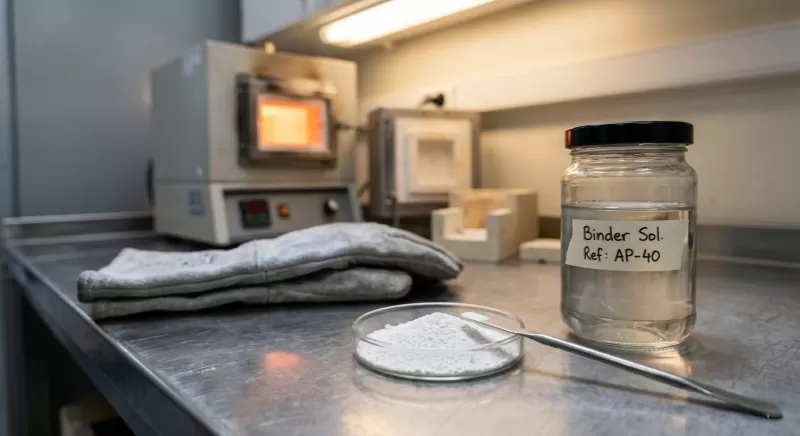
Xinsheng is dedicated to maintaining high standards of manufacturing consistency. Our production facilities utilize automated control systems to monitor precipitation temperatures, reactant concentration, and drying parameters. Each batch undergoes testing for particle size distribution, oil absorption, pH value, and chemical purity before packaging. We offer double-layer, moisture-proof packaging to ensure the pigment remains dry and free-flowing during maritime transit and warehouse storage.
Furthermore, our team provides comprehensive formulation support to assist clients in optimizing their paint recipes, ensuring that our products perform reliably within their specific resin systems.
Frequently Asked Questions
Q1: What is the main difference between dihydrate and anhydrous zinc phosphate in coating applications?
A1: The primary difference lies in thermal stability and crystal water content. Dihydrate zinc phosphate contains water molecules within its crystal structure, which are stable at normal drying temperatures but can be released at high baking temperatures (above 120°C to 150°C). For powder coatings or high-temperature coil coatings that undergo high-heat curing, anhydrous zinc phosphate is preferred to prevent the release of water vapor, which can cause micro-voids and pinholes in the cured paint film.
Q2: Why is the oil absorption value of zinc phosphate important for paint formulators?
A2: The oil absorption value indicates how much binder resin is required to completely wet a specific amount of pigment. A higher oil absorption value means more resin is consumed to wet the pigment surface, which directly impacts the viscosity of the paint and the Pigment Volume Concentration (PVC). Knowing this value allows formulators to precisely calculate the formulation recipe to avoid exceeding the critical pigment volume concentration.
Q3: Can zinc phosphate completely replace zinc chromate in heavy-duty marine primers?
A3: Yes, zinc phosphate is the standard non-toxic replacement for zinc chromate. While zinc chromate possessed highly effective solubility characteristics, its high toxicity and carcinogenic nature led to strict global bans. Zinc phosphate, especially when modified with auxiliary pigments or combined with synergistic barrier pigments, achieves comparable corrosion protection in marine and heavy industrial environments without the associated environmental liabilities.
Q4: How does particle size affect the performance of zinc phosphate in thin-film applications?
A4: Thin-film applications, such as automotive primers or coil coatings, require a very smooth surface finish. Coarse pigment particles can protrude through the dry film, creating structural weaknesses and aesthetic defects. Finer, micronized zinc phosphate particles (typically under 5 microns) disperse more uniformly, improve the packing density of the coating, enhance the barrier effect against moisture, and ensure a high-quality surface finish.
Q5: What packaging options are available for industrial bulk procurement of zinc phosphate?
A5: To accommodate different handling systems, we offer standard 25 kg multi-layer paper bags with polyethylene inner liners, as well as large bulk bags (ton bags) for high-volume automated production lines. All packaging is designed to resist moisture ingress, preventing caking and ensuring the pigment remains easy to disperse upon arrival at your facility.
Contact Xinsheng for Inquiries and Custom Sourcing
Selecting the appropriate anti-corrosive pigment is a key step in ensuring the durability of protective coatings. If you are currently evaluating high-grade zinc phosphate for sale, Xinsheng is ready to support your formulation objectives. We offer customized grades tailored to solvent-borne, waterborne, and high-temperature curing systems.
Please contact our sales and technical support teams to request product specifications, safety data sheets, or to arrange for sample testing in your laboratory. We look forward to partnering with your organization to deliver advanced anti-corrosive solutions. Please submit your inquiry through our official contact channels to receive a comprehensive technical quote.