
Industrial furnaces, ladles, and kilns operate under punishing thermal stresses. Refractory linings must withstand extreme heat, aggressive molten slag, and rapid thermal cycling without structural degradation.
When refractory linings fail, furnace downtime drives up maintenance costs and interrupts production schedules. The binder system forms the backbone of these refractory materials, dictating their mechanical integrity across varying temperature zones.
If your operations face premature refractory spalling or structural collapse, switching to an advanced chemical binder can resolve these challenges. Contact Xinsheng to review technical specifications or request certified material samples for industrial trials.
Quick Answer: Monoaluminum phosphate (also known as aluminum dihydrogen phosphate, Al(H2PO4)3) is an acidic chemical refractory binder. It forms a high-strength, polymer-like ceramic bond through progressive dehydration and condensation reactions. Unlike hydraulic cements that weaken between 800°C and 1000°C, monoaluminum phosphate maintains its structural strength continuously from low temperatures up to 1800°C, delivering superior resistance to thermal shock and molten slag attack.
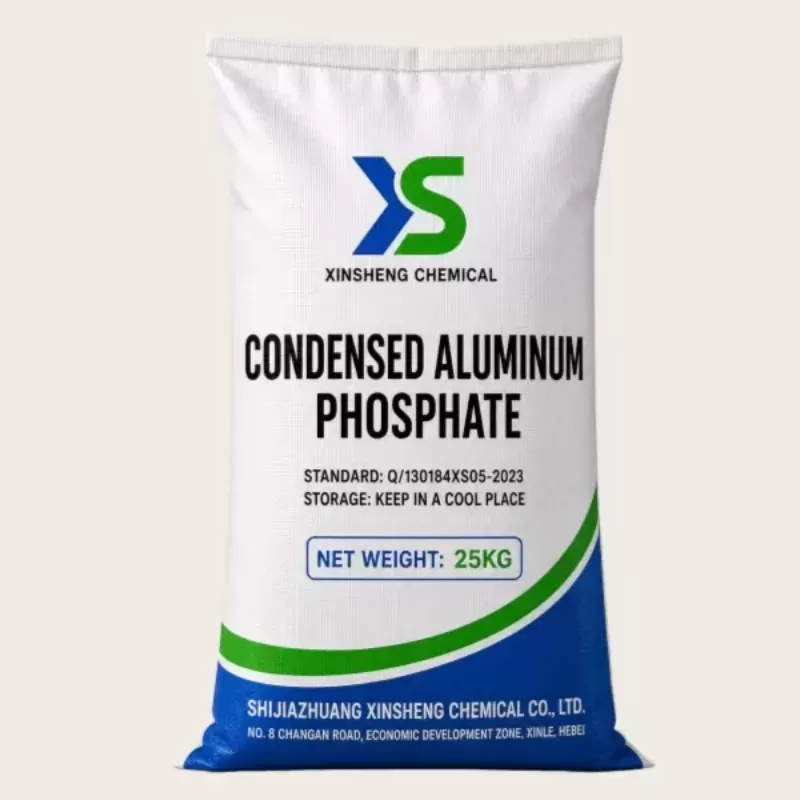
Understanding Monoaluminum Phosphate: Chemistry and Physical Forms
Monoaluminum phosphate is synthesized by reacting aluminum hydroxide with concentrated phosphoric acid under controlled temperatures. The stoichiometric control of the Al2O3 to P2O5 ratio governs its binding behavior, shelf life, and setting kinetics.
The chemical compound carries the formula Al(H2PO4)3. In the refractory industry, suppliers provide it in both liquid and powder variants:
- Liquid Monoaluminum Phosphate: A viscous, clear-to-translucent solution typically supplied at 48% to 60% solids concentration. It provides immediate reactivity, excellent wetting capability, and uniform dispersion across aggregate particles.
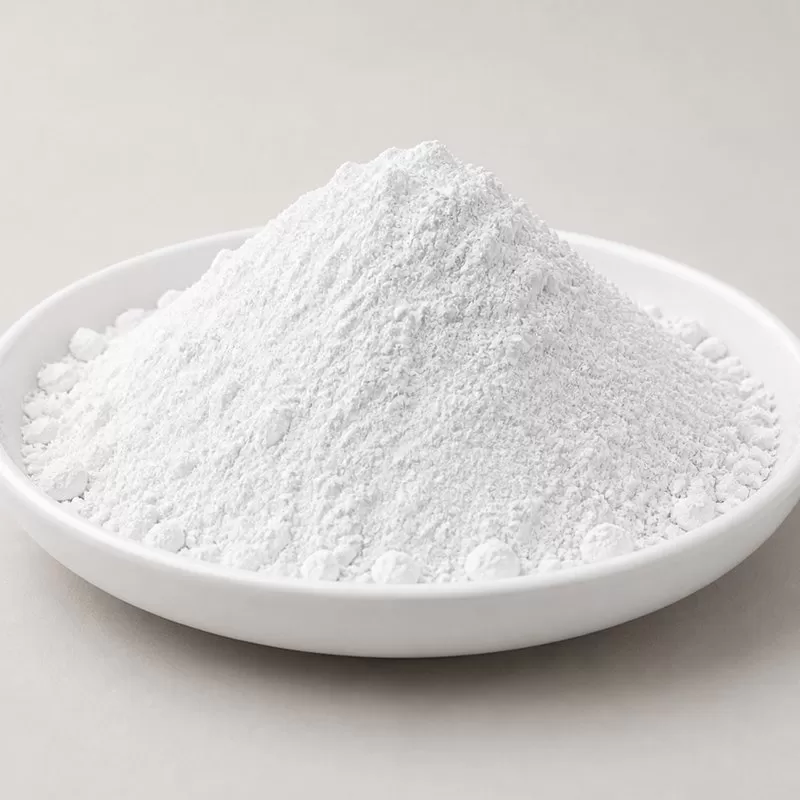
- Solid/Powder Monoaluminum Phosphate: A spray-dried, hygroscopic white powder. Refractory producers utilize the dry form to manufacture pre-blended dry mortars, plastics, and bagged patch materials that simply require water addition on-site.
The fundamental bonding mechanism differs completely from hydraulic binders like calcium aluminate cement. Hydraulic systems rely on water hydration to form crystalline hydrates. In contrast, monoaluminum phosphate relies on condensation polymerization.
Upon ambient drying and subsequent heating, adjacent dihydrogen phosphate groups cross-link by shedding water molecules. At lower temperatures (150°C to 300°C), acidic pyrophosphates and triphosphates form. As the temperature crosses 500°C to 1000°C, these groups convert into insoluble polymeric aluminum metaphosphates.
Above 1000°C, the metaphosphates react with fine refractory aggregates (such as calcined bauxite, tabular alumina, or mullite) to form aluminum orthophosphate (AlPO4). AlPO4 shares an isostructural lattice with quartz and cristobalite, as documented on Wikipedia's Aluminum Phosphate reference. This transition creates a direct ceramic bond within the material matrix.
Core Technical Superiority Over Conventional Binders
Refractory engineers frequently replace traditional binders with monoaluminum phosphate due to five clear physical and chemical advantages.
1. Exceptional Refractoriness and Service Limits
Conventional sodium silicate or low-grade cements contain alkali and alkaline-earth fluxes (Na2O, CaO). These oxides form low-melting eutectic phases at elevated temperatures, which severely lowers the overall refractoriness under load.
Monoaluminum phosphate introduces only aluminum and phosphorus oxides into the system. As a result, phosphate-bonded castables and bricks resist softening under load at service temperatures reaching 1500°C to 1800°C.
2. Elimination of the "Intermediate Temperature Drop"
The primary vulnerability of calcium aluminate cement (CAC) is its mid-range thermal deficit. Between 800°C and 1000°C, hydraulic hydrate bonds (such as C3AH6 and AH3) dehydrate and break down, while solid-state ceramic sintering has not yet begun.
This leaves a critical strength drop where the lining is susceptible to mechanical failure, abrasive wear, and cracking. Monoaluminum phosphate eliminates this deficit entirely.
The polycondensation reactions of aluminum dihydrogen phosphate provide unbroken mechanical strength. The binder progressively transforms from a chemical bond into a permanent ceramic bond without losing compressive strength.
3. Outstanding Thermal Shock Resistance
Rapid heating and cooling cycles generate high internal stress gradients within monolithic linings. Monoaluminum phosphate produces a micro-porous, cross-linked network that absorbs differential expansion better than rigid, dense hydraulic structures.
Consequently, phosphate-bonded castables resist thermal spalling during repeated thermal cycles, such as those found in furnace doors, burner blocks, and transfer ladles.
4. Natural Resistance to Slag Penetration and Chemical Attack
Molten metallurgical slag penetrates porous refractories via capillary action, dissolving the aggregate matrix. The acidic nature of AlPO4 networks provides resistance to acidic and neutral slags, molten aluminum, and sulfurous gases.
Furthermore, the reaction between phosphate binders and basic slags tends to form dense, protective barrier layers that slow down chemical penetration.
5. High Abrasion and Erosion Resistance
Phosphate-bonded mortars and ramming mixes develop high cold crushing strength (CCS) after initial heat curing. The toughness of the polymerized AlPO4 matrix holds aggregates tightly in place, resisting high-velocity gas erosion and particle abrasion.
Comparative Analysis: Monoaluminum Phosphate vs. Traditional Binders
Selecting the correct binder requires balancing thermal stability, installation requirements, and cost. Standards such as the ASTM C401 Standard Classification for Alumina and Alumina-Silicate Castable Refractories outline the categories under which these varied bonding systems perform.
The following table illustrates why engineers select monoaluminum phosphate over alternative chemical and hydraulic options:
| Performance Property | Monoaluminum Phosphate | Calcium Aluminate Cement | Sodium Silicate (Water Glass) | Silica Sol (Colloidal Silica) |
|---|---|---|---|---|
| Bonding Mechanism | Chemical condensation & ceramic bond | Hydraulic hydration | Chemical precipitation & glass phase | Colloidal gelation (siloxane bonds) |
| Max Service Limit | Up to 1800°C | 1400°C – 1600°C (purity dependent) | 1100°C – 1300°C | 1500°C – 1650°C |
| Mid-Temp Strength (800–1000°C) | Very High (Stable cross-linking) | Low (Hydrate decomposition valley) | Moderate (Viscous flow begins) | Moderate to High |
| Thermal Shock Resistance | Excellent | Moderate | Poor | Very High |
| Alkali Content (Na2O / K2O) | Negligible (< 0.1%) | Low (< 0.5%) | Very High (8% – 15%) | Negligible (< 0.3%) |
| Curing Requirement | Heat cured (>150°C) or hardener added | Moisture/ambient hydration | Air dry or chemical gelling agent | Air dry or controlled gelation |
| Slag Corrosion Resistance | High (Resists acidic/neutral slag) | Moderate to High (Alkali sensitive) | Very Poor (Low-melting eutectics) | Moderate (Attacked by basic slag) |
While calcium aluminate cement remains practical for general civil construction and standard castables, it falls short in high-wear, high-temperature zones. Sodium silicate offers a low-cost binder option, but its high alkali content creates low-melting glass phases that cause early lining failure above 1200°C.
Chemical producers like Xinsheng supply high-purity monoaluminum phosphate with low iron and alkali profiles, preventing unwanted fluxing reactions at high operating temperatures.
Critical High-Temperature Applications
Monoaluminum phosphate is utilized across heavy industries requiring dependable refractory performance under extreme thermal and mechanical stress.
- Phosphate-Bonded Castables and Plastics: Refractory plastics formulated with monoaluminum phosphate remain pliable during shipping and installation. Once rammed into position and fired, they yield high-density linings for boiler walls, soaking pit covers, and forge furnaces.
- Steel Ladle and Tundish Working Linings: The binder prevents molten metal and acidic slags from penetrating working linings, extending ladle campaign life and preventing steel contamination.
- Rotary Cement Kiln Discharge Zones: Kiln nose-rings, cooler inlet zones, and burner pipes encounter severe thermal shock, high abrasion, and chemical gas exposure. Phosphate-bonded high-alumina bricks and castables resist these combined stresses.
- High-Temperature Adhesives and Mortars: Masonry joints are typically the weakest points in a brick lining. Phosphate-bonded high-temperature adhesives cure to form joints that match the thermal stability of corundum and mullite bricks.
- Refractory Gunite and Patching Mixes: For rapid hot repairs, technicians spray acidic phosphate-bonded gunning mixes directly onto damaged, hot refractory surfaces to form quick patches that minimize furnace idle time.
For more details on phosphate interactions with corundum aggregates, refer to phase equilibrium diagrams published by the American Ceramic Society.
Application Guidelines: Curing, Setting Agents, and Firing Schedules
Achieving optimal properties from monoaluminum phosphate requires careful attention to material handling, hardening kinetics, and early moisture removal.
1. Incorporating Setting Agents (Coagulants)
Liquid monoaluminum phosphate does not harden at room temperature on its own. If you require ambient setting before heating, you must blend a small percentage of an alkaline or basic setting agent into the refractory aggregate:
- Dead-Burned Magnesia (MgO): The standard hardener. Powdered MgO reacts chemically with acidic phosphate ions, precipitating magnesium phosphate hydrates that set the green castable within 30 to 90 minutes. Dosage typically ranges from 0.5% to 2.0% by weight.
- Calcium Aluminate Cement: Adding small amounts (1% to 3%) can trigger ambient gelation and precipitation, allowing forms to be stripped before firing.
2. The Firing Schedule: Managing the "Explosive Spalling Window"
Phosphate binders retain chemically bound crystalline and coordination water up to 250°C–350°C. If a newly installed phosphate lining is heated too quickly, water vaporizes faster than it can escape through the pore network.
The resulting internal steam pressure can cause violent, explosive spalling. Engineers should enforce the following heating schedule:
- Ambient Hold: Allow the placed castable to air-cure for 24 hours after stripping forms.
- First Ramp (Ambient to 150°C): Heat slowly at no more than 15°C to 25°C per hour to drive off free moisture.
- Dehydration Soak (150°C to 350°C): Hold the temperature at this plateau for 1 hour per inch of lining thickness. This step allows structural water to release safely during polymer condensation.
- Final Ceramic Ramp (350°C to Operating Temp): Heat at 40°C to 50°C per hour up to working temperatures, finishing the conversion into aluminum orthophosphate.
3. Storage and Equipment Handling
Because monoaluminum phosphate solutions are acidic (pH 1.5 to 2.5), use acid-resistant storage tanks made of polyethylene, FRP, or 316 stainless steel. Avoid contact with mild carbon steel, which reacts with the acid to generate hydrogen gas.
Protect powdered monoaluminum phosphate from atmospheric humidity. Keep bags sealed in dry, climate-controlled warehouses to prevent premature caking.
Frequently Asked Questions
Q1: What is the primary difference between monoaluminum phosphate and
aluminum phosphate?
A1: Monoaluminum phosphate (aluminum dihydrogen
phosphate, Al(H2PO4)3) is an acidic, highly water-soluble compound containing
two hydrogen atoms per phosphate group. It serves as an active binder. Standard
aluminum phosphate (AlPO4) is a neutral, water-insoluble compound that
represents the final, cured ceramic phase achieved after heating.
Q2: Is monoaluminum phosphate corrosive to machinery and
mixers?
A2: Yes. Liquid monoaluminum phosphate has an acidic pH of
1.5 to 2.5. Prolonged exposure will corrode standard mild steel batch mixers,
pumps, and forms. Equipment should be lined with polyurethane, coated with
epoxy, fabricated from stainless steel, or washed thoroughly with water
immediately after each production run.
Q3: Why must phosphate-bonded castables undergo heat curing to
achieve strength?
A3: Without an added hardener like MgO, the
chemical polycondensation reaction that forms cross-linked phosphate chains
requires thermal energy. Dehydration and polymerization begin above 120°C and
complete between 300°C and 500°C. Without this heat, the material remains in a
green state.
Q4: Can monoaluminum phosphate bind basic refractory aggregates like
pure magnesia?
A4: Generally, no. Mixing acidic monoaluminum
phosphate directly with reactive magnesia aggregates causes an uncontrolled,
highly exothermic acid-base reaction. This reaction generates rapid gas release,
boiling, and material breakdown. It is best suited for neutral or acidic
aggregates like alumina, bauxite, mullite, zircon, and silica.
Q5: What is the typical shelf life of liquid vs. powder monoaluminum
phosphate?
A5: High-grade liquid solutions remain chemically stable
for 6 to 12 months when stored sealed at ambient temperatures (10°C to 30°C).
Powdered forms can last 12 to 24 months, provided they are stored in
moisture-proof packaging away from humidity to prevent clumping.
Maximize Your Refractory Campaign Life with Xinsheng
Refractory lining failures lead to unplanned shutdowns, damaged equipment, and lost production. Choosing monoaluminum phosphate as your refractory binder ensures continuous structural integrity, avoids mid-temperature strength loss, and provides superior resistance to slag and thermal shock.
Xinsheng manufactures high-purity liquid and powder monoaluminum phosphate engineered specifically for the refractory and metallurgical sectors. Our production guarantees consistent Al2O3 and P2O5 ratios, low iron contamination, and reliable batch-to-batch stability.
Contact our technical engineering team today to discuss your formulation, request a detailed Certificate of Analysis (COA) and Material Safety Data Sheet (MSDS), or order free samples for your testing laboratory.